These ultra-luxe hotels are great for both the soul and the planet.
World-class hotels don't need to be wasteful. 50 Best's Sustainability Audit Partner, The Sustainable Restaurant Association has rounded up five hotels for the eco-concious traveller.
Soneva Fushi, Maldives
Whether tucked away among lush tropical greenery or perched above clear cerulean waters, Soneva Fushi's luxury villas offer unparalleled views of the hotel's stunning natural surroundings. It's therefore no wonder that its sustainability strategy includes a keen focus on protecting the region's rich biodiversity, best seen through its abundance of underwater life and coral reefs.
Recognising the central role of these reefs in supporting marine ecosystems, the hotel funds the Soneva Foundation Coral Restoration, the largest facility of its kind in the Indian Ocean. This includes the Maldives' first coral spawning and rearing lab, which replicates the reef's natural environment to facilitate safe spawning, protecting these critical resources for generations to come.
This commitment to nature shows up on the plate, too. Soneva Fushi works closely with local fishermen, purchasing their catch directly. Not only does this retain money in the local community and help to keep small-scale fishers in business, it also means choosing traditional, sustainable fishing methods, keeping marine ecosystems healthy and thriving for the long term. One example is Rocket, a local fisherman who has supplied the hotel with his pole-and-line-caught fish for nearly 30 years. Rocket's sons work at Soneva Fushi, and they take great pride in serving their father's catch to hotel guests.
The Datai Langkawi 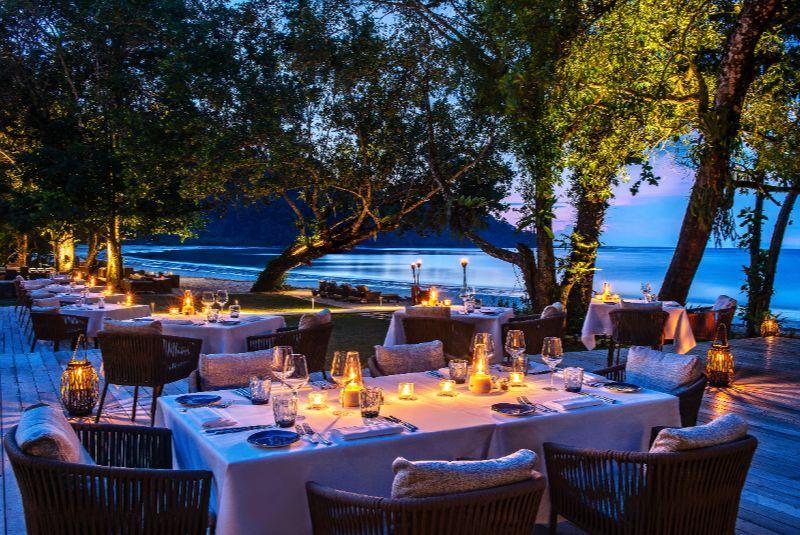
On a laidback island in Malaysia, The Datai Langkawi offers a luxurious retreat flanked either side by dense tropical rainforest and tropical blue waves. While guests relax in the spa or enjoy authentic Malaysian cuisine, the hotel is working quietly in the background to prove that high-end hospitality doesn't have to come at the expense of the natural world.
One of The Datai Langkawi's goals is to achieve the TRUE zero waste certification – a globally recognised standard that verifies businesses are minimising waste by redesigning processes, reducing consumption and maximising reuse, recycling and composting. Understanding that collaboration can greatly magnify impact, the hotel's commitment to circularity is bolstered through community engagement.
Through partnerships with local enterprises The Kanshalife Project and Suri Lifestyle, The Datai Langkawi creates circular systems that actively benefit the island's people. These partnerships find new lives for linens, towels, slippers and candles that would otherwise go to waste, transforming them into stools, cushions, new candles and artisan crafts and providing work and financial stability for underprivileged community members. In 2024 alone, The Kanshalife Project produced 10,862 recycled candles created from decommissioned wax, enabling local women to generate consistent income while reducing waste.
Ellerman House, Cape Town 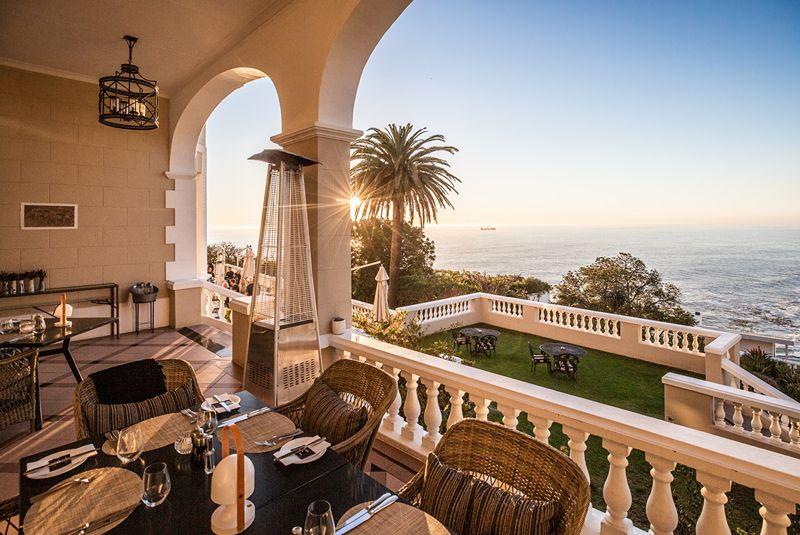
Resting above Cape Town's Bantry Bay with breathtaking ocean views, this luxury boutique hotel is an all-singing celebration of its locality. Menus are designed to honour and celebrate South African history, culture and culinary heritage, with at least 50 per cent of ingredients coming from within 150 kilometres of the hotel, and a specialist forager supplying the kitchen with everything from wild mushrooms to seasonal herbs.
When it comes to seafood, the hotel is meticulous about sourcing in ways that support the health of the majestic marine environment it overlooks, with its restaurant offering a key fish dish that's rotated daily. Ellerman House only serves catches that have been certified as sustainable by reputable third-party organisations, including the Marine Stewardship Council (MSC), Aquaculture Stewardship Council (ASC) and South African Sustainable Seafood Initiative (WWF-SASSI).
When it comes to sourcing these fish, the hotel works with local social enterprise ABALOBI to cultivate thriving, equitable and climate-resilient small-scale fishing communities and trace every single fish right back to the person who caught it, the boat they used and where and when it was caught. Not only does this serve the fishing communities, it also enhances the story behind each dish for each guest dining at Ellerman House. Menus also look beyond the most commonly consumed species to dish up a diverse selection of responsibly caught fish, helping to reduce pressure on vulnerable populations and also introducing new audiences to unique local flavours.
Borgo Egnazia, Savelletri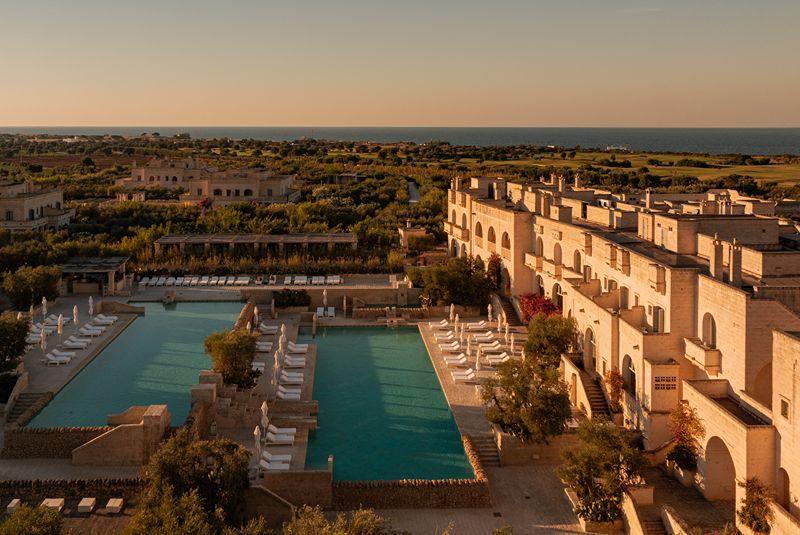
From the outside, Borgo Egnazia's complex is resembles a traditional Puglian village, complete with bell tower and fortified walls. But the hotel was actually built from scratch in 2010 and has become living proof of how hospitality can act as a custodian of biodiversity and cultural heritage, specifically through the saving and reviving local seed varieties.
This project is the result of the passion and commitment of an entire team, working side-by-side with an agronomist who has dedicated more than 20 years to restoring fruits and vegetables that had long disappeared from the market. In the hotel's Casa delle Sementi (Seed House), seeds are researched, preserved, handed down and, eventually, returned to the soil where they are cultivated on the hotel's own land and by carefully selected suppliers using organic and regenerative techniques. By working in harmony with the rhythms of nature, these farmers can use significantly less water compared to conventional crops – increasingly important in drought-vulnerable southern Italy.
Each seed carries a story, often the story of a family whose livelihood once depended entirely on that variety, and by bringing these heritage varieties back to the land and the table, the hotel is actively building cultural history, resilience and a sense of belonging.
Rosewood São Paolo, São Paolo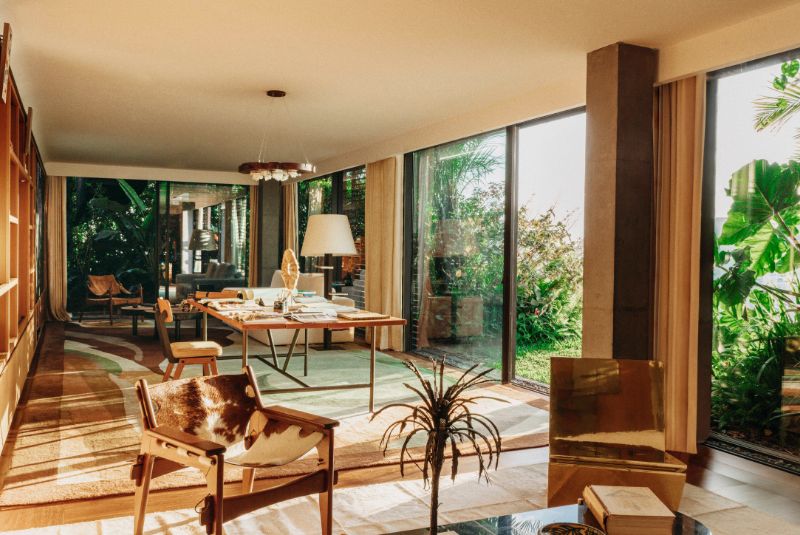
You'll find Rosewood São Paolo in the Cidade Matarazzo, a complex of cleverly preserved buildings dating from the 20th century in the heart of the city. As one of Rosewood Group's Impact Trailblazers, this hotel is a leader in ambitious sustainability and social responsibility initiatives, operating on 100 per cent renewable energy, maintaining a guest experience completely free of single-use plastic and generating almost zero waste.
The principles of circularity lie at the centre of operations for all eight of this Rosewood's guest-facing food and beverage outlets, as well as the staff canteen. Chefs choose multi-functional ingredients and utilise them in different ways across outlets and recipes, ensuring that perishable products always get used, regardless of how many guests are dining that day. Serving over 550 meals every day, the staff canteen also provides a significant opportunity for innovation and creativity. Everything from breadcrumbs to tomato petals and unsold fruits from the restaurants are cleverly repurposed into sauces, flours and juices for staff meals.
The hotel has signed a long-term agreement with Multilixo, a company associated with the Zero Waste Training Program, an international alliance aimed at helping businesses find sustainable solutions to waste management and achieve zero waste. Rosewood São Paolo has seen a measurable decrease in waste since its early days and is continuing efforts to go even further by embracing circularity, providing ample staff training and encouraging employees to identify ways to reduce waste and to suggest improvements. Guests are kept informed through information displayed in each room, bringing awareness around sustainability and social responsibility into every stay.
Build your wish list of ultimate stays across the globe with The World's 50 Best Hotels, and follow us on Instagram, Facebook, X and YouTube.