The wine director at Le Bernardin discusses how to approach a large list without feeling intimidated, says which bottle to celebrate with that's not champagne and insists that the most basic questions are the smartest.
Born in Austria, and with the absolute right name for the job, Aldo Sohm rose through the ranks of the global sommelier scene at speed, earning the title of Best Sommelier in Austria multiple times, before clinching the title of Best Sommelier in America in 2007. Just a year later, he was named the Best Sommelier in the World by the Worldwide Sommelier Association.
These accolades cemented his reputation as one of the most technically gifted palates of his generation, but his warmth and rapport with guests is what's made him such a beloved fixture at Le Bernardin and Aldo Sohm Wine Bar, its more relaxed neighbour.
Sohm shares his hyper-personalised approach to guests and what's kept him going for more than 20 years.
How is life at Le Bernardin?
"Very, very busy, thanks to 50 Best. Oh my gosh, it's like a firestorm. It has been absolutely crazy.
"It was my first time in New Orleans [for North America's 50 Best Restaurants 2026]. I finally visited Emeril's, because I'm friendly with them. For me, living in New York and working in my bubble, it's very hard to escape sometimes. So it's often that you don't see outside of it either. And the hospitality – I mean, the whole package – was really, really impressive."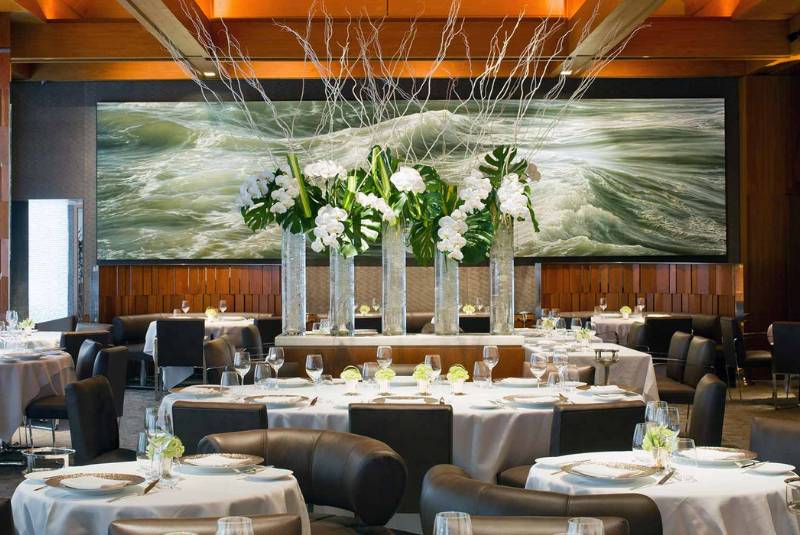
The dining room at Le Bernardin ready for service to begin
Did you get to explore New Orleans much while you were there?
"Yes, the next day we went to eat crayfish at Jewel of the South. It was my first time having crayfish.
"What you probably don't know is that I'm an awfully loyal person. In 2024, I was invited to present at the James Beard Awards, and I actually gave them their award [for Outstanding Bar]. So we stayed in touch. That's why it was such a nice moment. They had a smiling face when they saw me, and vice versa."
You've spent your career helping people navigate wine. Why do you think it intimidates people?
"I often think about it from the other side: what if I'm in their position? The longer you work in an industry, and the more you specialise, the more you start thinking in your own world. I actually have a teacher education background from Austria, and I always think about this in reverse.
"It's a little bit like an old radio. When the channel wasn't right, you had that constant static sound. That's basically what happens when you have an absolute expert who is not able to talk to a person in the right language. There's an immediate disconnect.
"You see this everywhere, with top doctors, with attorneys, they speak their own language. And if you're not familiar with the topic, you don't get a good feeling with it either."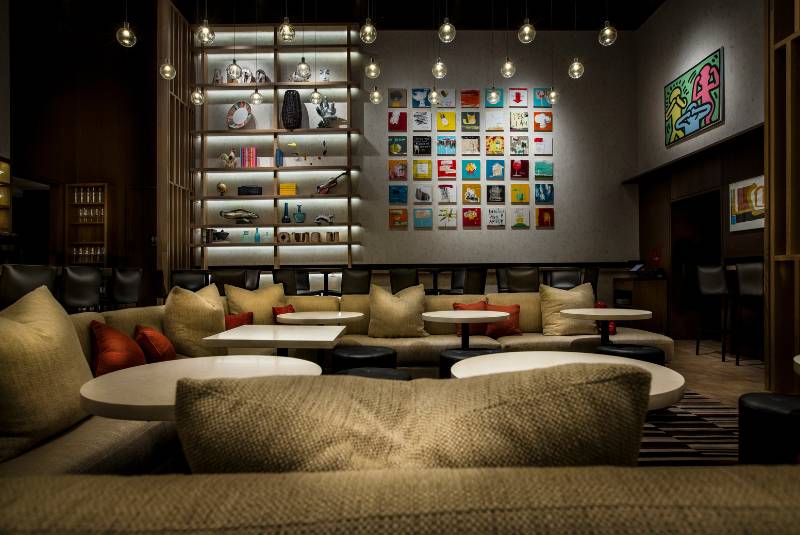
Aldo Sohm Wine Bar is a more casual spot than Le Bernardin
How do you try to change that experience for guests?
"This is actually one of my favourite situations. People often think fine dining is only for very wealthy people. But we have a lot of food lovers who save for an entire year to come to the restaurant.
"You see them, they sit down, they open the wine list... and of course they land on the page with Romanée-Conti, where it starts in five-digit numbers. And for them, it's over.
"That's when I say: have a glass of champagne, relax, and let us work with you. We promise we're not going to take advantage. Rather the opposite. We want to give you an experience you didn't expect. And I take extra care of those people."
Can you give a real example of how you handle that?
"I had a young couple recently, they were on a date. He knew me, she didn't. He asked for a wine recommendation. She liked sauvignon blanc, so I knew she wasn't very experienced with wine, while he liked something more mineral, more Burgundy-driven. So how do you bridge that gap?
"I said: 'we can do this wine, we can do that wine, we can do this one'. But instead of overwhelming them, I described each wine in one sentence: 'If you want something mineral, it's this one. If you want something more aromatic, it's that one. If you want something that bridges the gap, it's this one.
"That's when her eyes lit up. He was super happy too. Then they wanted to do pairings because they saw how everything connected. At the end, we did one of my oldest pairings – the chocolate pot de crème with a Trappist ale. I created this in 2008. At first glance, it makes no sense. But that's when I had them. And they loved it. She said, 'I think you just converted me to a beer drinker.'"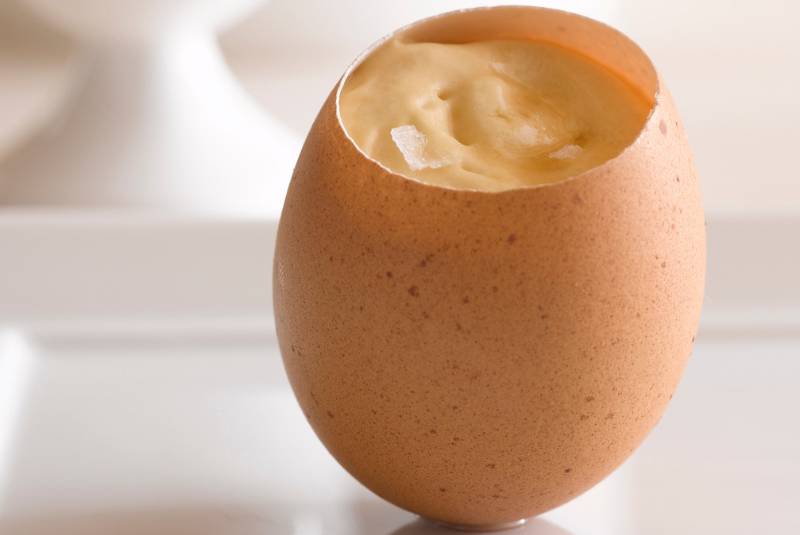
The Egg is a secret menu item at Le Bernardin consisting of a milk chocolate pot de crème and caramel foam, finished with maple syrup and a single flake of salt
What do moments like that mean to you?
"It's everything. It wasn't about the money. Of course they spent something, but it wasn't about La Tâche or Margaux or any of that. It was about creating a future client. They saw I didn't take advantage of them. They saw I lifted them up and gave them something. That's why I love the restaurant industry. You get instant feedback."
How important is the human connection in what you do?
"It's crucial. In today's world, everything becomes digitised, everything is AI. But we're missing one element: the human. AI is not going to replace that. When I wrote my book, I realised something very quickly: as sommeliers, we sell emotion. And you can only do that through human interaction."
You've mentioned reading the table. How does that work in practice?
"I actually don't like guest profiles much. A guest is not the same person every time. Someone is completely different when they come with a business client versus when they come with their partner. So you need to read the table in real time. Wine is a social lubricant. It can soften edges. It can bring people together. But only if you understand the moment, the mood, and the people."
What makes certain food and wine pairings difficult?
"I actually like difficult. I like challenges. Very strong or hot elements narrow your options immediately. Then you have ingredients like caviar, or tomatoes, because of the tomatine. Pickled elements can be tricky too.
"And then there are cuisines. Mexican cuisine can be challenging because it has sweet, salty, spicy, acidic, all at once. Persian cuisine is very layered and complex. Korean cuisine has lightness but also fermentation, which adds another dimension. So you have to think very carefully."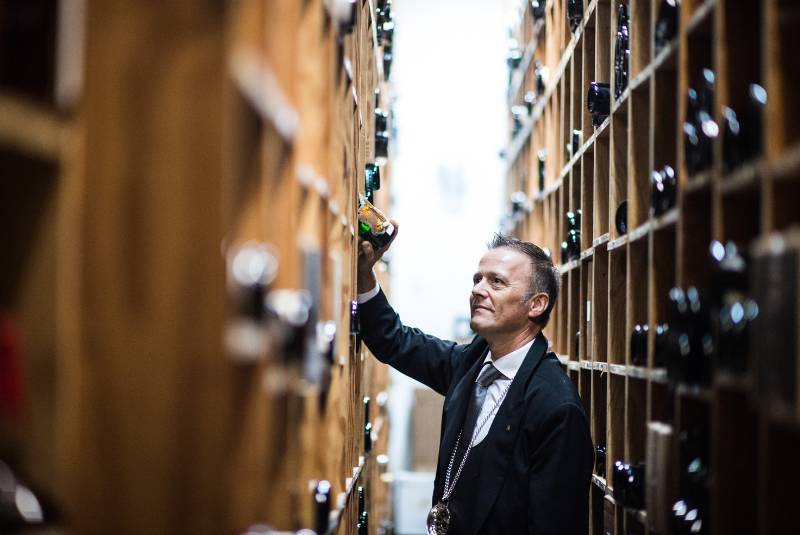
Sohm looking through the Le Bernardin cellar, which has more than 15,000 bottles
How do you approach pairing in those situations?
"Ultimately, I look at the chef. The chef is the conductor, and I work with that. In my case, with Éric Ripert, he sets the tone. Without that, there is no harmony. If you're not aligned with the chef, you're just a consultant and you're not part of the team."
What are the wine questions people are most embarrassed to ask?
"This is a funny one, because it's not what you think. People are not afraid to ask complicated questions. They'll ask about obscure Burgundy differences without hesitation. But they are afraid to ask simple things: How do I open a bottle of champagne? How do I store wine properly? What temperature should it be? These are the most basic questions, and people feel embarrassed asking them. But those are the smartest questions."
Is that why you wrote Wine Simple?
"Most wine books are written from experts to experts. That serves maybe two-three per cent of people. The other 97 per cent are left out and I wanted to change that. So we created this fictional reader, Josephine, someone who loves food but feels intimidated by wine. Every time we wrote something, we asked: 'would she understand this?' Because if she doesn't, it doesn't matter how correct it is."
If Josephine wanted to try three iconic wines, where should she start?
"A champagne, something like Cristal. A Bordeaux, perhaps Château Latour or Les Forts de Latour. And for white, a riesling. Egon Müller Kabinett, ideally with some age. That gives you a great spectrum."
Which wine regions are over-delivering right now?
"This is a difficult question because the world has never been more exciting. But a few examples:
"In Patagonia, Bodega Chacra is producing incredible pinot noir and chardonnay. That's not what people expect from Argentina.
"In California, look at Santa Rita Hills and Santa Barbara County. Fantastic quality, great value.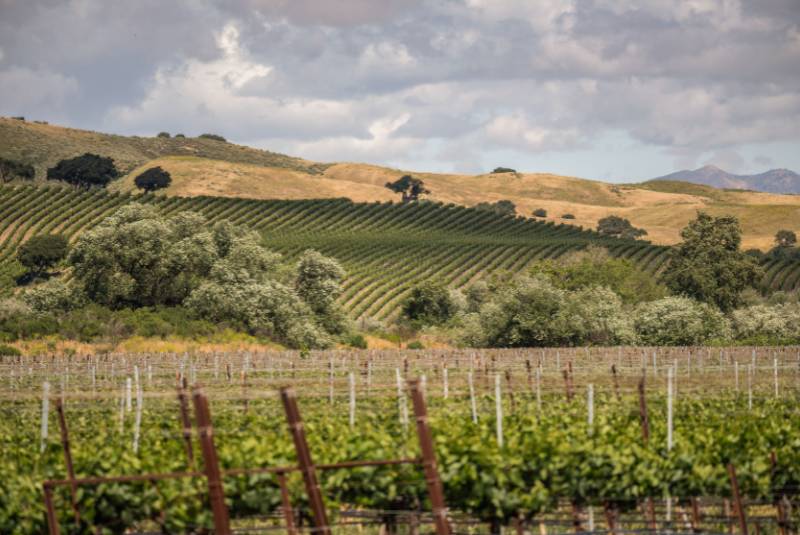
Vineyards in Santa Barbara County
"Spain is on fire right now. Go beyond Rioja. Look at Ribeira Sacra Galicia and the vino de pasto wines from Andalucía. And unfortified sherries from producers like Ramiro Ibáñez and Willy Pérez who are doing incredible work.
"And then Austria and Germany, look at the chardonnay and pinot they are producing now, not just riesling."
How did it feel to be named the winner of North America's Best Sommelier Award 2026, sponsored by Vik Wines, as part of North America's 50 Best Restaurants?
"I feel very blessed. But what really struck me was something my father said. He pointed out that I've been doing this consistently for more than 20 years. That's an entire career. And that's what matters, the consistency. Because we're human. Some days are better than others. The challenge is to switch that on every day, to give the same level. And at the end of the day: stay grounded, stay grateful. Don't forget where you came from."
What did you drink to celebrate your award?
"We actually had a white Burgundy. It was from Auxey-Duresses, a bit more understated, but I love the producer and I love the vineyard. It was a 2011, and the wine was insanely good. Still so fresh, very elegant, not overly rich, with these honeysuckle notes and almost a saline touch."
Discover the full list of North America's 50 Best Restaurants 2026, sponsored by S.Pellegrino & Acqua Panna, and other special award winners.