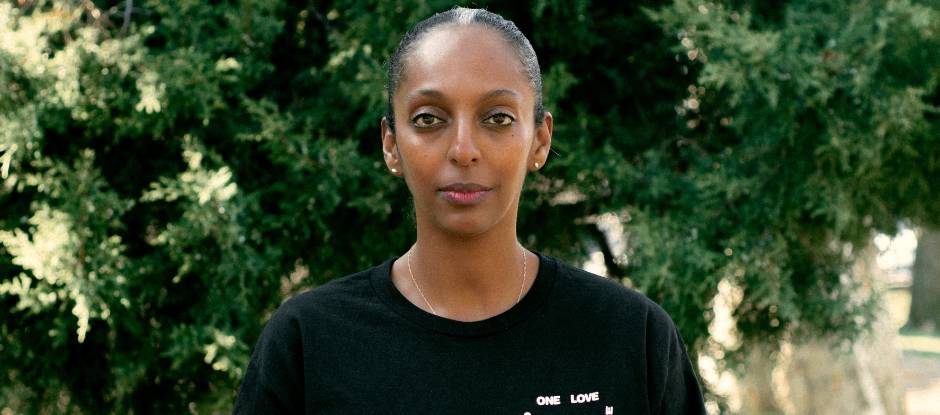
Asmeret Berhe-Lumax has always believed in the power of food. Five years after setting up a network of fridges to feed and educate communities during the pandemic, she has won the Champions of Change Award for North America's 50 Best Restaurants 2025.
"I grew up in a home where you solved issues over food," says Asmeret Berhe-Lumax, whose family moved to Sweden from war-torn Eritrea when she was a baby. "You welcomed guests with food. That's how we gathered as a family – over food. There's so much power in it."
Growing up as an immigrant in Stockholm, she quickly realised education was "the greatest equaliser". But it wasn't until she moved to New York and started her own family that she realised how difficult it was for people to seize opportunities if they didn't have access to nutritious food – because "food is the foundation of our health".
That's why, when the Covid-19 pandemic hit in 2020, she knew food was the solution to a crisis. Realising families were going hungry while farmers were destroying produce they couldn't deliver, Berhe-Lumax had the idea to set up One Love Community Fridge (OLCF). With her two teenage daughters, she installed the first fridge in Brooklyn, stocking it with fresh eggs and vegetables so that those in need could cook for their families. Rather than setting up a soup kitchen, she wanted to provide the tools – and therefore the dignity – for people to feed themselves.
"We're not just providing a meal; we're creating opportunities for people to build healthy habits," says Berhe-Lumax, who also educates communities on the importance of nutrition and teaches them to cook. "That, for me, is how you really implement change."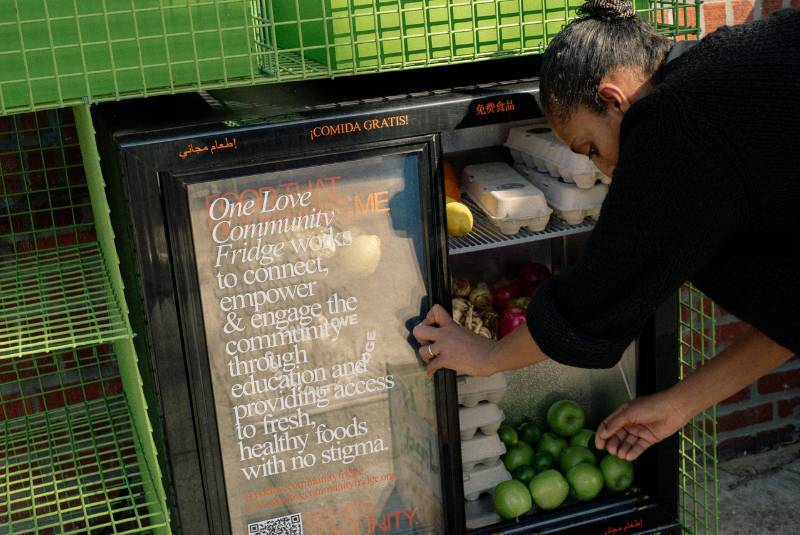
OLCF has seen impressive growth since it started in 2020
Dignity, respect and health
OLCF now has 40 refrigerators in New York City, 30 of which were set up by partners and are now stocked and managed by OLCF. It has recently installed a fridge in Seattle, and is expanding to Los Angeles, Baltimore and Atlanta. Each fridge is owned by its community, with volunteers responsible for cleaning and stocking it with fresh ingredients donated by supermarkets, companies, restaurants and individuals. Electricity is provided by a local 'host', such as a coffee shop or temple.
From 2020 to the end of 2025, the non-profit will have redirected around 5 million kg (11 million lbs) of food that would otherwise go to waste. But its impact goes way beyond feeding the hungry – it's about fostering dignity and removing stigma. With a background in fashion, Berhe-Lumax thought carefully about the design of the fridges, which are brightly coloured in yellow, green and blue, with welcoming messages in different languages.
"I've always loved fashion and beauty, and it's not superficial for me, especially growing up as a Black girl in Sweden. It's a way for us to communicate and create identity," she says. "Our community meals are beautifully set up, with colourful food. That changes how people feel about themselves and their ability to contribute to society."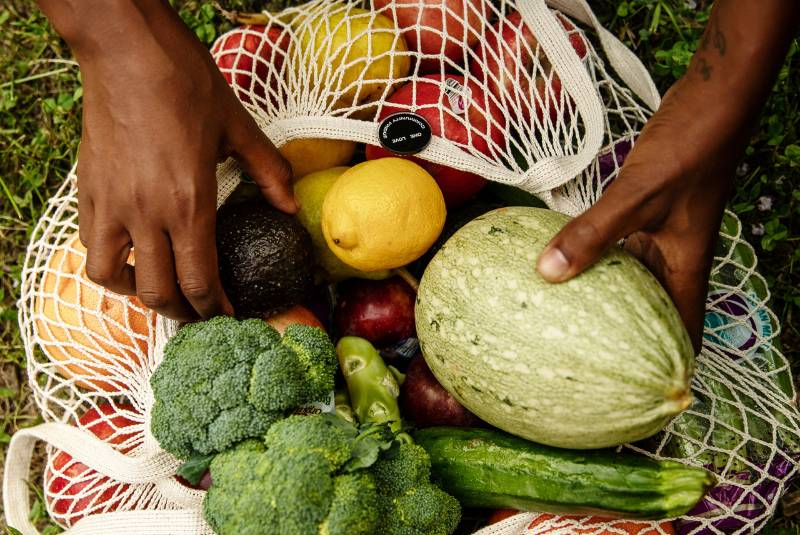
As well as helping people access quality food, the project also reduces food waste
Fostering community
That same immigrant mentality has also fuelled Berhe-Lumax's desire to bring neighbourhoods together. Not long after she was born in the late 1970s, her parents left everything behind in Asmara during the Eritrean War of Independence and were forced to 'start over' in Stockholm. As an East African in Sweden, then as a European in the US, she has always recognised her differences.
"But what I love about New York is I can create this place where I'm African, I'm European and I'm American – you don't have to pick," says Berhe-Lumax, who studied finance before moving into fashion. "That has also been helpful in shaping the vision for One Love – when you're able to show people they have more in common than they have things that separate them, you're able to bring people into one space. And using food – something we all need, that is so powerful to bring people together, across different cultures but also different age groups."
From farm to fridge
OLCF now has four different strands. The first is 'food to fridge', which engages everything from the smallest to the largest businesses to donate food. 'Farm to fridge' harnesses excess produce and creates consistency for recipients too. 'School to fridge' ensures that education is provided alongside free ingredients, with projects around food insecurity and one school setting up its own fridge. Finally, 'chef to fridge' engages local restaurants to help teach communities how to cook.
The four strands fuse together in initiatives like a Community Support Agricultural (CSA) programme, which OLCF ran for the first time in 2024. Thanks to a grant, Berhe-Lumax worked with a local farm to set up a subsidised bag of produce that people could buy for $20. For every bag sold, OLCF donated five bags. Local chefs created recipes that were taught to community members, and fresh meals were taken to the fridges. Berhe-Lumax hopes to raise funds to repeat the project.
She also gives talks in schools, encouraging teachers to continue to spread the message and empowering students to redirect excess food.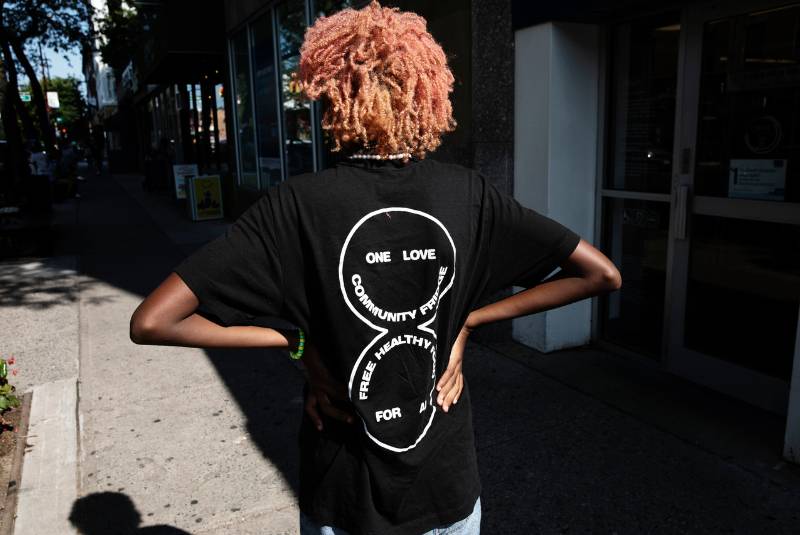
Berhe-Lumax has a background in fashion and her eye for design is clear across the project
Going local
OLCF now has 700 volunteers and welcomes more. Berhe-Lumax says the key to the non-profit's longevity and sustainability will be in empowering locals to take full charge of their fridge.
"The pandemic really opened our eyes to how important it is to empower and engage people on a local level," she says. "Hunger, food insecurity and malnutrition are huge, global problems. How can we break down these huge problems into smaller steps that can be taken on an individual level, at small business level and on a macro level?"
With that in mind, she is engaging chefs, companies and local businesses to support their communities by donating regular food or simply lending an hour of their time to help stock a fridge. In New York, OLCF is expanding borough by borough, while in the US it is growing one city at a time, with six new fridges planned for the rest of 2025. "There's not a single county in the US that doesn't have food insecurity," she says.
Just as a fridge in one part of New York City might be stocked with a greater proportion of Asian or Latin American ingredients, depending on its population, the installations will all have different set-ups, depending on each community's eating and shopping habits. "We're building a toolkit that can be adjusted based on different urban settings," she says.
Helping to fight food insecurity and hunger is an enormous challenge, but Berhe-Lumax is clear she won't be tackling it on her own.
"[OLCF] is incredibly powerful, and I can say that because it's not just about me, it's about collective action," she says. "We have volunteers that are part of this every day, and others who do 15 minutes a week or once a month. Small, consistent actions lead to big, meaningful changes."
Watch the video all about Asmeret Berhe-Lumax and OLCF:
North America's 50 Best Restaurants 2025, sponsored by S.Pellegrino & Acqua Panna, will be announced in Las Vegas on Thursday 25 September. Find out more about the inaugural event, including how the voting works.