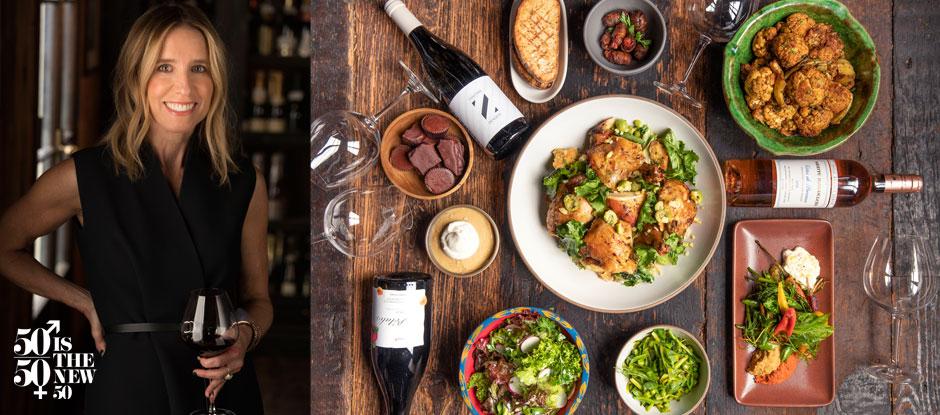
Restaurateur and wine director Caroline Styne has been at the forefront of restaurant trends for over 20 years. With thousands of hospitality venues at risk of closing and the livelihoods of over 10 million workers at stake, Styne felt compelled to join the leadership of the Independent Restaurant Coalition. Here, she takes you inside the battle to save restaurants in the US, shares her predictions for the future and calls on the public to support their local restaurants and bars today
Caroline Styne is the co-founder of The Lucques Group in Los Angeles. With chef and business partner Suzanne Goin, she launched Lucques – a 50 Best Discovery restaurant – in 1998, pioneering the concept of a market-led menu in LA. In 2002, the pair opened A.O.C., an iconic spot at the forefront of the small-plate movement; then, in 2009, they added Tavern Restaurant, bringing together a dining room, craft cocktail bar and artisanal wines. Styne and Goin manage the casual eatery, bakery and retail market concept The Larder and took over the culinary and wine operations of Hollywood Bowl in 2016.
The first LA lockdown: “We got a notice around 15th March that we were going to have to close down for two weeks, but we recognised that it was probably going to be longer. Suzanne and I said: ‘OK, we have to do something’. We had to lay off all our employees – we couldn't keep them and not be operating for over two weeks. We went into emergency mode, as you can't just close the doors, you have product in the restaurant that's going to go bad, you have people you have to deal with, you have bills to pay.”
The second LA lockdown: “We closed all the restaurants for about six weeks and I got PPP loans [Payment Protection Programme, an initiative by the US government to help employers pay their workers] for the businesses. We did a bit of take-out to keep our staff employed, although it was nowhere near enough to sustain us. The minute LA allowed anybody to open, we started doing dining service. Then, we got shut down again for indoor dining. So we built a whole dining space in our parking lot. Now we're operating out of just one restaurant doing outdoor dining and we're still at about 50% or 60% of our capacity.”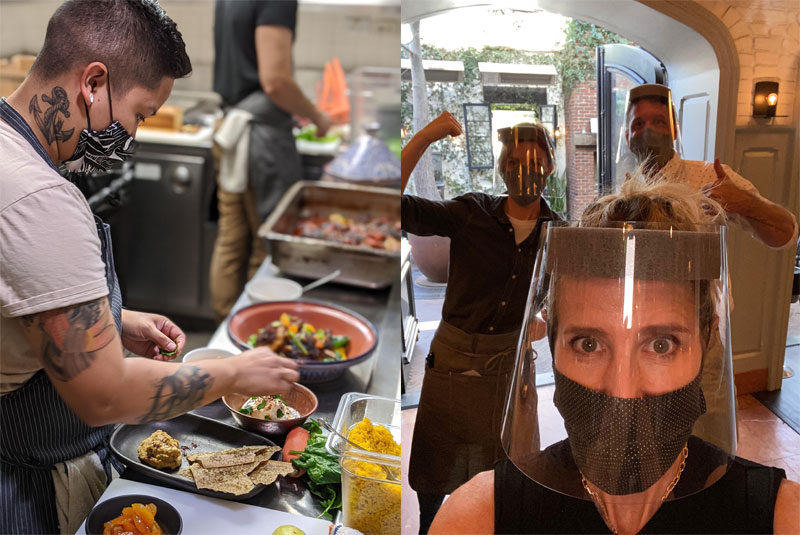
Sous Chef Tiffany dela Pena cooking at A.O.C. during the lockdown (image: Suzanne Lanza); Caroline Styne poses with a visor (image: Caroline Styne)
Closing her first restaurant: “That was a very depressing decision to make, because Lucques is our first baby. That place meant so much to us. But the restaurant was over 20 years old, and before Covid, LA was having a restaurant renaissance with chefs from all over the country opening and it was really hard to compete. Although we still had a vibrant following, it wasn't enough to maintain it in a profitable manner. We had celebrations and collaborations planned for our 20th anniversary. The last service was going to be in May. But when Covid hit, we realised we had to shut down – just pull the plug and get out while we could. It's been incredibly depressing, we've cried a lot of tears over it, and there's definitely a hole in our in our restaurant world because of it.”
Joining the Independent Restaurant Coalition: “A group of restaurateur friends of mine banded together early, and I got pulled into it around April. Now, there are over 100 restaurateurs who are part of the Coalition and we represent everything from the tiny mom-and-pop single operator, to small bars and star chefs like José Andres and Thomas Keller. It's been an amazing experience. We've been reaching out to legislators and trying to make changes to some of the legislation that's coming down. When the government put the PPP loan programme together, originally it was supposed to be for eight weeks, and we were able to and get them to extend it to 24 weeks. That was amazing. Every time we open a restaurant, I always tell my staff: ‘you have to put yourself aside. It's not about ego, it's about the restaurant’. It's been that way with the IRC, too. It's not about my individual restaurant, it's about the greater good of the restaurant industry.”
The Restaurants Act: “Now we’re working on passing the Restaurants Act. It was introduced by a congressman from Oregon who was in close contact with a couple of restaurateurs. Along with a republican senator from Mississippi, they were able to introduce legislation both sides of Congress to save restaurants. It would be a $120bn Restaurant Revitalization Fund that would replace lost revenues from 2019 to 2020 to help restaurants pay their bills, their employees, their rents and operating costs. We are fighting every day to get this legislation passed. Right now, we have 143 Congress people have co-signed the bill and about 24 senators, which is huge. It would be a lifeline and would also save the millions of jobs that restaurants provide. It's do or die right now.”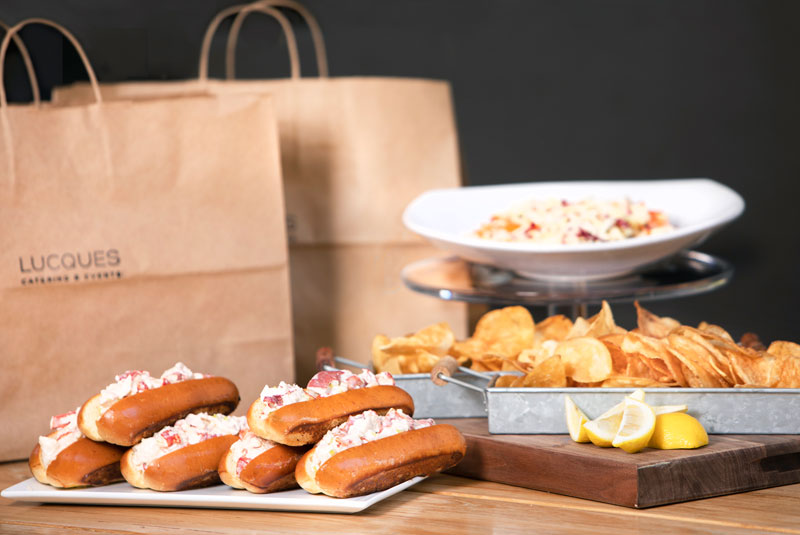
Father's Day lobster rolls with house-made potato chips and coleslaw by Lucques Catering (image: Anne Fishbein)
The issue with the restaurant model: “The financial setup of the restaurant is out of whack: 95 cents in the dollar that come into a restaurant goes right back out to its suppliers, labour, rent… If a restaurant profits 5% each year, it's doing well. This idea that we could get by with reduced capacities [due to social distancing] is just not a real concept. Our industry not only has been hit incredibly hard by this pandemic, but the recovery from it is going to take so much longer because of this financial setup.”
Supporting local restaurants: “I don't think people understand how much of the local economy restaurants support and how it all trickles down. With the proper protocols in place, restaurants can be very safe. So it’s about making that conscious thought to say: ‘I'm going to support that restaurant down the street that I love to go to’ and recognising that it could be gone. Even having one dinner a week can make a huge difference.”
Embracing take away: “We've been embracing to-go, take away and delivery as much as humanly possible. The key is trying to convey that sense of hospitality, the quality of the food and the spirit of the restaurant in a box. It's a challenge. We're continually trying to improve. All restaurateurs – if they haven't already – have to embrace this and really work on developing that arm of their business, because that's what is going to hopefully create a percentage of the revenue for the next few months.”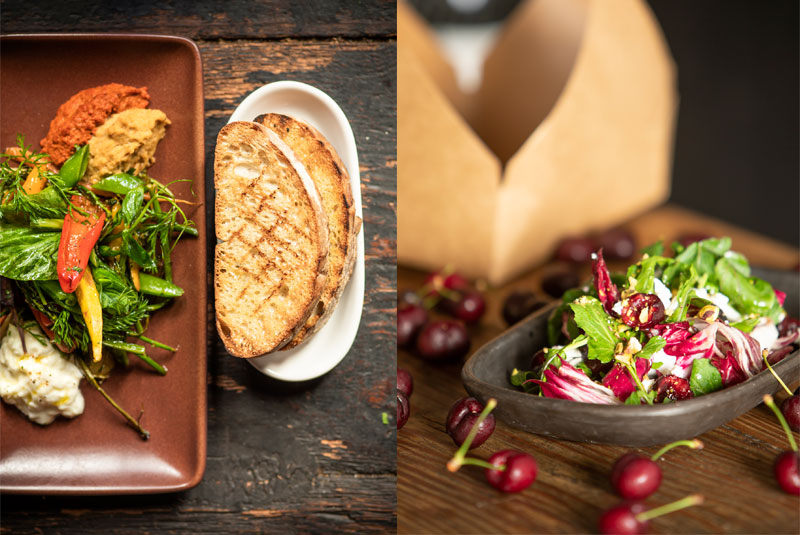
A.O.C. small plates (image: Anne Fishbein)
The resilience of the restaurant community: “Restaurant people are always scrappy, and we’re pretty resilient. We’re always trying new things and figuring stuff out. It’s about being flexible and being willing to change things. I hate change. It freaks me out, but I've had to embrace it and make decisions more quickly than I would have in the past. Every service job is different now. It’s about being willing to accept it, go with it and not being stuck in the old ways.”
Lessons learnt from the lockdowns: “Lesson number one is that you cannot wait, you need to act now. Everything has to be done with a sense of urgency, you cannot delay. The thought of having to put somebody out of a job is horrible. But you recognise that the faster you move, the faster you will recover and the faster you'll get your employees back. I’m so over the word ‘pivot’, but it's true, you just have to be able to shift.”
The sense of community: “In our industry, there is a sense of family, even with people you don't work with. That sense of solidarity, of banding together and helping each other out is very much ingrained in the restaurant community. We're the ones who get called to help when there's a disaster, we raise funds for cancer, we feed people when they're in trouble. That sense is kind of innate and we know that if we work together, we're better. We're stronger as a group.”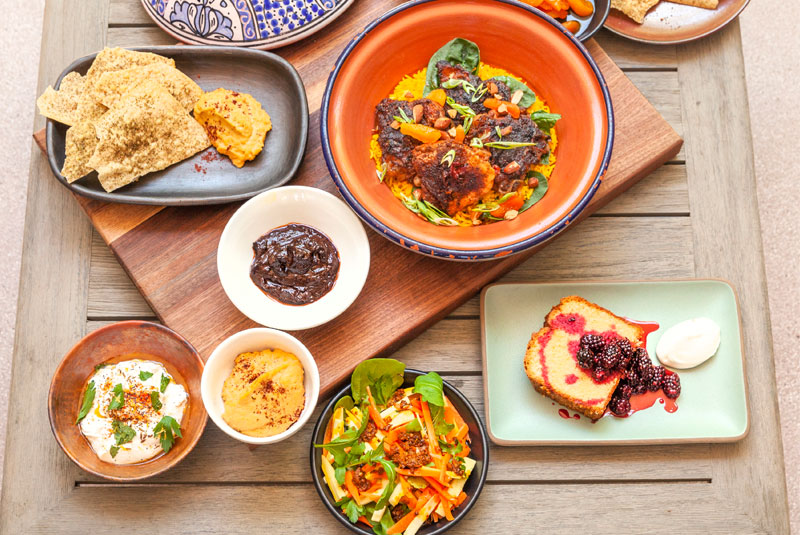
Moroccan feast by Lucques Catering (image: Anne Fishbein)
The next trend in the restaurant world: “I wonder if the virtual concept and the virtual restaurant will last beyond this moment. A lot of restaurants and fundraisers are gathering virtually. Not only does this work in a pandemic, but it could really work for an event that is national versus local, and companies could even increase their fundraising abilities. I know some people who have organised chef-led, virtual fundraising dinners and normally, they would have been done in LA with 70 guests attending. Instead, they are being done throughout the county with 500 people. The virtual concept is kind of the new pop-up.”
What to look out for in the next months: “For a lot of restaurateurs, we constantly have to keep adding more to stay relevant – you open a new restaurant and it boosts the others. But with more, I wonder: are you really doing better, qualitatively or even financially? Right now, I'm tending towards less is more, focusing on doing well instead of doing a lot of different things. I think the future will be about focusing on what your speciality is instead of trying to be jack of all trades, honing in on what you do differently and better than everybody, rather than everyone just doing the same thing.”
The future of restaurants: “Everything is showing that 85% of restaurants could potentially not make it through this. You have to look at who's going to be able to afford to open restaurants once this is over. If we're not careful, it's all going to be large chain, quick-service restaurants. If you care about restaurants, the culture and the sense of community that they bring; if you care about all those memories you made there and all those interactions you had; if you care about that sense of home you get from certain restaurants, from your local pizza place to your local sushi place... If you ever want to be able to experience that again, you need to support restaurants now. If you can do anything to help support the business you love right now, you're way more likely to see it survive.”
Header images: Caroline Styne (image: Greg Gorman) and the classic A.O.C. dinner for four (image: Anne Fishbein)
‘50/50 is the new 50’ is a content series created by 50 Best and supported by S.Pellegrino with the shared aim of promoting equality, inclusivity and balance in the hospitality sector and beyond.
Visit the Restaurant Recovery Hub and the Bar Recovery Hub to explore useful resources and read the stories of chefs and bartenders around the world. Follow 50 Best on Instagram, Facebook, Twitter and YouTube for the latest news and videos.