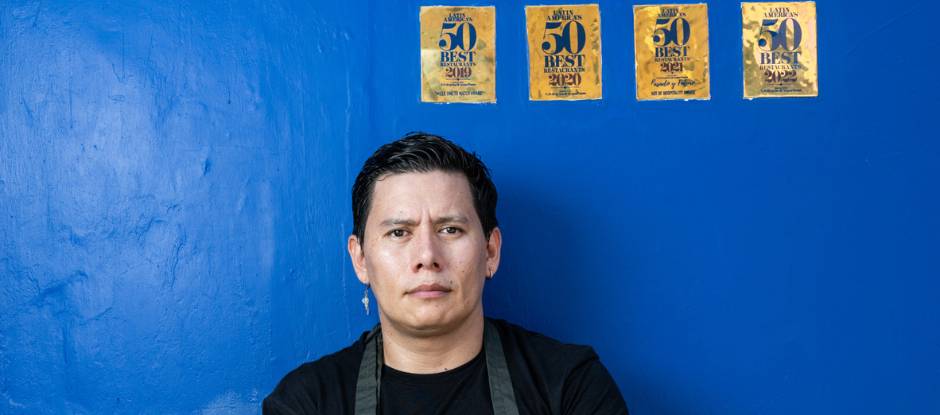
Born in central Colombia, Jaime Rodríguez found a home – and a whole new approach to cooking – in the country's Caribbean region. Now, his restaurant Celele has been named the 2025 winner of the Sustainable Restaurant Award, as part of The World's 50 Best Restaurants.
The word 'Caribe' may be tattooed on his left arm, but Jaime Rodríguez, chef and owner of Celele in Cartagena, was born not in the Caribbean, but in Boyacá, in the mountainous central region of Colombia.
There, his childhood revolved around food: his mother running a bakery and events space and his father growing watermelon and yuca. After receiving a qualification in cooking, he honed his skills working with chef Luis Forero from La Fontana in Bogotá.
Later, he joined famed Colombian chef Jorge Rausch's team, first in Panama and then in Cartagena, which marked his arrival in Colombia's Caribbean region. This proved to be a fateful moment for the young chef. "I was like a kid in a candy store," Rodríguez remembers. "It's an incredibly diverse region in terms of climate, landscape and ingredients, and there was this real element of surprise every time I came across something new."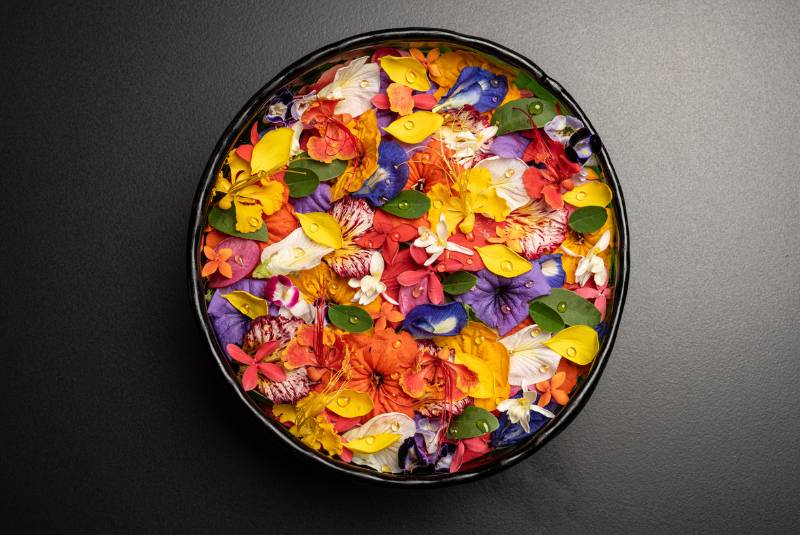
Celele's colourful dishes make use of local flowers
Today, this passion for his adopted home is not only inked on his skin – it goes right to his core. In 2025, Celele is No.48 on The World's 50 Best Restaurants ranking and is the winner of the Sustainable Restaurant Award, with the judges praising its commitment to native Caribbean ingredients and partnerships with local communities, as well as its ethical sourcing.
Still in his 30s, Rodríguez is already something of a role model for rising Colombian chefs. "His success is like a beacon for the new generation of Colombian chefs, like me," shares Angélica Ortiz, winner of the 50 Best Restaurants Scholarship 2025, in association with Parmigiano Reggiano. "It shows us that no matter your background, you can build your own restaurant, not only as a personal achievement, but as a tool to help change our country for the better."
Below, Rodríguez discusses Celele's philosophy, Proyecto Caribe Lab (the research project which preceded the restaurant), his 'seed to shell' concept, and why tasting menus aren't his thing.
How would you describe the philosophy of Celele?
"At Celele, our concept is contemporary cuisine inspired by the gastronomic culture and biodiversity of the Caribbean area of Colombia. Sometimes people reduce sustainability to things like having solar panels on the roof: while these sorts of measures are important, our approach to sustainability is based more on trying to protect the fragile ecosystem of the tropical dry forest and have real impact there."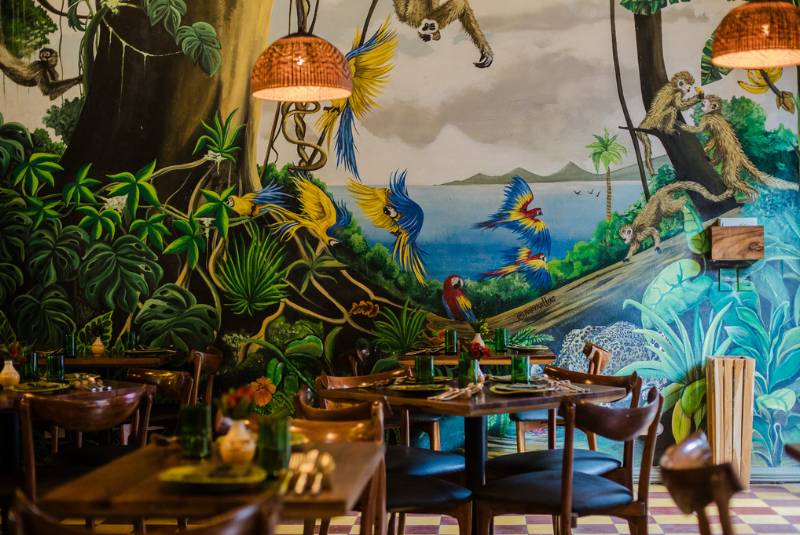
The team worked with Caribbean artists to create vibrant murals in the dining room
Tell us about Proyecto Caribe Lab.
"When I was working at Hotel El Gobernador in Cartagena [with celebrated Colombian chef Jorge Rausch], I started cooking traditional Caribbean food in the restaurant's patio space. There, I was trying to understand the flavours and processes and add some technical knowledge too. It was then I realised I wanted to open a restaurant focusing on Caribbean food and that I would have to do my research first, and give up my job to really commit to it.
"To support myself financially, I organised secret dinners in Cartagena, serving a tasting menu to strangers who booked slots through social media, and some consultancy work. With the money, I was able to take trips to Barranquilla or Santa Marta, where I met local producers, cooks, marine biologists and historians, and shared what I learned on Instagram. It was all very organic.
"We had a very low budget but a huge desire to learn. Our platform started to grow, which naturally meant people got more excited about our dinners, and I was invited to give talks at universities and do pop-ups at restaurants in Bogotá. This period of research, travelling and cooking lasted two and a half years, and then we opened Celele."
Can you explain your 'seed to shell' philosophy?
"For me, every part of a product can serve some kind of purpose. We use peels, shells and skins to make dyes, which helps reduce waste. We also don't serve fish fillets, as there's so much waste. On the Caribbean coast of Colombia, we have a huge variety of fish, but there isn't a great abundance of each species, so we make dishes like our salpicón de pescado, which uses far more of the fish."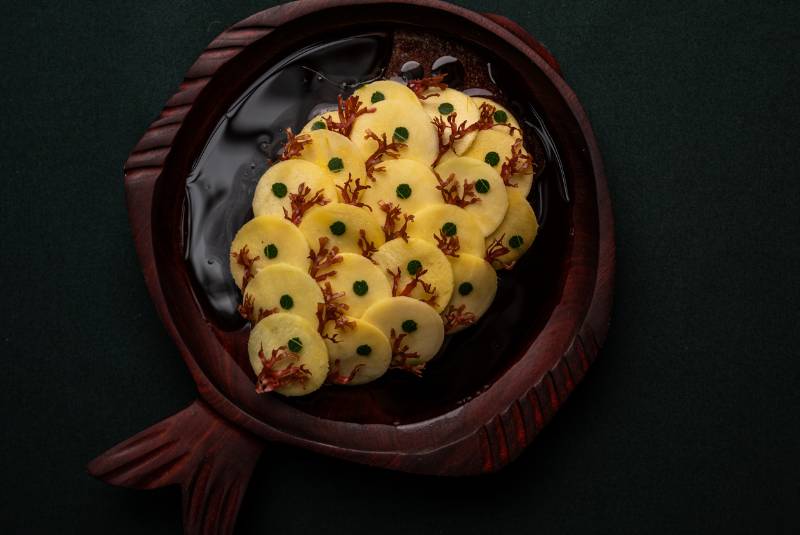
Even some of Celele's crockery was designed by Caribbean artisans
Are there any ingredients you're particularly inspired by?
"I'd have to say orejero, a fruit that comes from huge trees found in Colombia's tropical dry forest. It's ear-shaped [hence the name – 'oreja' meaning 'ear' in Spanish] and its seeds are incredibly rich in protein. We use the whole versatile fruit: we've used it to create a vegan demi-glace in an aubergine dish and an ice cream with a subtle cacao flavour.
"Traditionally, this fruit wasn't highly prized, so we worked with local communities to show them that the fruit can be valuable and instead of cutting down the trees for wood and getting a single payment, they could continue to earn year after year.
"We've also had chefs from all over the Caribbean visit us and realise they're surrounded by these trees too, so we've started a bit of a trend throughout Central America."
Which chefs inspire you?
"I think Leonor Espinosa [chef-owner of Bogotá's Leo, No.76 on The World's 50 Best Restaurants 2025] is one of the most powerful chefs in the country. It's still not easy being a female chef and I really admire everything she and her daughter Laura [winner of Latin America's Best Sommelier 2024 Award] have achieved.
"Outside of Colombia, I've really been inspired by Virgilio Martinez's work in Peru at Central , The World's Best Restaurant 2023, and Rodolfo Guzmán's work in Chile at Borago. I was always a big fan of René Redzepi and had all his books, and when he did Noma Mexico in Tulum, which is also a Caribbean region, I was fascinated to see how he used local flowers, herbs and seaweed. His work has had a big impact on me."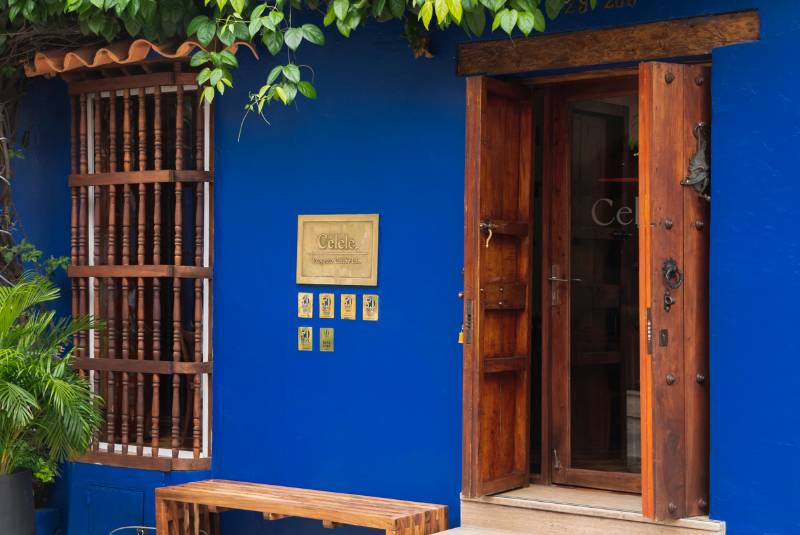
The restaurant is located in the colourful and historic neighbourhood of Getsemani
What did you decide to stop serving tasting menus at Celele?
"A tasting menu can be prohibitively expensive for people, and I wanted diners from all over Colombia as well as foreign tourists to be able to afford to eat at Celele. We wanted to take the lessons we'd learned from places like Central, Leo and Boragó, while finding a way to make research-led cooking more democratic. Doing a la carte also helps us buy these biodiverse products in greater quantities, meaning we have a bigger impact on the people we're buying from."
What makes the dynamic special between you and your producers?
"We're in constant contact with our producers, trying to ensure we have a mutually beneficial relationship. We work closely with an association called Asocoman in Montes de María, which is made up of more than 40 families, and with producers in la Guajira, another Caribbean area. I think the profits the restaurant has generated for these communities has helped them to keep growing. They feel respected by us.
"We also work with a project called Granitos de Paz, which turns unused outdoor space in working class areas of Cartagena into productive gardens. When I first met them 10 years ago, they were growing things like basil, coriander and various types of lettuce, but we suggested they start producing local ingredients like moringa and verdolaga, both of which have lots of nutritional benefits. They've really grown over the last 10 years and become an even more interesting project." 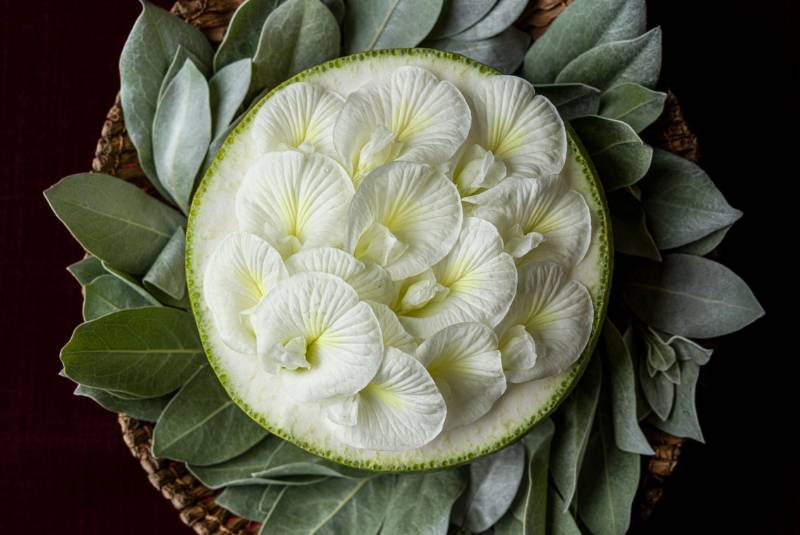
Celele's plating is consistently creative yet refined
You've been praised for how you treat your team members. How do you promote a sense of well-being among your staff?
"I think sustainability and your team's wellness go hand in hand. We really benefited from the increased interest in Celele, as more reservations meant we could hire more people and our staff could spend more time with loved ones.
"We have also issued loans to long-serving staff members who want to improve their living conditions and quality of life. We want our team members to see that while we're developing as owners and partners, they too are progressing."
What plans do you have for Celele's future?
"When people see that a restaurant is successful, they assume the next step is expansion. We'd love to do some remodelling and those kinds of things, but for me, it's much more important to keep working with and creating projects that are going to leave a real mark. One of my dream projects is to create a mill in the Montes de María region, where we make flour from different kinds of seeds. I'd love to see those kinds of ingredients, which people aren't used to, being sold in supermarkets."
Discover the full list of The World's 50 Best Restaurants 2025, sponsored by S.Pellegrino & Acqua Panna