The culinary educator and chef behind Onjium shares why good cooking should probe deeper than perfect technique.
For Cho Eun-hee, winning the Asia's Best Female Chef Award 2026 is about more than being celebrated as a successful woman in a male-dominated industry. To her, the win is tantamount to historical restoration.
Western fine dining is built on the military-style brigade system, developed by French chef Georges-Auguste Escoffier in the late 19th century. Under this system, male chefs established today's Western institutionalised restaurant environment.
However, the high culinary arts of Asia and specifically Korea survived the turbulent eras of colonisation and war not through commercial restaurants, but through the inner courts of royal palaces, the kitchens of noble families and Buddhist temples. For centuries, the true architects and guardians of Asia's haute cuisine were women.
In this historical context, winning the award is not just an acknowledgment of Chef Cho's individual talent, but a recognition of the unnamed women who have sustained the foundations of Asian food culture.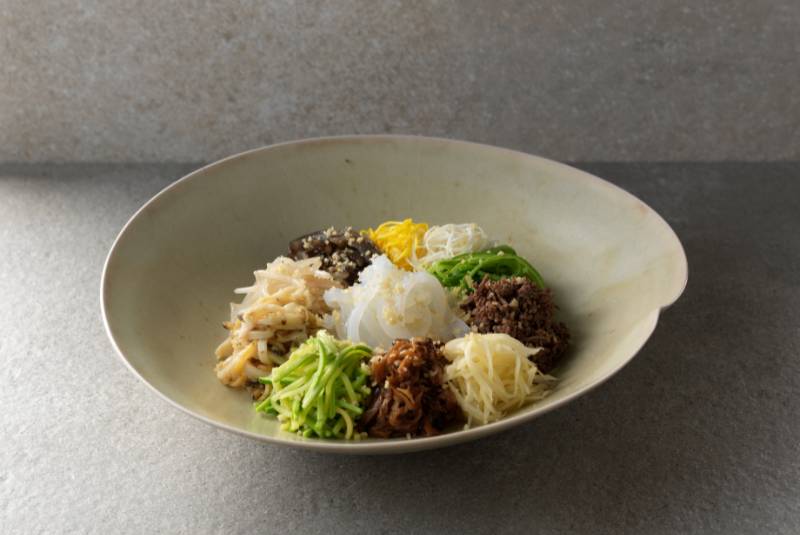
At Onjium, Chef Cho highlights the importance of fermentation in Korean cuisine
Chef Cho's work at Onjium reflects this. Not just a restaurant but a cultural institution, at Onjium she and fellow chef Park Sung-bae reimagine Korean heritage, focusing on contextual modernisation instead of preserving the past in the form of museum relics.
Her career in culinary arts began with academia – she studied at the Institute of Korean Royal Cuisine in Seoul before becoming an education team leader at the same school. She then took on the role of adjunct professor at Seoul's Baewha Woman's University and went on to open Onjium in 2013.
Staff at the restaurant study ancient texts to revive food, clothing and design as part of Onjium's mission to understand Korean culture holistically. And while the rest of the world is pivoting to a new culinary language focusing on fermentation, sustainable sourcing and wellness, this approach has existed in Korean cuisine for centuries and is exemplified by Chef Cho's work.
As someone who came to cooking after a different career path in education, what unique perspective do you bring to the kitchen?
"While this award is given to a single chef, I believe it is, in fact, an acknowledgment of the history of the unnamed women who have safeguarded the foundation of Korean cuisine. The culinary cultures of Korea and Asia developed differently from Europe. The foundations of our cuisine were deeply rooted in royal courts, noble households, temples and homes, always relying on the hands and senses of women. I see my role and Onjium's mission not to preserve the past like taxidermy, but to translate it into today's language. Just as I approached education, I view tradition not as preservation, but as sustainable creation."
If you could introduce Korean food to someone in one sentence, what would you say?
"Korean cuisine is not a culture of overpowering flavours, but a culinary culture that uses time to perfect relationships and balance. Many remember Korean food for its bold or spicy characteristics, but the Korean food I want to showcase lies deeper. It is the culture of accumulating time through fermentation, creating rhythm with the changing seasons, and harmonising different flavours, temperatures and textures on a single table. I want the world to experience an elegance and naturalness that speaks to a profound way of treating time itself." 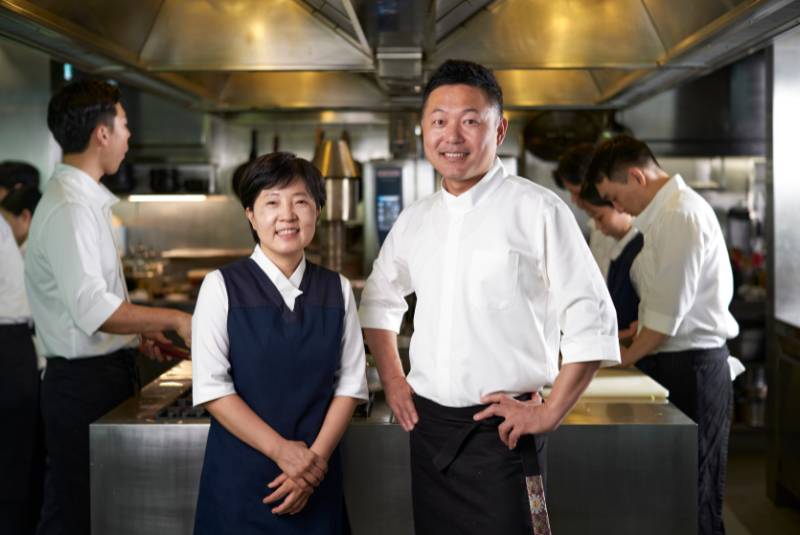
Together with fellow chef Park Sung-bae, Cho is committed to culinary education
Why is Korean food particularly relevant right now?
"Many of the 'future languages' the world is currently seeking have existed in Korean food for a very long time. Our cuisine is centred around fermentation – making essential sauces like soy sauce, doenjang and gochujang – and emphasises balance over excess. The global conversation around wellness and sustainability is ultimately asking: where does food come from, and what does it leave behind? In that sense, Korean food does not follow trends; it showcases a philosophy of life accumulated over centuries."
Traditional Korean cuisine is categorised into royal, noble, temple and regional cuisines. What is the relationship between them?
"Korean food is not a single, linear genealogy; it is a great forest where royal, noble, temple and regional cuisines lean on and support one another. Royal cuisine shows the most refined order; noble cuisine reflects the dignity of daily life; regional cuisine expresses the terroir of the land; and temple cuisine embodies the aesthetics of temperance and practice. You cannot separate one from the others. At Onjium, we read the seasons, ingredients and fermentation through the context of all Korean food, not just royal recipes. Tradition is a structure of relationships, and my role is to bring that structure back to life on today's dining table."
How would you describe Korean royal cuisine?
"It is a living text that shows how Korean food has created balance and order, not a remnant of power. Royal cuisine gathered the best ingredients from across the country and was crafted by highly skilled artisans. While it may look extravagant on the outside, its core is balance and consideration – respecting the seasons, harmonising regional flavours on a single table and observing the physical and mental state of the person eating it. It provides the structure and standards needed to understand the depth of Korean cuisine today."
Onjium's food is often called an 'interpretation' rather than a 'reproduction'. What does modernising tradition mean to you?
"Modernising tradition is not about copying the shapes of the past, but speaking its spirit and order through today's senses. Reproducing old recipes exactly as they were will not connect with modern guests. I value the attitude towards ingredients, balance, temperance, seasonality and the dignity of the dining table over the physical appearance of old dishes. The methods may come from tradition, but the expression must clearly reach the guests of today. What moves people's hearts might sometimes be novelty, but ultimately, it is time-honoured sincerity."
You are also an educator. How do you expand the teaching of cooking to include the understanding of culinary legacy?
"Techniques can be taught, but transmission is the act of handing down an attitude towards the world. I do not view cooking merely as acquiring skills. Learning how to use a knife or season a dish comes with time. But understanding why an ingredient is handled a certain way, why a single meal can comfort a person and why food connects to history requires deep contemplation. That is why at Onjium, our staff study ancient cookbooks together and learn Korean history and culture. We believe your perspective must change before your hands can change the food."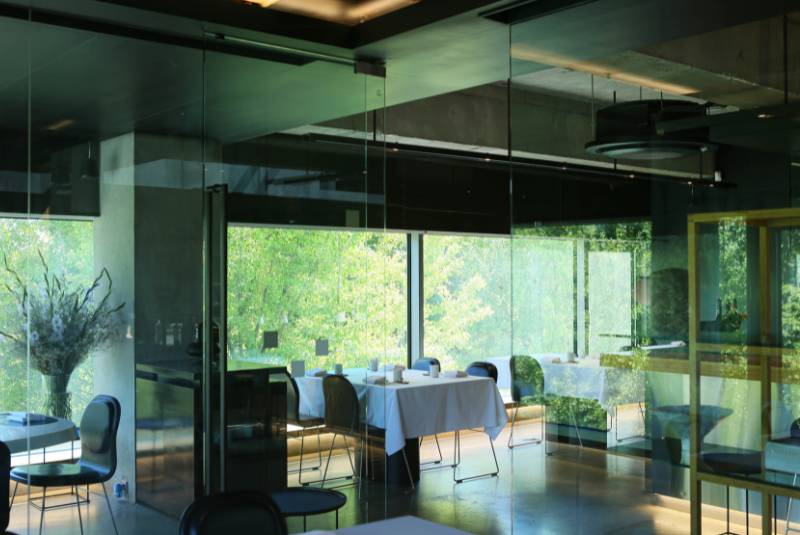
Onjium's refined, light-filled dining room is a space for reflection
Onjium also operates clothing and design studios. Why is it important to take this holistic approach?
"Culture is never completed on a single plate. The cuisine of a nation can only be fully understood when the tableware, garments, space, demeanour, seasonality and even the light and texture are present together. Onjium's philosophy is to weave these elements together building clothes, food and houses. We draw inspiration from the colours and designs of traditional Hanbok and think about how to express them in our food. It is a slower path, but a deeper and more enduring one."
What has your experience as a woman working in a restaurant been like, and what kind of role model do you want to be for the next generation?
"What I want to show the next generation is not simply 'women can do it too', but the truth that a person with profound depth will ultimately endure. I do not want to remain merely a symbol. I want to be remembered as someone who carried the lineage of Korean cuisine. Food is a field that demands long, patient study, not quickly consumed imagery. If my path inspires young chefs to learn longer, dive deeper and feel pride in bearing the weight of our culture, that would be my greatest achievement."
What is the most important thing you want to teach young chefs at Onjium?
"Good food does not come solely from good technique; it begins with a good attitude. Techniques without a grounded attitude will not last. I want young chefs to first cultivate respect for ingredients, consideration for their colleagues and the discipline to manage their own bodies and lives. The mental and physical state of the cook is directly reflected in the food. Only when a chef is healthy, balanced and genuinely loves cooking can their food truly move people."
Cho Eun-hee is the winner of The Best Female Chef Award, as part of Asia's 50 Best Restaurants 2026. Discover the full list and other special award winners.