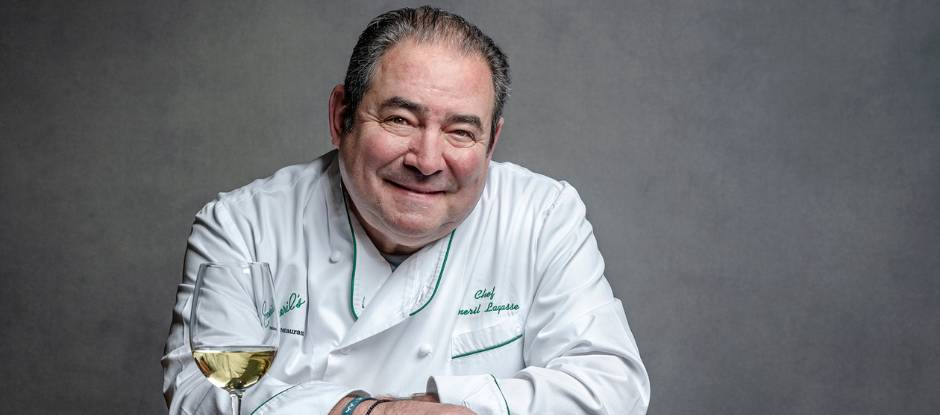
Always kickin' it up a notch, the SevenRooms Icon Award 2026 winner shares what drives him, his thoughts on being a TV cook and what he thinks the future of food looks like.
Known for his 'New New Orleans' style of cooking, Emeril Lagasse is one of the most beloved chefs in the US. A TV star since the early 1990s, he's inspired millions of people to cook.
From working as a pot washer in his hometown of Fall River in Massachusetts at 10 years old to starring in more than 2,000 television episodes, writing close to 20 cookbooks, opening more than 20 restaurants, including his flagship, Emeril's (No.20 on North America's 50 Best Restaurants 2026) and supporting countless young people through the Emeril Lagasse Foundation, he's had a wild ride of a career.
Named the winner of the SevenRooms Icon Award, as part of North America's 50 Best Restaurants 2026, Emeril Lagasse sits down with 50 Best to reflect and look at the future of the industry he loves so much.
Looking back over your career, what do you think people would be most surprised to learn about you?
"I think people would be surprised to know that I turned down a full scholarship to a music school to pay to go to cooking school. I was a percussionist mostly, but I could also play any horn and some strings. I still toy with it sometimes."
When did you realise New Orleans was going to be home?
"I came in 1982 to take over Commander's Palace and I fell in love with New Orleans. I had incredible mentors with Ella and Dickie Brennan and I'm still very close with the family.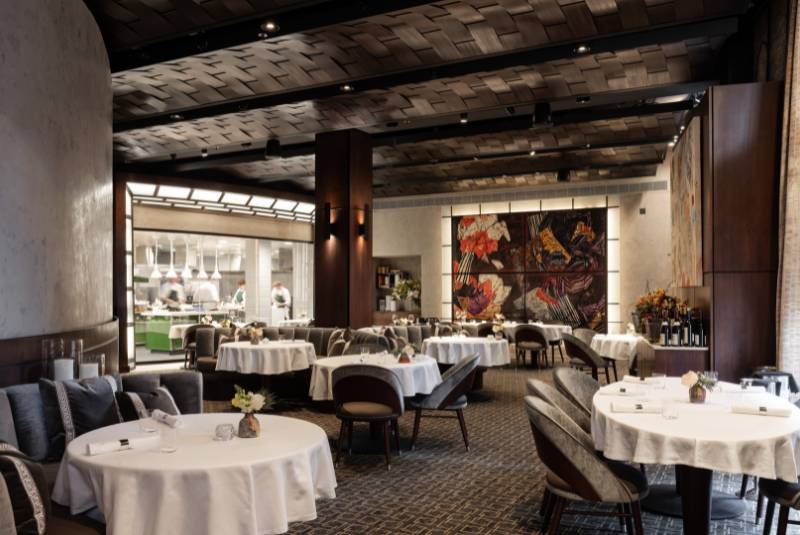
The interior at Emeril's in New Orleans with its theatre-style open kitchen
"Down the line, Ella and I were going to open a restaurant together, but she wanted to be in the French Quarter, and I wanted to pioneer the Warehouse District. She thought I was out of my mind. The area had no street lights and no traffic signals. I was one of the first residents, and I'm still here now, 44 years later.
"When I opened Emeril's, we began doing 'New New Orleans' cooking, which was basically just incorporating ingredients and techniques of other cultures, not only what we had in Louisiana – although I never disrespected that. As that evolved and my customer base grew, the restaurant became part of the fabric of New Orleans."
What is your cooking philosophy?
"I believe the customer is always right. I also don't take things for granted. I wouldn't ask anybody to do anything I wouldn't do, whether it's cleaning the bathroom or deciding what's going on the menu tonight.
"I used to have an ego. My mentor, Ella Brennan, I'll never forget... Once, during a busy Sunday brunch service, I was working the line. I was young and a little risqué at times. My mentor, Ella Brennan, used to carry this yellow pad and she wrote something down. She gave it to me and said, 'when you go home, read this'. When service was done, I went to the back and opened the note. It said, 'the next time you come to work, leave your ego at home'. From that point on, it was a different game."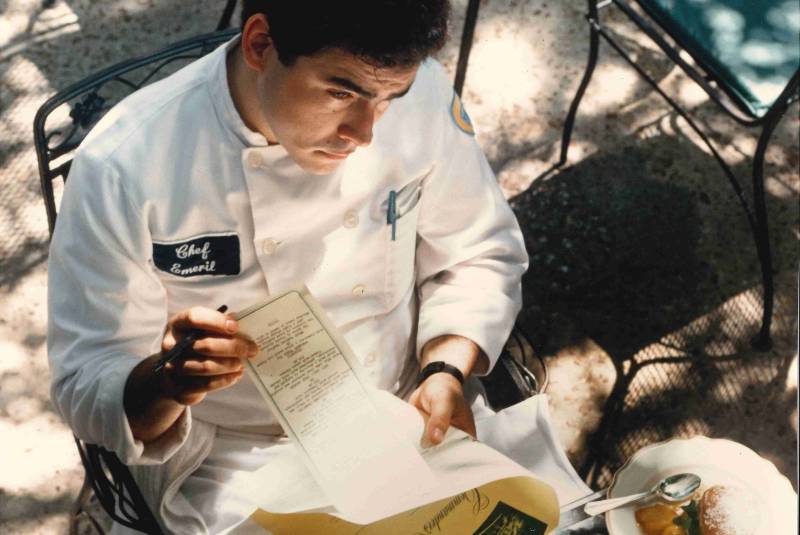
Emeril Lagasse at Commander's Palace, where he was executive chef from 1982 to 1990
How did you originally get into television?
"I was trying to expand our industry. It had nothing to do with money or fame or whatever. I wanted people in America to not be intimidated about cooking or shopping for ingredients."
Your shows always felt very natural. Were they heavily scripted?
"In all the shows I did, more than 2,200, I never had a script. I had an eight-second dialogue at the beginning that was on a teleprompter, but after that, only God knew where we were going."
During the height of your Food Network fame, was there ever pressure to become more of a television personality and less of a restaurateur?
"Who I am has always been my restaurant. There would be nothing without the restaurants. I never woke up saying, 'I'm Mr TV', or equating myself to Julia Child or Jacques Pépin.
"I would wake up and say, 'you know what, I'm Emeril Lagasse and I'm glad and blessed to be breathing and alive.' If I can touch one person today to make them just a little bit more interested in food, maybe I'll sleep better tonight."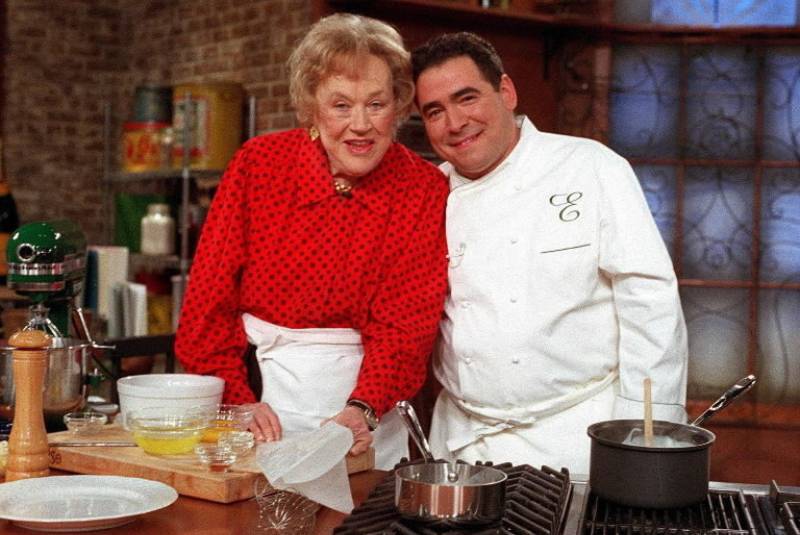
Legendary chef and authorJulia Child with Emeril Lagasse (Image: Jim Cooper AP Photo)
What do you make of food television today?
"Towards the tail end of Emeril Live is when the competitiveness began to start. Of course, I was approached, as early as Gordon Ramsay was, about doing these types of shows. But screaming and yelling at people isn't my personality. What excited me was teaching people how to cook. When it became about competitiveness, it was time for me to get out of the game.
"I took a little break, before shooting Eat the World with Emeril Lagasse for Amazon, which won five Emmys.
Yet Amazon didn't renew it...
"That's right. But I realised, it's not because of me, or the show, or the team. It's because they have so much damn money, they don't know even what they have.
"So then it was time for me to take another step back, breathe, and say, 'okay, just let this all happen'.
"But everything comes back around, whether it's fashion, music or food. When that happens, maybe I'll consider going back to TV and teaching people how to cook."
You've also written children's cookbooks and established the Emeril Lagasse Foundation. How important is it to you to encourage the next generation?
"Well, there's two parts to that. One is the restaurant, mentoring young people that are learning how to cook and who want to work in a Michelin-star restaurant and understand what the restaurant business is all about.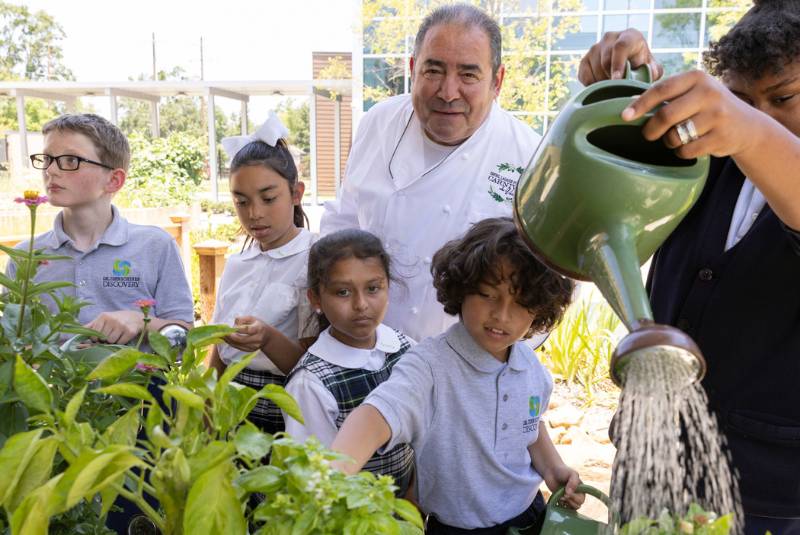
The Kitchen House and Culinary Garden in Orlando, Florida, the Emeril Lagasse Foundation's flagship facility
"The other side is the Foundation. The edible schoolyard I started with a teaching classroom has been very effective. We have nine of them now and five on the drawing board, all over America.
"So that is really rewarding to me: mentoring young people and teaching them about what's coming out of the soil and how to treat and respect ingredients."
Speaking of the next generation, have you steered EJ towards continuing the family legacy?
"I don't ever put any pressure on EJ. When he told me he wanted to be a chef, we were at Café Boulud in New York. He was maybe 11. The chef, Gavin Kaysen, blew us all away. "That night he said, 'I want to be a chef.' I was like, 'oh, boy'.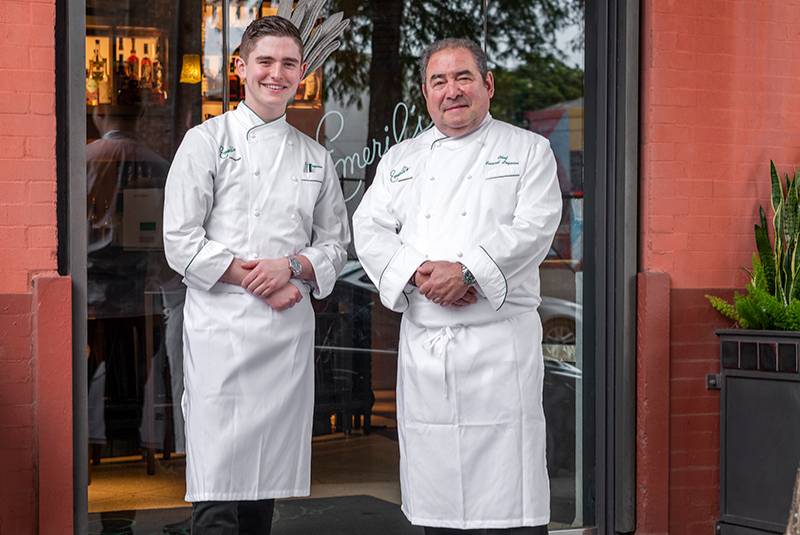
EJ Lagasse, chef and co-owner of Emeril's, with Emeril Lagasse
"Now at Emeril's, we're waking up every day and trying to be a better two Michelin star restaurant than we were yesterday. We're not dreaming about three stars. We just wake up and try to be the best two-star restaurant that we can be."
What's something that's key to the success of Emeril's?
"The key to having a great restaurant is having great ingredients and treating them with respect. Simplicity goes a long way.
"I'm very proud of the farm cooperative I started back in the mid-80s that EJ has helped grow even more. We have some great producers working from the land, and sea.
What does the future of food look like to you – in New Orleans and beyond?
"I'll start with New Orleans. There are some hard times and some good times. There's not as much business as there was, so it's harder to get the customer through the door. You have to be better than you were yesterday.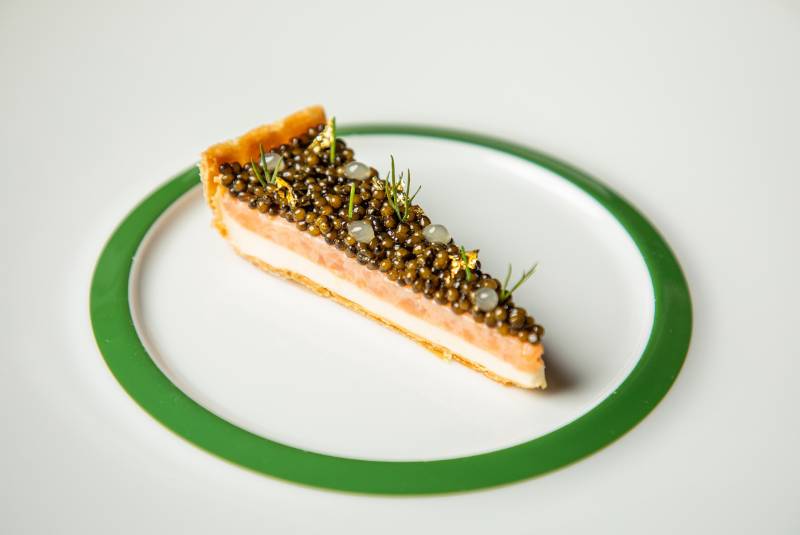
The iconic smoked salmon cheesecake at Emeril's
"But New Orleanians are allowing other cultures and cuisines into the city. It used to be very regimented. You were either Creole, you were Cajun, and there wasn't really anything in between. Maybe a little bit of Italian, but that was pretty much it.
"As far as North America goes, this farm-to-table, seed-to-table approach is just getting stronger. We're getting a lot more disciplined about taking care of ingredients, the land and people."
There has also been a lot of discussion about the future of fine dining...
"There was a point maybe around 10 years ago that people were saying, 'what's happening to fine dining? I think we're losing fine dining.' I disagree. I think people are embracing fine dining when they want that experience.
"When they want a more casual experience and order a good burger or a piece of fish, that's fine and dandy.
"But it doesn't matter if you're serving a po' boy or fried chicken. As long as the quality is there and the product is being respected, that means a lot to me."
Emeril Lagasse is the winner of the SevenRooms Icon Award, as part of North America's 50 Best Restaurants 2026. Discover the full 1-50 list of restaurants and other special award winners.