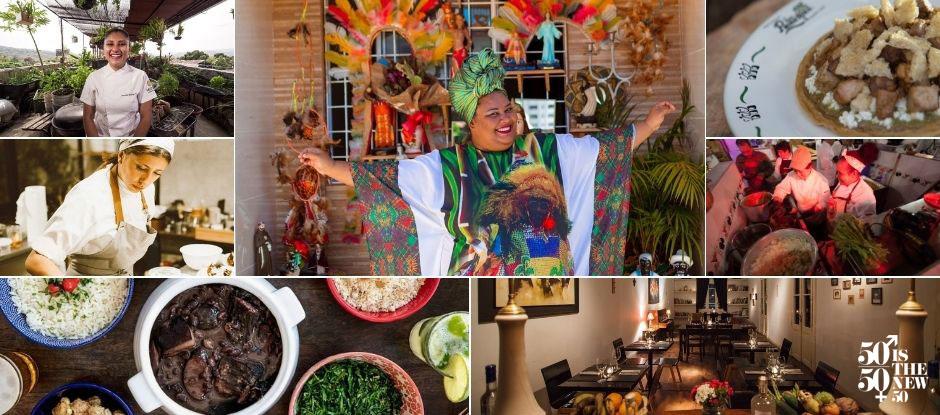
In November 2020, 50 Best’s El Espíritu de América Latina initiative recognised a collection of restaurants that embody the spirit of the region as part of Latin America’s 50 Best Restaurants 2020, sponsored by S.Pellegrino & Acqua Panna. These restaurants are supporting their communities, promoting sustainable practices and playing a pivotal role in the recovery of the region’s gastronomic ecosystem while staying true to its values. Today, we take a deeper look into nine restaurants created and led by female chefs and restaurateurs that are having a positive impact on their local areas and cuisines
1. Catalino, Buenos Aires, Argentina
Raquel and Mariana Tejerina are the sisters behind Catalino, which was born in 2017 with the aim of strengthening food sovereignty in Argentina. “We build bridges between agro-ecological producers from all over the country and the palates of diners through a noble and sincere cuisine at a fair price,” explains Raquel. “We contribute to educating consumers by asking questions such as: where does the food I’m eating come from? Who is behind it? Who am I giving money to and what work am I validating by doing so?”
Working with over 180 producers across the country, the Tejerinas promote the consumption of more vegetables and legumes, ensure the traceability of all animals and serve only organic and ecological ingredients, arguing that their work is now more important than ever. “The Covid-19 pandemic is closely linked to how we relate to the earth, how we produce our food and whether we encourage the emergence and strengthening of zoonic viruses,” says Raquel. Throughout the pandemic, Catalino remained firmly true to its philosophy, delivering affordable, healthy meals across the Argentine capital using only sustainable containers, and continuing to blaze a trail towards a more sustainable food ecosystem.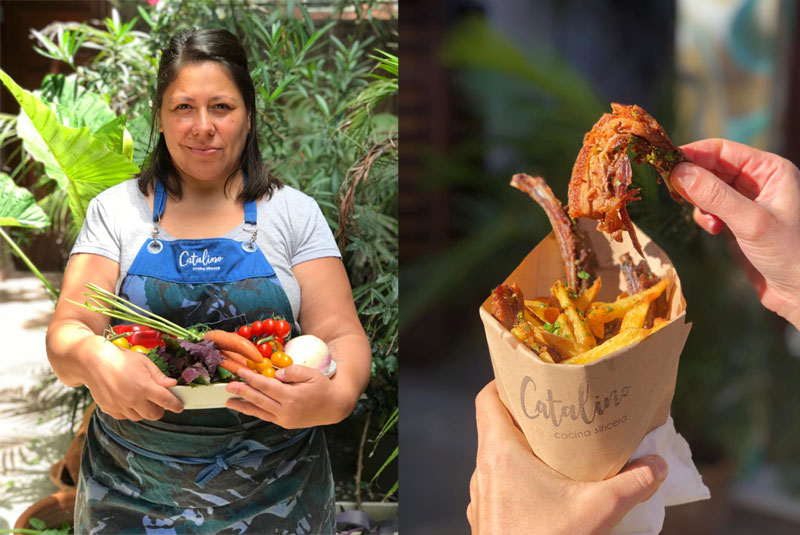
Chef Mariana Tejerina and Catalino's wild boar ribs, homemade fries and chimichurri sauce
2. Altar Cozinha Ancestral, Recife, Brazil
Altar, created by Black chef Carmem Virginia Barbosa dos Santos in the coastal city of Recife, has become a reference for ancestral cuisine and the chef’s own high-energy personality encouraging inclusivity and tolerance. Since the age of seven, Barbosa has dedicated herself to cooking as a way of honouring her religion, Candomblé – which derived from West Africa’s traditional Yoruba faith and from Roman Catholic Christianism – with her food often used as part of religious rituals.
With the opening of Altar, the chef wanted to share her culture with the public. Focusing on recipes that combine the flavours of African cuisine with Brazilian spices and the local products of the Pernambuco region, the restaurant has become a symbol of equity and opportunity. Having been subjected to bullying, racism, religious intolerance and fat-shaming over her lifetime, Barbosa now speaks out against prejudice and strives to give opportunities to Black chefs.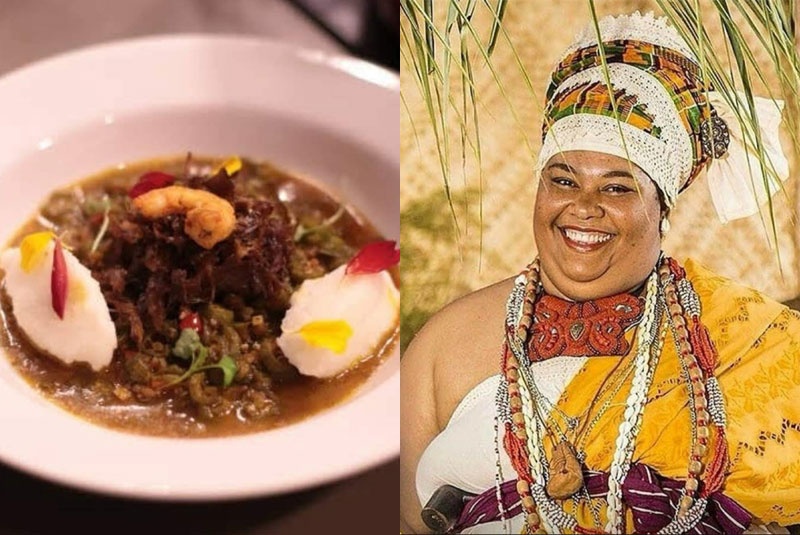
A dish from Altar and Chef Carmem Virginia Iyabasse
3. Tolú in Plaza de la Perseverancia, Bogotá, Colombia
Doña Luz Dary Cogollo (Mama Luz to her friends and beloved customers) is equally famous for her award-winning ajiaco – a traditional Colombian chicken soup – and for her campaign to reclaim the ‘plazas’ (food courts) of the capital. She is the informal leader of Plaza de la Perserverancia, a food court in downtown Bogotá run entirely by women from troubled and underprivileged backgrounds.
In October 2020, Cogollo and other female chefs from the plaza took part in an initiative organised by the foundation Toma un Niño de la Mano and the Sierra Nevada group: a cookathon that saw them prepare 800 meals over the course of two days to be delivered to vulnerable children. With six other plazas across the city taking part, over 8,000 meals were prepared, supporting indigenous communities, students and farmers.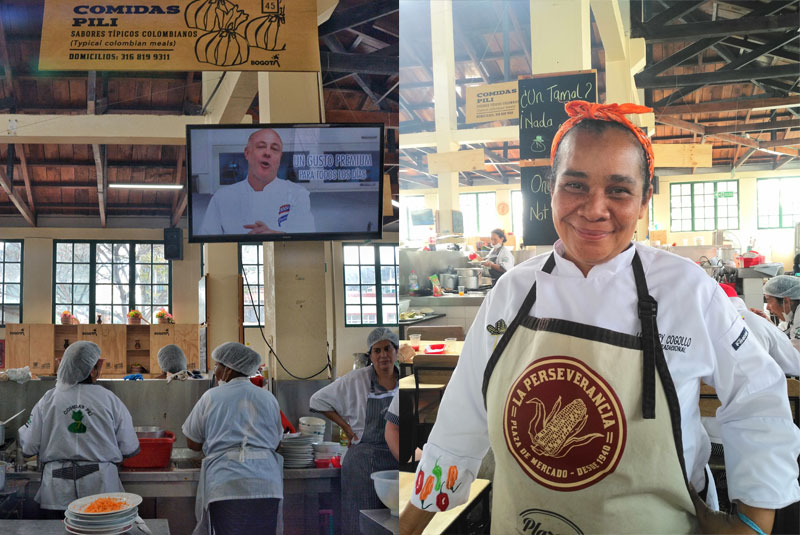
The cooks at Plaza de la Perseverancia and Chef Luz Dary Cogollo
4. Aconchego Carioca, Rio de Janeiro, Brazil
Mother-and-daughter duo Kátia and Bianca Barbosa founded Aconchego Carioca in the Zona Norte of Rio de Janeiro in 2002. Since then, the restaurant has become one of the cosiest, most welcoming places to eat in the city, celebrating authentic Carioca food and spreading positive and comforting vibes to locals and tourists alike.
The Barbosa’s take on Carioca cuisine includes deep-fried feijoada balls filled with cabbage and bacon – said to be loved by chefs including Daniel Boulud and Nigella Lawson – and frozen coconut cakes and tapioca ‘cushions’ with doce de leite (dulce de leche). As an underlying motive, the restaurant celebrates the positive effect that food can have on people’s feelings and emotions. Bianca, who joined the restaurant as chef in 2009, also lectures at Augusto Motta University and helps organise not-for-profit soup kitchen, Gastromotiva.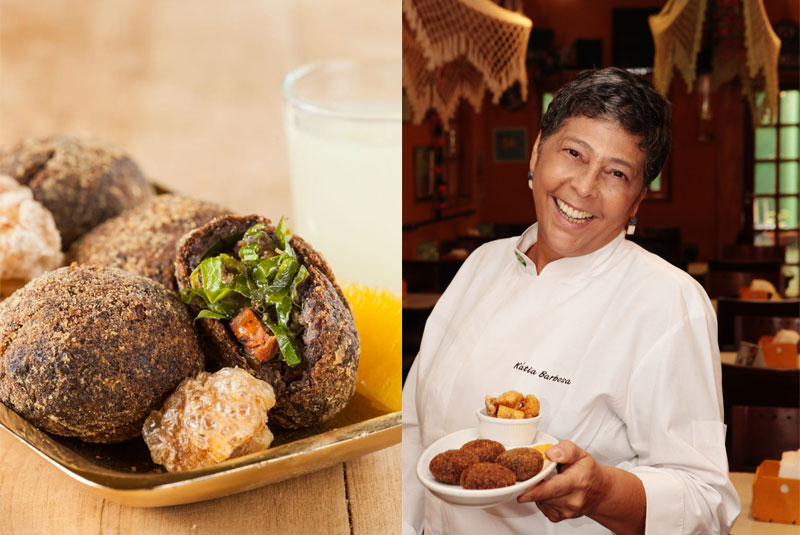
Deep-fried feijoada balls and chef Kátia Barbosa
5. Diacá, Guatemala City, Guatemala
Chef Deborah Fadul founded Diacá 12 years ago to explore Guatemala’s natural bounty, give new value to its culinary traditions and connect its farmers with a wider gastronomic network. A trailblazing restaurant in its own right, during the pandemic Diacá found new ways to apply its core philosophy – which revolves around respect for the earth, people and cuisine – to an increasingly challenging situation.
Fadul’s reflections led her to create three new projects in 2020. Crece en Guate, the not-for-profit side of the restaurant, is a free virtual platform that helps consumers and chefs connect with producers to buy their ingredients. El Estudio de Diacá is a laboratory that conceives and produces new preparations. Finally, Diacá pa Allá is the restaurant’s delivery concept, which created 16-course virtual dinners in consumers’ homes, using only wood, mud and glass as sustainable packaging.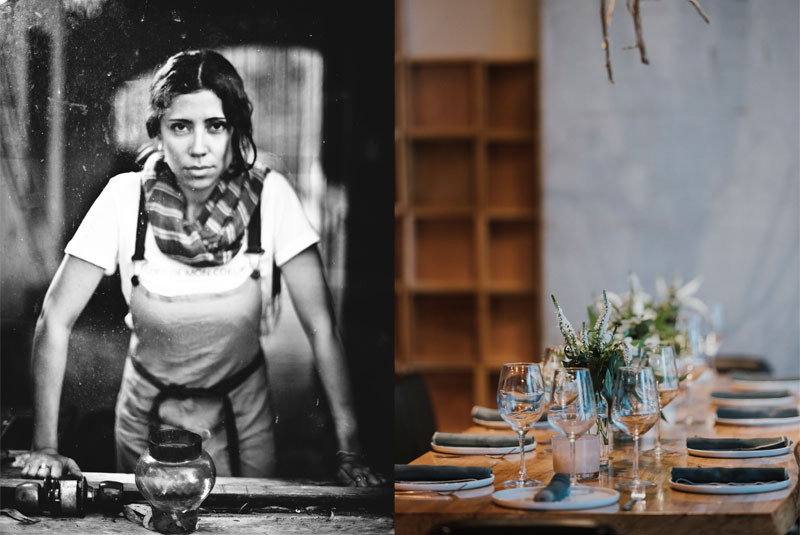
Chef Deborah Fadul and Diacá restaurant
6. Los Panchos, Mexico City, Mexico
When Carolina Rodríguez Vásquez opened Los Panchos in 1945 with her husband Francisco Chischistz Correa, she made it a habit to donate the first sale of the day to a worthy cause. Today, under the stewardship of Chef Mariana Guadarrama, the restaurant has grown to have over 200 employees and stays true to the same philanthropic principles. It has become a reference for the Mexican dish carnitas (braised pork) for chefs all over the globe.
Heavily involved in community work, Los Panchos joined the Comidas Solidarias initiative, a not-for-profit project led by Mexico City’s most famous chefs – including Quintonil’s Jorge Vallejo and Sud 777’s Édgar Núñez – that donates meals to the most vulnerable in the community. Los Panchos also supports other foundations, including Comedor Santa María – which supported 5,000 families in need with essential food products – and Vedimi, which promotes the healthy development of children through sport.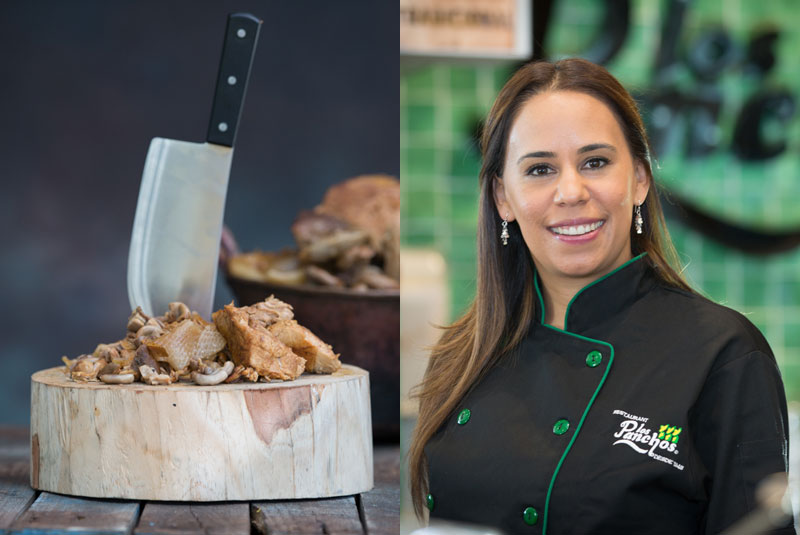
Los Panchos' signature carnitas and chef Mariana Guadarrama
7. Mãos de Maria, São Paulo, Brazil
Much more than just a restaurant, Mãos de Maria is Elizandra Cerqueira and Juliana da Costa Gomes’ project to help vulnerable women achieve financial independence. Founded in 2007 in Paraisópolis, one of the city’s poorest communities, it manages catering, restaurant and delivery operations while training the women in the community in the gastronomic arts, with a special focus on those affected by domestic violence.
Since its foundation, it has helped over 3,500 women enter the job market. During the pandemic, Cerqueira and Costa Gomes focused their attention on helping those who lost their jobs, while also feeding the hungry. As a result, Mãos de Maria helped create 200 jobs, distributed 1 million meals to the hungry and trained 55 community cooks, each of whom received stoves, fridges, pots and ingredients to carry out their trade while supporting the community with hearty meals such as feijoada (beef stew) and moqueca (seafood stew).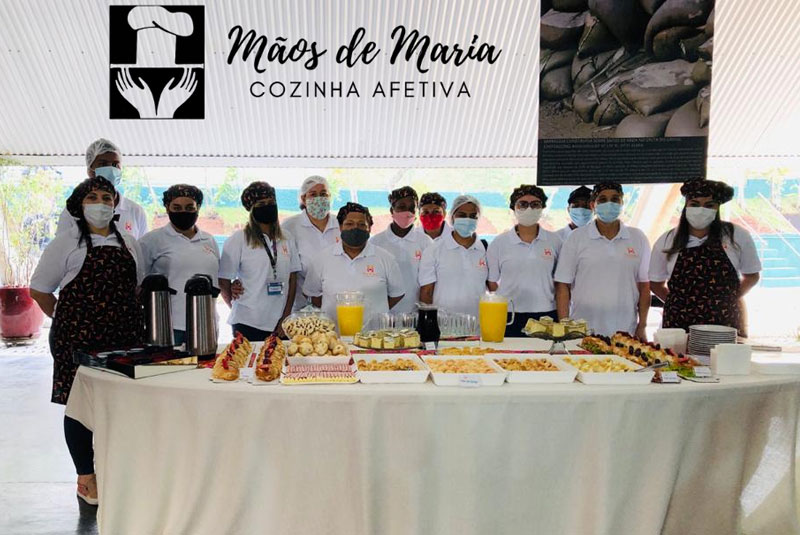
The team of Mãos de Maria
8. Mestizo Cocina de Origen, Mesitas del Colegio, Colombia
Located 60km from the capital of Bogotá, in the rural and agricultural region of Cundinamarca, Mestizo is a family restaurant that has been run by Chef Jennifer Rodríguez and her family for more than a decade. “We are dedicated to creating an honest cuisine based on rural customs, with the objective of building an identity for the region through its gastronomy, ingredients and culture,” explains Rodríguez. “We focus on sustainability, food security and creating a fair market.”
Mestizo is truly at the centre of its remote community, whose main income is from tourism and agriculture. During the pandemic, Rodríguez endeavoured to create new connections between the farmers and the city of Mesitas del Colegio, both to support her producers and to help bring their products directly into people’s homes through produce baskets. With the campaign ‘Share bread with your neighbour’, the restaurant raised money to get the products of its bakery, Pancoger, to the most vulnerable in the community. The bakery itself uses traditional Colombian recipes and “slow, long, old-fashioned fermentations” to create sweet and savoury breads with exotic fruits and local cheeses.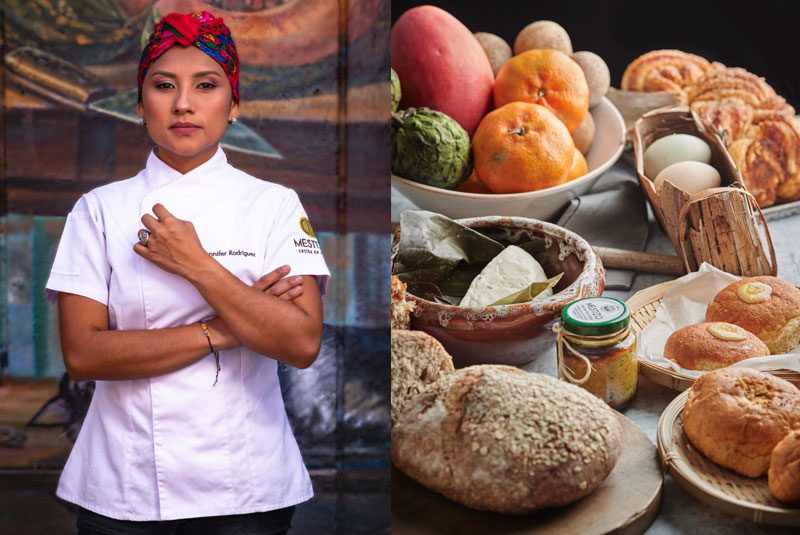
Chef Jennifer Rodríguez and Pancoger's bakery products
9. El Café de Acá, Asunción, Paraguay
Patricia Ciotti, a self-described ‘amateur cook’ and foodie, opened El Café de Acá 11 years ago in response to a growing movement that valued foreign cuisines over traditional Paraguayan dishes. Full of cultural and folkloric touches, the restaurant serves heritage dishes such as mandi’o chyryry, a comforting plate of cassava, egg and cheese, and drinks such as tereré.
Ciotti’s commitment to the community shone when the restaurateur set up a campaign to raise money for and feed the volunteer firefighters combating wildfires in the dry Chaco region. During their trip to Chaco, the team met an indigenous community, the Toba Maskoy. This meeting inspired them to raise more funds to help the group by organising food donations, a communal meal, workshops, tree plantings and a general cleaning the area. El Café de Acá is also a patron for school charity El Cántaro BioEscuela, which offers free art, design and music classes to children in the city of Areguá.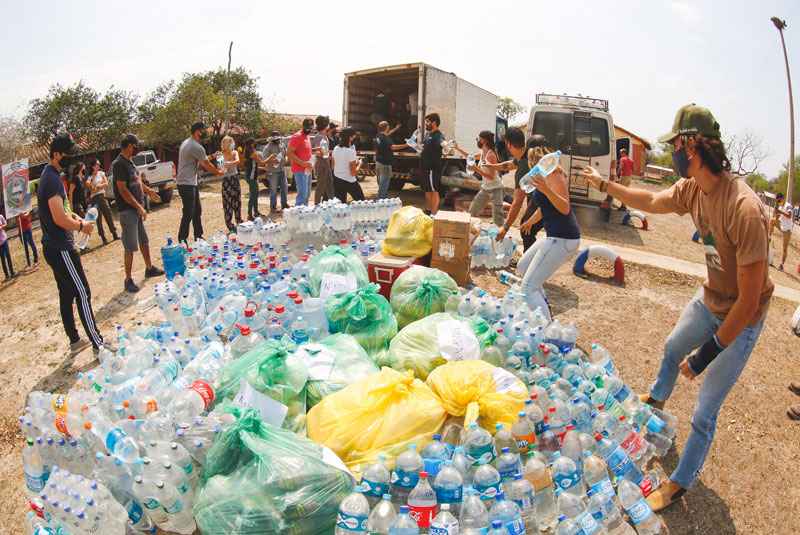
The team of El Café de Acá helps deliver water bottles to firefighters in Chaco
‘50/50 is the new 50’ is a content series created by 50 Best and supported by S.Pellegrino with the shared aim of promoting equality, inclusivity and balance in the hospitality sector and beyond.
Discover the full El Espíritu de América Latina collection, presented in association with S.Pellegrino & Acqua Panna, in the article. Follow us on Facebook, Instagram, Twitter and YouTube for the latest news, features and videos.
With reporting by Laura Price