Sidelining processed foods and championing local ingredients is part of the NGO's plan to rewrite Ghana's food story.
At any good house party, the best conversations happen in the kitchen. It is much the same at Ghana Food Movement (GFM), where The Kitchen – part hub, home and the engine room for ideas – is where change gets started.
Opened in Accra in 2024, The Kitchen is the nerve centre for GFM's network of chefs, farmers, students and other passionate community members who come together to holistically look into the issues currently dogging Ghana's food system.
The country is still deeply reliant on international agricultural policies, and coupled with the impact of its colonisation, systems very much lean on a Western-style diet and processed foods. With climate change, undervalued local crops and threats to the country's biodiversity ever present, GFM saw a gap that needed to be bridged.
"Our approach to the problem is systems-based. These dots are connected," says Abdallah Smith, co-managing director of GFM. "When someone sees KFC or Burger King, they are attuned to want that food because the world has told them that, and your traditional ways of cooking are not part of this aspirational identity."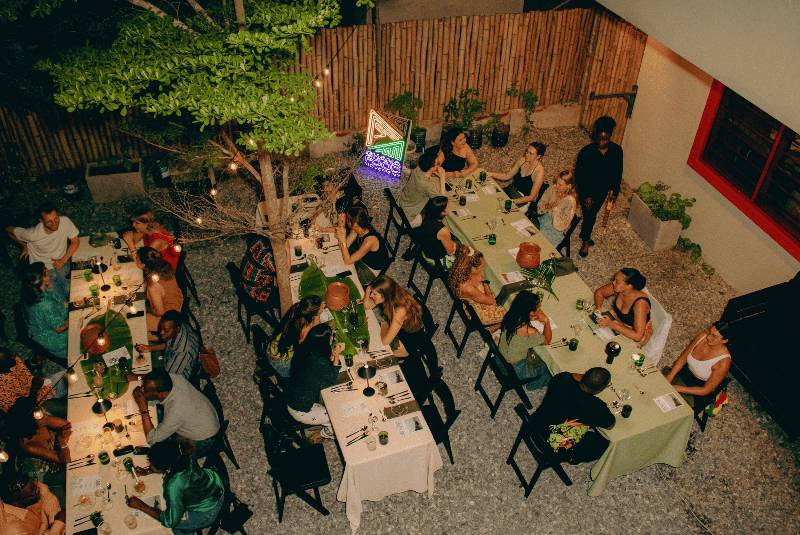
The Kitchen also serves as a venue for GFM's dining events
Smith, alongside the rest of the GFM community, wants to change this mindset through education and connection.
"The easiest way to communicate about issues with the food system is to serve them a delicious plate of something. That was the start of the idea: to use gastronomy to show Ghana's food potential," says Smith.
GFM's creative director Lydia Kekeli Amenyaglo also stresses the ambition to change the story the Global North tells about sub-Saharan Africa.
"[In Global North media] there's always a narrative around the poverty in West Africa. We are rewriting this. We want people to think of West African food as joy."
Rooted in Ghana
For GFM, the starting point is getting people excited about Ghana's native ingredients. Crops such as millet and cassava are often disregarded in favour of foreign imports.
"[The missing link in Ghana's food system] is the enthusiasm and knowledge about ingredients, how they are grown and about what they could become," says Smith.
Amenyaglo says it's also important to acknowledge how Ghanaians have adapted to imported crops. Cocoa arrived in the late 1800s, with colonisers profiting from its growth and export. "What we're doing with cocoa is writing our own story," says Amenyaglo. "We have to build on structures that were imposed from the outside. Agri-preneurs are now making their own products, writing their own narratives. I think there's so much power in that."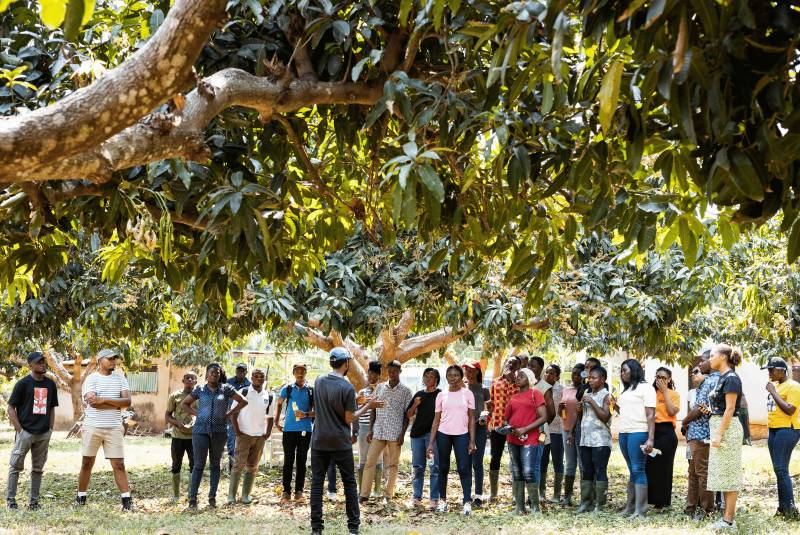
Trips to local farms are part of the programme of activities GFM runs
Building on educational ambitions, GFM runs a programme called Food Fridays where children learn about local ingredients and how to use them. This project coexists alongside another of GFM's ventures, Ghana Plate, which works with school meal providers to get them using more Ghanaian ingredients.
"We've analysed the food environment for children in schools, and it's focused on processed foods. We want to work with the meal providers to change that," says Smith.
The project is currently in a pilot phase working with 10 schools, but there are plans for a nationwide roll-out.
Spinning plates
GFM also offers culinary training programmes aimed at creating a more sustainable restaurant scene in the country, led by and designed for Ghanaians.
Developed with Danish non-profit Melting Pot, these include immersive in-person sessions and coaching across practical culinary skills, as well as sustainable practices including better food waste management and use of locally grown produce.
The organisation has also been running its Youth in Food programme for four years, offering six months of training to young people keen on a career in food.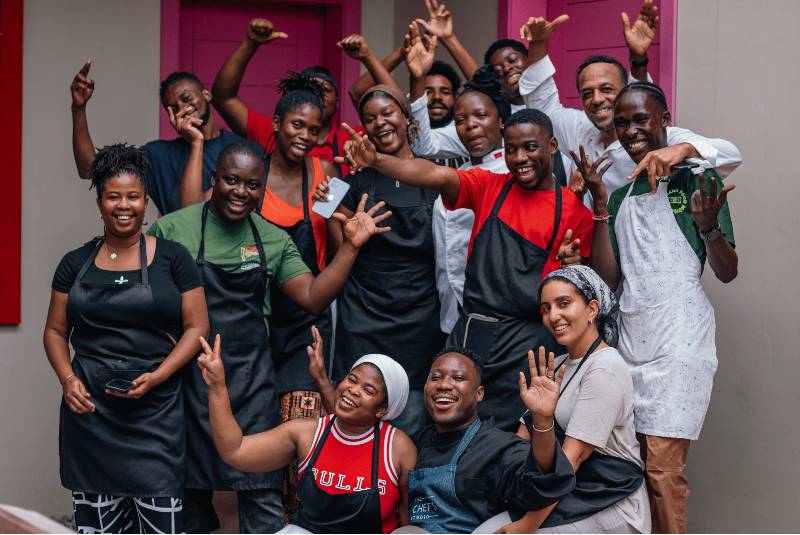
GFM's Cooking Masterclasses also offer local people the chance to learn more about traditional Ghanaian food
Youth unemployment is an issue in Ghana, and with few avenues available in food, GFM saw an opportunity. "We've been developing soft skills for youth in the food sector and connecting them to jobs and been able to get secure jobs for over 200 youths in that time," says Smith. "The Kitchen is also a space for young people to come and connect with like-minded people. In Accra, there are few places for young people to meet without having to pay a fee."
Tricky terrain
Building both GFM's community and bricks-and-mortar home hasn't come easy. "In Ghana, just running a normal business is difficult," says Smith. "The way the city is built means traffic is a huge problem. The internet and electricity are unstable at times. Currency fluctuations also pose another obstacle. "The price of a tomato can be completely different one week to the next," says Smith.
Like most non-profits, funding is limited. "I'm often astonished how we were able to pull this off," says Amenyaglo. "Most grants will pay for a programme, but they don't pay for growth. They don't pay our salaries."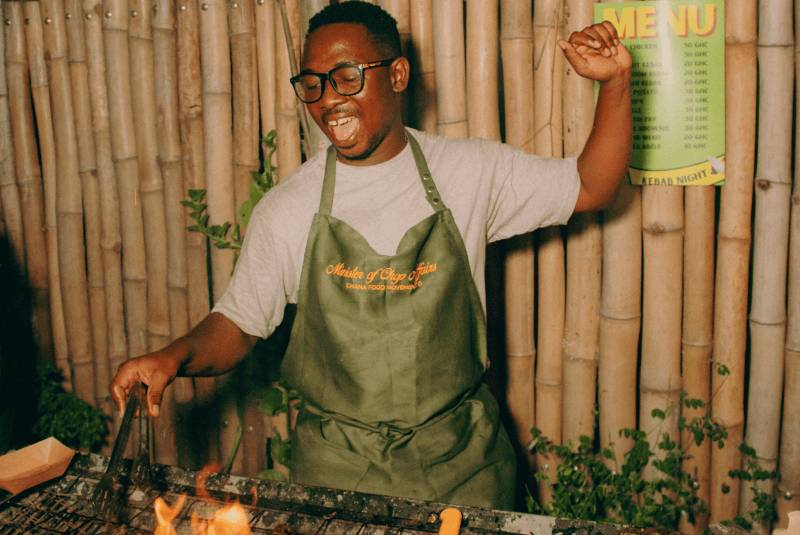
Despite challenges, GFM brings a sense of joy and fun to its events such as Dine and Dance
There's also acknowledgement that for the work to be recognised within Ghana, it needs to be endorsed by people outside of Africa. Smith shows frustration over local people with the financial resources to support GFM choosing to spend their money elsewhere. "For whatever reason, they sometimes don't see the value of our work," he says.
But the tide is turning. "Thank God we're cool," laughs Amenyaglo. "We really know how to make things. Without the cultural elements such as dancing and historical storytelling at our events, our branding and the openness of The Kitchen, we would not be able to change mindsets."
Going deeper
Having all the answers to Ghana's food system issues isn't the goal for GFM. Instead, it wants to open dialogues across the food system, creating space to improve on it.
"We need to connect more deeply with our food traditions, connect with Indigenous communities, farmers and custodians of what our cuisine used to be and find a way towards a better future," says Smith.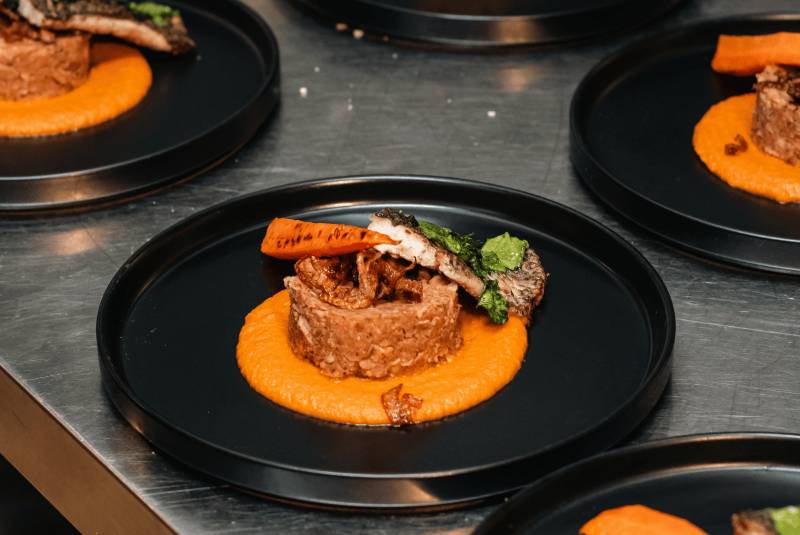
Bringing back knowledge from Indigenous communities to The Kitchen will be a key part of the future success of GFM
"We'll be spending more time in the countryside learning and finding ways to co-create experiences that translate what we find to people in Accra and beyond," says Smith.
For GFM, winners of the Champions of Change Award 2026, sponsored by illy, as part of The World's 50 Best Restaurants, the work will always be a team effort.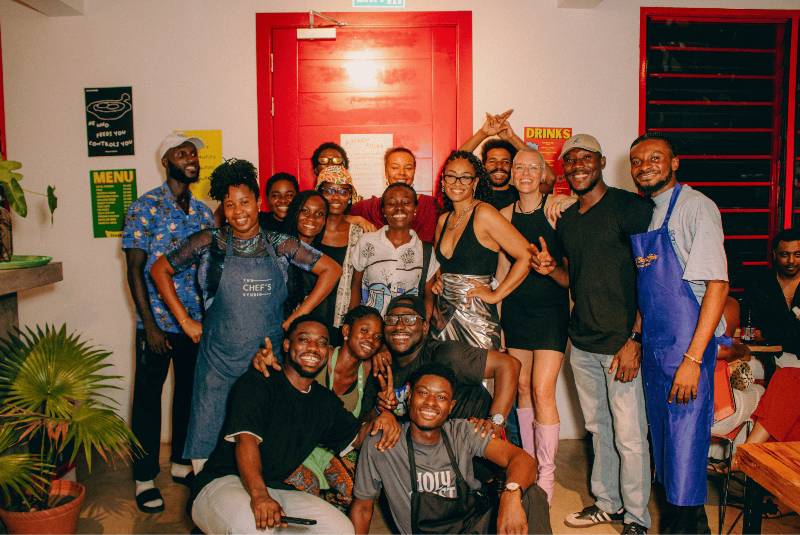
Community is a central pillar for GFM, where important organisational decisions are made via member vote
"We think we're little, but we're touching so many people's lives and they're changing for the better. If you put your mind to it, you can do it," says Amenyaglo.
Forever the optimist, Smith is excited about what this award means and how GFM's growth could change Ghanaian cuisine: "West Africa's cuisine is the bomb, so watch this space because you're going to be seeing more of that soon."
Ghana Food Movement is the winner of the Champions of Change Award 2026, sponsored by illy, as part of The World's 50 Best Restaurants. The full 1-50 list will be revealed from Lima in November.