Inés Páez Nin is her country's premier culinary ambassador. Now the pioneering cook, known as Chef Tita, has been recognised with the Champions of Change Award as part of Latin America's 50 Best Restaurants 2025.
It's hard to think about Dominican cuisine without picturing Chef Tita, the Caribbean country's most famous cook. An activist, a restaurateur and a TV cooking show judge, she has spent most of her career championing the food of the Dominican Republic, from cacao and avocado to the lesser-known guayiga root. Yet when she decided to focus on her nation's bountiful ingredients 20 years ago, she was met with ridicule.
"When I first started working with local products, my chef friends would make fun of me," says Chef Tita, who runs the acclaimed Aguají restaurant on the island's north coast. "They said: 'Why would you buy oysters from Cabrera when you can import the French ones?' I told them I love our local oysters – they might not have as much meat on them, but the flavour is incredible."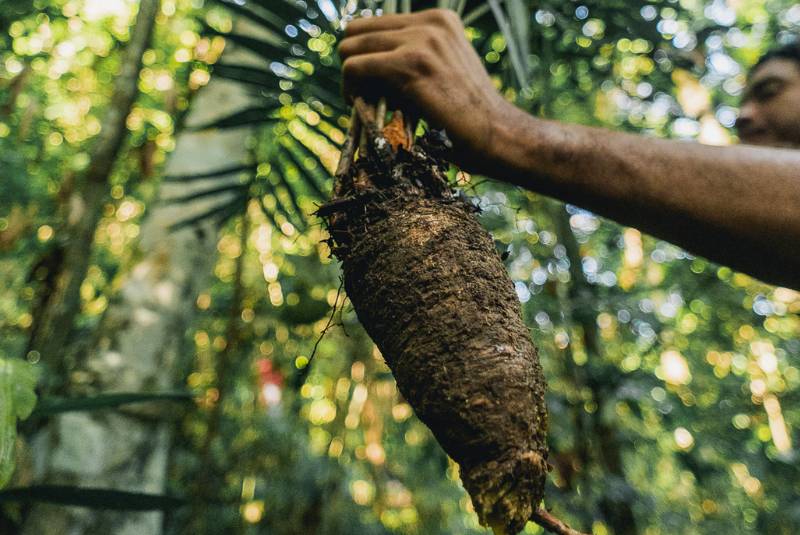
Guayiga root, native to the Dominican Republic, is traditionally wrapped in plantain leaves and baked to make guayiga bread
Chef Tita was so convinced of the strength of Dominican produce that she started to visit remote communities, meeting producers and exploring ingredients, culture and recipes. In 2015, she founded Fundación IMA, a non-profit dedicated to promoting local produce and giving underprivileged farmers the tools and knowhow to earn a living. It's a win-win concept, giving Dominicans access to the tastiest homegrown ingredients while helping rural families to survive and thrive.
"It changes the lives of the community," says the chef, who connects individual producers with supermarkets and retailers, as well as buying directly and using their ingredients in her restaurants. "These people want to carry on working on their land – they don't want to have to move to the city and find other work. But if there's no one to give them visibility and help with sales, then it's impossible for them."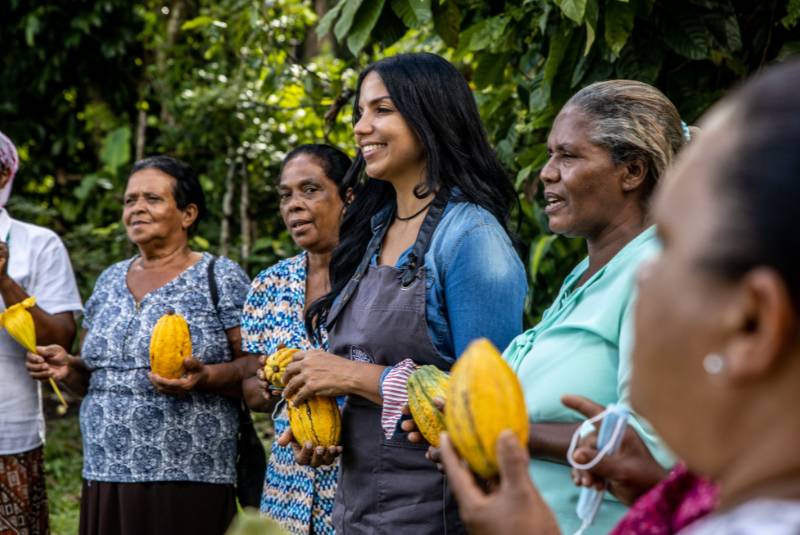
Chef Tita regularly visits remote communities across the Dominican Republic to connect with producers
Chef Tita plans to use the grant from her Champions of Change Award to continue supporting these communities, helping them to buy farming equipment and seeds.
A passion for empowerment
Through her work at Fundación IMA, which means 'food' in the indigenous Taíno language, she has transformed the lives of countless people. But when asked what she gains from her social work, Chef Tita breaks down in tears.
"It's everything," she says. "It fills my heart with so much happiness, so much satisfaction. It means it's all been worthwhile. It gives me so much strength to keep working. Cooking makes me happy, but meeting communities and transforming people's lives through food makes me even happier."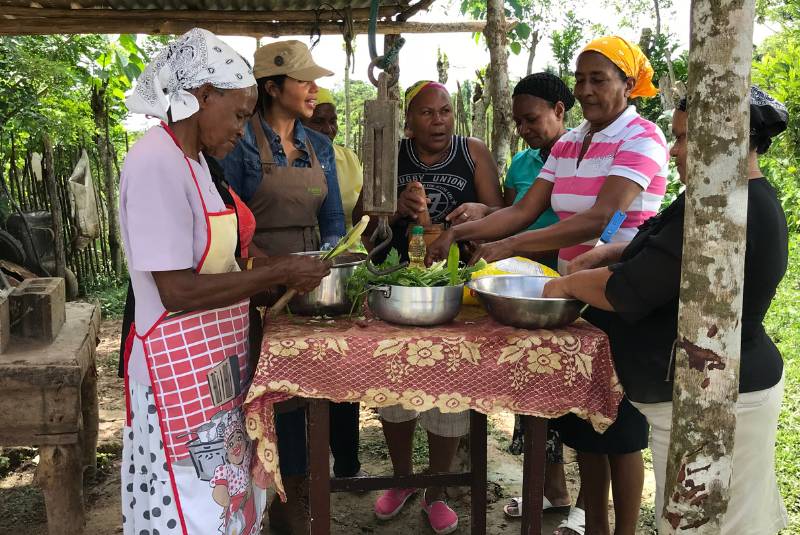
Empowering communities through Fundación IMA initiatives is Chef Tita's driving force
Her passion for helping people comes from her grandmothers, and particularly her maternal grandmother: "She didn't have much, but she always helped others. She kept chickens and would cook them for anyone who came to the house, even taking food for prisoners in jail. There was always food in abundance."
Promoting indigenous cuisine
A food-filled childhood led Chef Tita to work in kitchens from the age of 17. She opened a restaurant called Travesías in the capital, Santo Domingo, in 2013 and later published a book of 100 recipes. She became an ambassador for New Dominican Cuisine, working with the government and championing the island's gastronomy at international food forums such as Madrid Fusión. During the pandemic, she created Fogones y Gastronomía Solidaria to help feed poor communities, while continuing to support rural producers through Fundación IMA.
After the pandemic, having closed Travesías, Chef Tita opened Morisoñando, a restaurant in Santo Domingo that showcased local dishes and ingredients. Meanwhile, her star was rising as a celebrity chef. She appeared on the Dominican version of MasterChef for several years, before moving to the international Spanish-language Top Chef VIP in 2024. Late last year, she closed Morisoñando, and now focuses on Aguají, a coastal fine dining spot that revolves around the Taíno-Arawak indigenous culture and cuisine. It is located in Puerto Plata, where her father's family is from.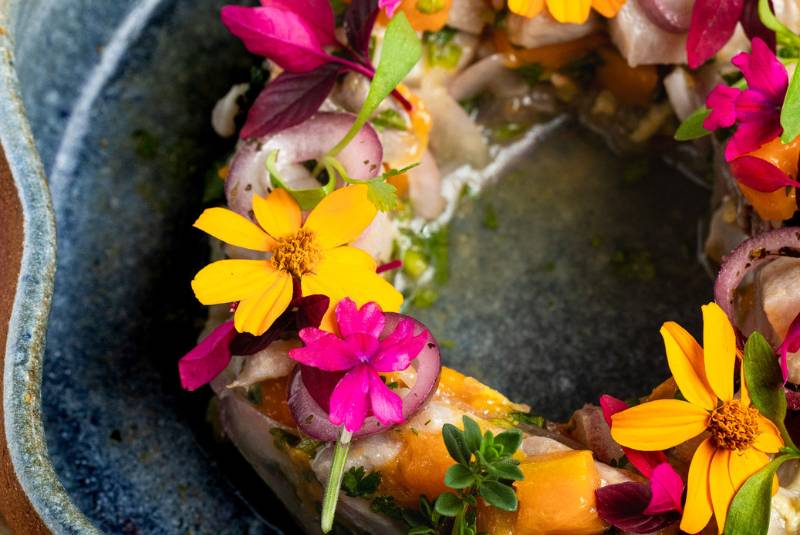
Dishes at Aguají honour Taíno-Arawak indigenous culture with modern twists
"I've always wanted to recover that side of my ancestry, and an opportunity came up," says Chef Tita, who opened Aguají in 2023. "Everything is centred around local produce and teaching our guests about Dominican food, as well as the Taíno-Arawak side that has been forgotten. We've always had Spanish and African influences, but we need to tell ancestral stories."
One product she is promotes is guayiga, a root that the Taíno people transformed into flour to make bread, but which has since fallen out of use. She incorporates it into her tasting menu and has told its story at conferences and exhibitions. Next year, she will publish a children's book of Dominican history and culture, told through food. She would also like to open a smaller version of Aguají in Santo Domingo in the next couple of years.
Beyond sun and sand
Like other parts of the Caribbean, the Dominican Republic is popular with tourists who stay at its beautiful all-inclusive beach resorts, but Chef Tita is determined to attract visitors keen to experience its food.
"We're not just a destination for sun and white-sand beaches," she says. "We have so much going on in our gastronomy too. There are so many different influences – from Taíno to Spanish, African, Italian, Lebanese and Asian – and the mix of ingredients makes our food unique. Dominican food has so much flavour, so much personality. I've travelled all over, and people always say, 'Wow, I didn't realise Dominican food was so tasty.'"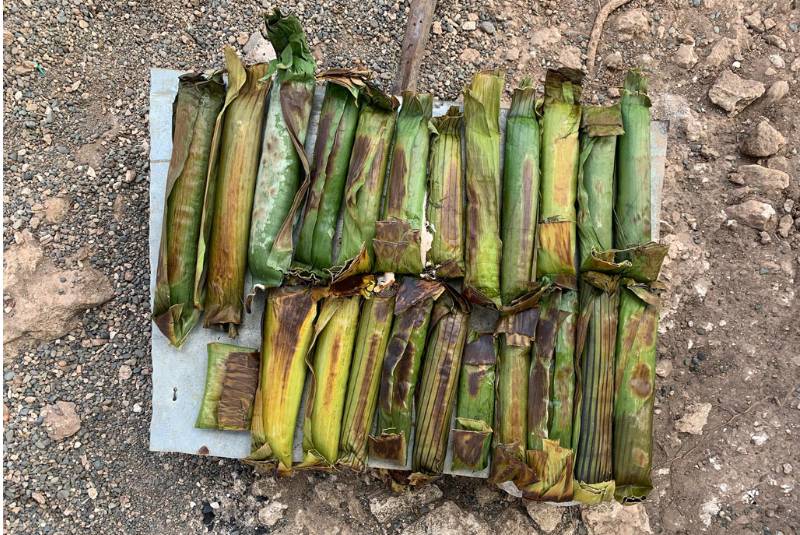
Traditional guayiga bread, a version of which appears on Chef Tita's menu at Aguají, fresh from the oven
As much as she is focused on teaching the world about her island's cuisine, she also believes it is her responsibility, as a cook, to support others – which is why her work at Fundación IMA remains such a key part of her identity.
"Cooks aren't meant to stay within their four walls," she says. "They must get out, experiment, get to know what's around them and figure out how to help people. Cooks are agents of change – they can be an example for a lot of people, motivating them and helping them to generate an income."
Chef Tita's work at Fundación IMA involves sharing knowledge with local producers to help promote sales and boost their income
How to do it? Through food, of course. "Food is a tool for social change because via food you can transform, you can create opportunities for many people. You can give them visibility, be a voice, tell their stories, put a face to them. You can change their way of making money, change their way of life. It's connecting people, and through that connection you can change their lives."
Winning the Champions of Change Award has the power to change Chef Tita's life, but she is most excited about what it will do for the Dominican Republic. "It's always been a big dream to put my country on the international map," she says. "I've always worked towards that. Now the moment has arrived and I can't believe it."
Latin America's 50 Best Restaurants 2025, sponsored by S.Pellegrino & Acqua Panna, will be announced in Antigua, Guatemala on Tuesday 2 December. Find out more about the event including how the voting works.