
London's Ikoyi is currently one of the most talked-about restaurants, picking up the Highest Climber Award, sponsored by Lee Kum Kee, at The World's 50 Best Restaurants 2025. Its chef and co-founder, Jeremy Chan, explains his unusual, provocative, sometimes controversial and always thoughtful approach to creativity and flavour.
I think of flavour as a multi-dimensional experience. It encompasses taste, texture, aroma, mouthfeel. It's an all-encompassing experience that goes beyond the simple act of consuming and tasting food – it relates to time and place, such as eating food from a street vendor, or a Michelin-starred restaurant or on a plane after saying goodbye to loved ones. It is the context of where you are when you are eating something, which means that flavour is not only subjective, but linked to our emotions and perception.
As chefs, we have experience, raw materials, techniques and tools at our disposal when creating flavour. But the fact is that we cannot always control others' perception of our creations, since flavour is affected by a person's perception of what it is they are eating, along with all kinds of other factors like who they are and what customs, traditions, cultural tastes and palate they have.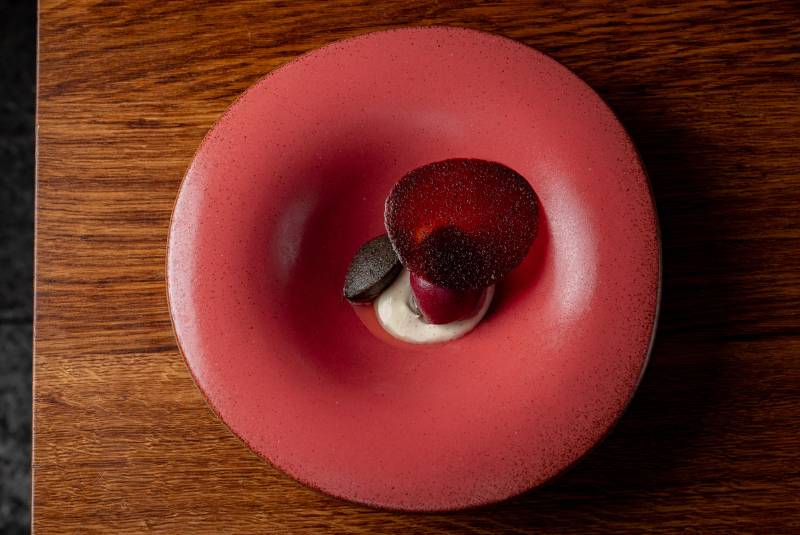
The food at Ikoyi is "a journey into bold heat"
Unfortunately, despite the complexity of an individual interpretation, society at large is obsessed with labelling our ideas to fit a narrow understanding, so that what we too can become marketable, intelligible concepts.
The concept is there is no concept
Since the beginning, I very much felt pigeon-holed into labelling the 'concept of Ikoyi', but I have resisted this with all my strength. One day our menu might be inspired by the delicate aromas of white truffle on a veal chop at L'Ambroisie; on another it could be the numbing sensation of a hot pot I'd eaten as a kid growing up in Hong Kong or the fire of pepper soup in Lagos, Nigeria.
Ikoyi exists within a vacuum, but it can encompass cuisines, minute details of sublime experiences I have witnessed in my life, whether it be that perfect bearnaise sauce, the texture of aged metal on a sculpture, the pristine quality of teardrop peas, the simmering red of a solar eclipse or the sharpness of a slice of tuna.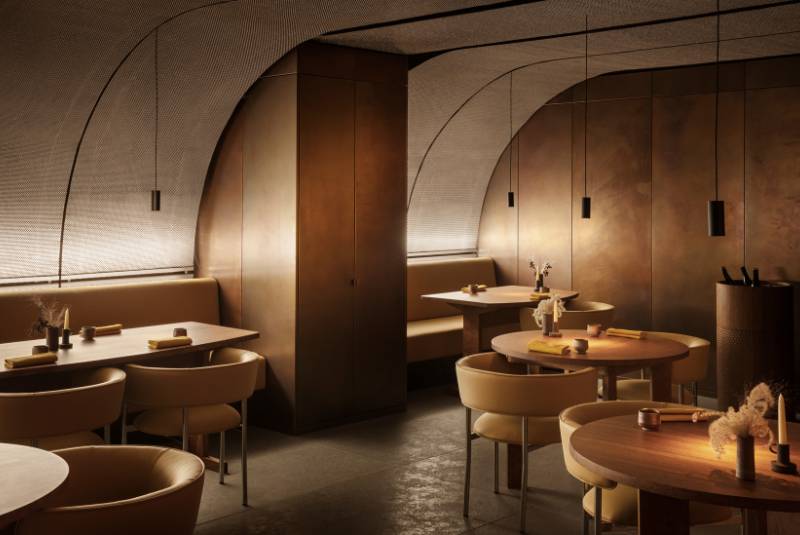
Chan has never eaten at Ikoyi, and has no plans to
And so if you are to view Ikoyi as a West African restaurant, you are missing the point. It is neither a West African restaurant nor a Cantonese or French one, it exists to express the totality of my life experience – what is within, rather than aiming to recreate a single tradition. To me flavour is simply the output of my life's journey, the output of my current state of being.
A journey into bold heat
When we opened in 2017, I knew the restaurant was embarking on a unique but challenging and risky journey with flavour. I wanted to create a restaurant that used spice and bold heat as a catalyst for creativity, to draw from the effects of spice and how it ignited my imagination – the pain, the joy, the sensation of aromatic burning and pleasure – and how this was linking me to all kinds of experiences and sensations I had felt over the course of my life.
To me, spice is more than flavour. It represents the spectrum of culture, history and people around the world, the transference of ideas, languages, secrets and myths. And while there are many forms of magic in cooking – that perfect pearlescent turbot, a glistening quenelle, roasting a steak in foaming butter – cooking with spice goes to the heart of my passion for cooking and the essence of my expression of flavour.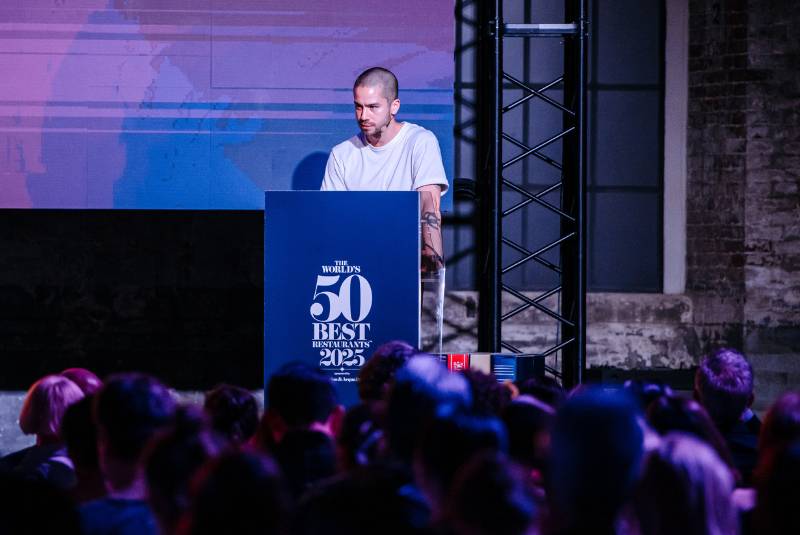
Jeremy Chan spoke at #50BestTalks: The Flavour Files, as part of The World's 50 Best Restaurants 2025 events programme
If flavour is defined as the output of our life's journey, our current state of being, then the best flavours I have ever cooked will be from the first years of opening the restaurant. I didn't care what anyone else thought at the time. I was combative and defiant; the more people told me who I was, and the more people tried to define our flavours, the more I would dig inside to pull something out that was unpredictable and true to my emotions. With a dish like the plantain with raspberry and scotch bonnet, I fought against what others thought and only listened to my own voice and inspiration. But as you get older, you start to listen to what others think and like and this begins to infect your creative process. Your ideas have less integrity.
Orchestral manoeuvres
While it may sound crazy, I haven't tasted a single dish in my restaurant since the day we opened, and I have not and will never eat at Ikoyi. The restaurant is where I output my life experience into its food, and so to eat there would be like eating a part of myself. I don't believe in R&D, testing dishes, consuming them, practising them... The reason I cook is to see the joy others experience in eating my food.
I think of the cooking at Ikoyi as like playing music in an orchestra with a highly precise group of musicians or playing an intense game of football. There would be no joy and beauty in a game of football if the goal posts were set as wide as the pitch and you could score every time, nor would it be exciting to experience the Berliner Philharmoniker if the musicians were to pre-record the music.
On the other hand, it's not improvised jazz either. It's highly precise, containing an understanding of produce, ingredients and raw materials, and it is our goal to make food look like it is machine-made, while embracing nature and humanity. But it's true that the menu changes every day, even if just a little bit, because we don't control nature and we don't control seasonality.
The end goal, the output – which is flavour – has to come from somewhere deeply personal, emotional and in some respects, unknown. The subconscious. There must be an element of risk, and you must be willing to accept that someone may not enjoy the experience of your flavour. Therein lies vulnerability.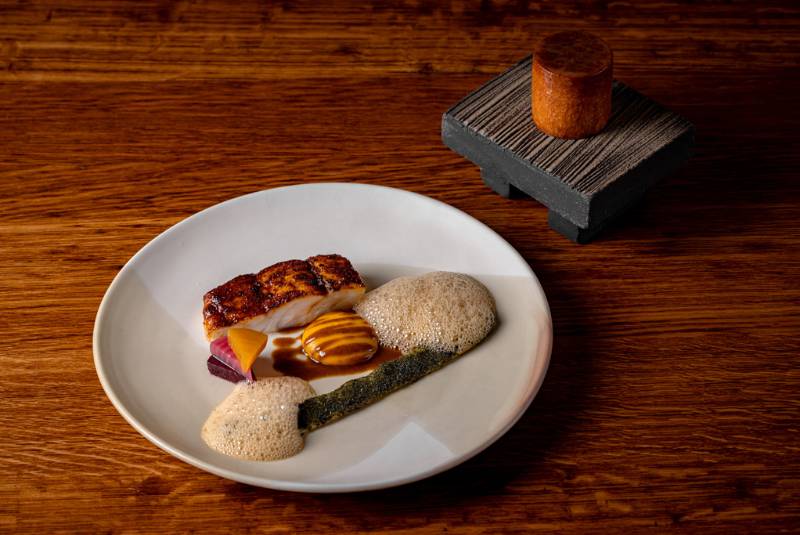
Turbot and egusi miso at Ikoyi
In terms of purity, I feel like there is a trend to cook and serve ingredients as themselves, as pure, stand-alone subjects. That perfect oyster, that exquisite first strawberry... ingredients left unadorned tends to be a perception of cooking exalted in our industry as a form of restraint and minimalist perfectionism. I think you could view this form of purity as a kind of exclusionism – not allowing other influences, tastes, consciousnesses to enter a creative sphere in order to safeguard a single identity. I feel like we seek to safeguard this kind of exclusionary purity as it's easier to understand and control. But at the same time it is predictable.
What I am trying to achieve with flavour is also a kind of purity and minimalism, but one that infuses, compresses and condenses memory, time, taste, spice and years of life into a single dish. At Ikoyi, we strive to create an extremely precise form of minimalism, a single bite, whether it be a courgette sliced razor-sharp and infused with intense reduction of spices, or a mouthful of slowly cooked and chopped squid, exploding with deep oceanic flavours. It is a form of minimalism that reveals layers of complexity and lingering sensations, a minimalism that unlocks multiple reference points.
Pushing for uncontrollable perfection
Seasonality, terroir, the process and the people behind our ingredients – these are the foundations of flavour at Ikoyi. If I'm trying to create food with personal integrity, then I must use ingredients that are made with the same basis of integrity. And that's where the suppliers come in.
Just like I'm pushing for a kind of uncontrollable perfection in my style of cooking, not testing dishes but forcing them into existence for the first time with our guests, I'm equally inspired by the fact that the beef coming through our door will vary considerably. I cannot control the way the individual animals have been shaped by nature, weather, life and the people who have reared them.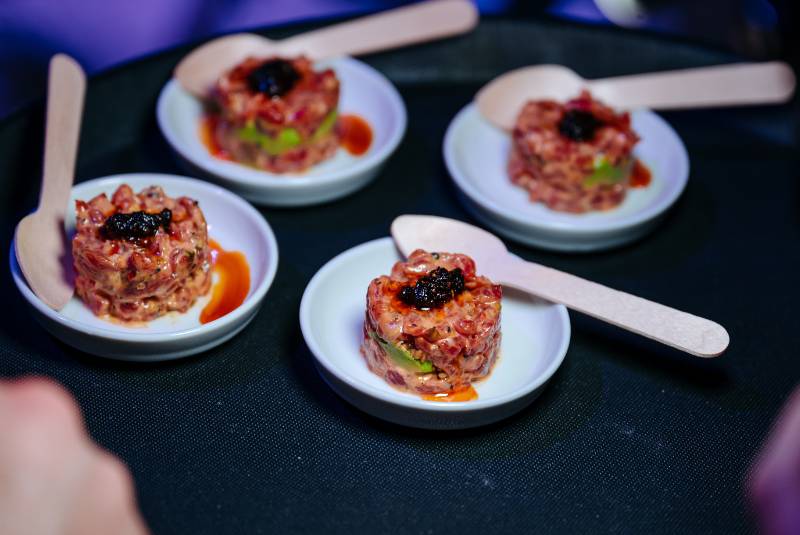
The beef tartare dish Chan prepared for guests at #50BestTalks
And so every day our beef is distinct in size, texture, depth of colour, marbling and flavour. The infinite variability of nature is awe-inspiring, and it induces a cooking style that is dynamic, bold and intuitive. It means that every piece of beef is seared, grilled, caramelised and sliced to different specifications, based on our observations.
Food is a symphony of different lives
If my food is a true expression of who I am, then the meat is a true expression of the animals' life, and so what I am creating here – and what every chef creates with every dish – is effectively a symphony of different lives: of the plants, the herbs, the meat and the people who make and supply them.
Cooking is an untameable art form, different from any other, because it is inherently at the mercy of nature. When you make a film or produce a song, you can control almost every variable. But the elements that make our dishes – the ingredients – are coloured and shaped by conditions of the lives they have lived. This is what makes cooking so beautiful and tragic at the same time. Especially if you're a control freak!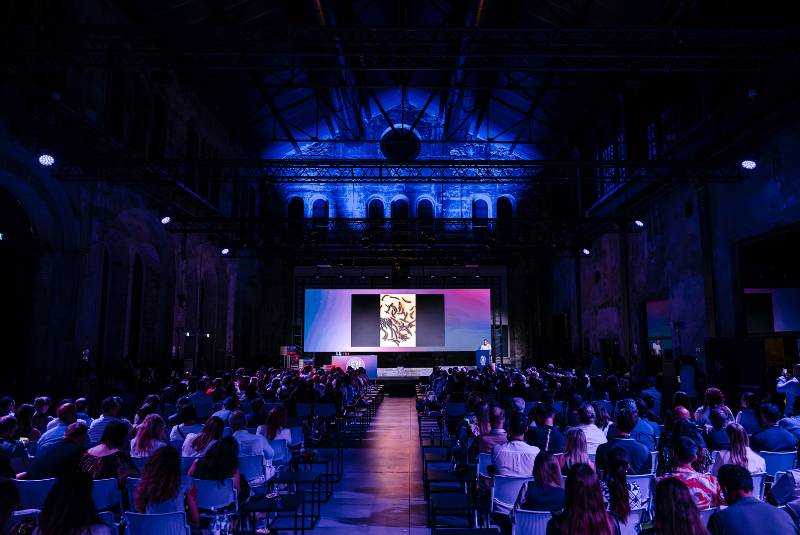
The crowd at #50BestTalks listening to Chan's explanation of his creative process
Unfortunately, as much as we cherish diversity, we are also encouraged to create things that are easily identifiable, tradable, consumable. We aren't supposed to offend or challenge anyone, and in a sense it is true that we have to please as many people as we can in order to survive. This trend is the same in cinema and in music. But it leads to the eradication of personality and soul, of authenticity and meaning.
Ikoyi is about cooking from the inside out, of bringing who I am out into the world, for better or for worse. But the trend today is that we start by thinking what people other want, instead of looking inward first. And when it starts to lean too far in this direction, there will no longer be any output for the soul.
The above is an edited transcript of Chan's address at #50BestTalks: The Flavour Files, the live thought-leadership forum that took place in Turin on 18 July as part of The World's 50 Best Restaurants 2025 programme.