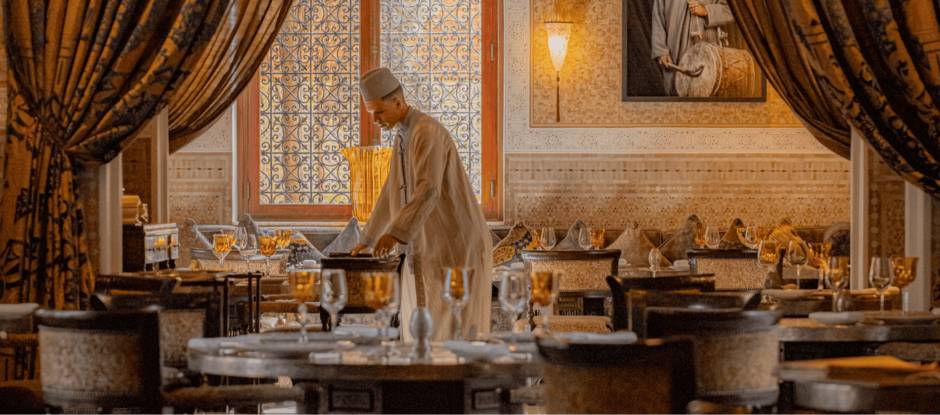
Morocco is known for some of the warmest hospitality in the world, and not many do it better than La Grande Table Marocaine. Here, centuries-old rituals come together with beautifully preserved heritage design, creating an experience that diners won't likely to forget.
The art of genuine hospitality runs deep in Morocco. Welcoming guests isn't an automatic exercise in politeness – it's a time-honoured tradition and a reflection of Moroccan identity. Artful preparations of atay, a sweet Moroccan mint tea, are often the first ritual of welcome in homes across the country. The same is also true for restaurants, and it's difficult to imagine it done more beautifully than at La Grande Table Marocaine.
Since opening in 2008 in the Royal Mansour Marrakech hotel, La Grande Table Marocaine has come to represent some the very finest hospitality Morocco can offer. Under the stewardship of chef Karim Ben Baba, with international influence from Hélène Darroze, traditional Moroccan cuisine is redefined, without losing the sense of generosity that's key to the country's dining culture.
"The menu at La Grande Table Marocine is designed as a celebration of Moroccan traditional gastronomy, its terroir and flavours," says Chef Baba. "At the same time, it reflects our desire to collaborate with chefs, such as Hélène Darroze, who bring their technical expertise and contemporary vision. This dialogue allows Moroccan gastronomy to be honoured, elevated and presented at its highest level," he explains.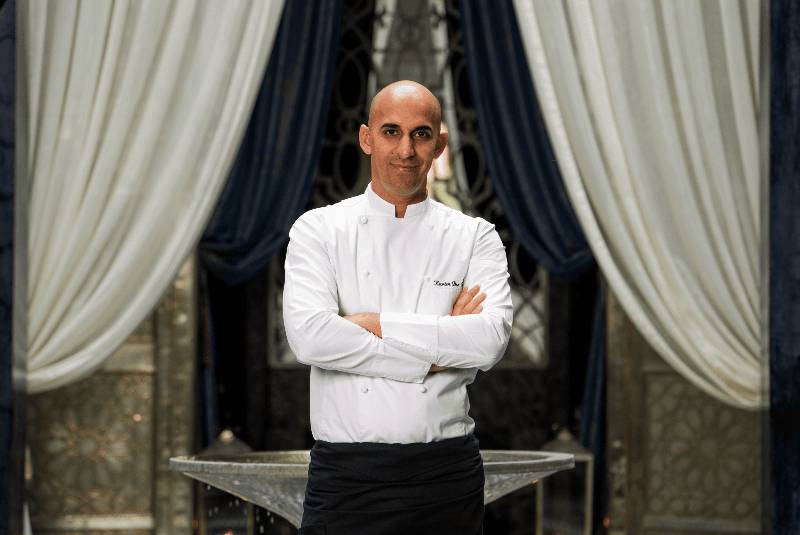
To create La Grande Table Marocaine's menu, Chef Baba reinterprets ancestral recipes with contemporary ideas
While the menu may modernise some of Morocco's most prized traditional dishes, the front-of-house team strives to keep the essence of ancient hospitality rituals alive. "Traditional Moroccan hospitality means warmth, smiles and the pleasure of making others happy," says Jean-Claude Messant, managing director of Royal Mansour Marrakech & Royal Mansour Collection.
"We embody this through generous dishes meant for sharing, a convivial table setting, attentive service and a musical ambiance that accompanies guests until the very end – including a final gift, offered as a gesture of gratitude and generosity," he continues.
The eye eats first
According to Chef Baba, there is a saying in Morocco: "the eye eats first." While this is true of the table, it also applies to other details. "Variety, generosity and presentation are essential, as they reflect the host's respect and generosity towards the guest."
"Hospitality at La Grande Table Marocaine is expressed through every detail," says Messant. "It is embodied by the warmth of the team, with women in exquisite ceremonial caftans and men in elegant djellabas, whose presence and gestures turn service into a refined and thoughtful ritual."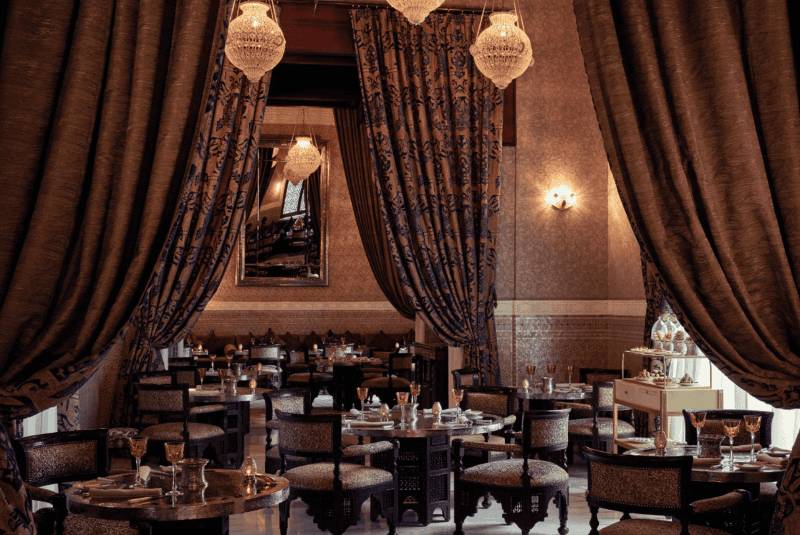
The ornate design of the dining room relfects Moroccan tradition and creates symbiosis with the service style and cuisine
Design is also key to creating an immersive experience, from the opening of the restaurant's opulent panelled door to its high ceilings and intricate blue patio, reflective of Morocco's traditional riads.
Ritual revival
Culturally important rituals are painstakingly preserved at La Grande Table Marocaine, forming an important part of the restaurant's identity. "From the moment guests arrive, they are immersed," says Messant. "Symbolic offerings of milk and dates – a centuries-old shorthand for welcome – mark the beginning of the experience, followed by hand washing with orange blossom–scented water [...] and the pouring of tea."
These rituals are not to be rushed – each gesture is intentional, with every detail from service and attire to music and decor aligning. "It creates a refined yet deeply human experience rooted in Moroccan tradition," says Messant. "The welcome with milk and dates is particularly meaningful to us, as it reflects traditions found in Morocco's most important ceremonies and celebrations."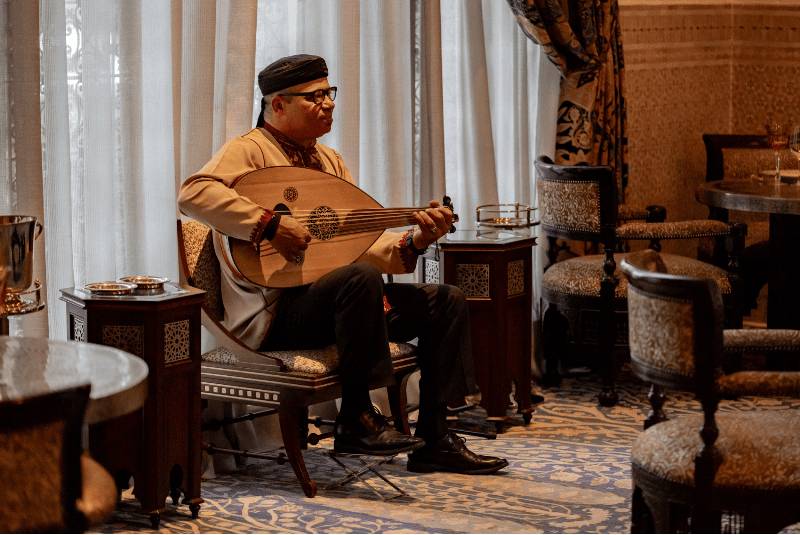
Authenic music is important to the entire experience at La Grande Table Marocaine
Hand washing is another ritual Messant cherishes – a gesture he says is slowly disappearing. Traditionally, an ornate vessel called a tass or an el mokraje would be used, often with scented water, to wash hands before communal meals as a moment of honour and hospitality. "Celebrating these traditions gives them new life, and that brings us great pride," he explains.
Story service
Creating a sense of abundance and conviviality is key to the culinary philosophy at La Grande Table Marocaine, and is best exemplified through the serving of couscous, says Chef Baba. "[Couscous] is Morocco's national dish and, above all, a dish of sharing," he says. "It is never eaten alone and traditionally brings families together, especially on Fridays."
In a reimagining of this heritage gastronomic moment, every Friday, La Grande Table Marocaine welcomes diners for a lunch of the country's most emblematic dishes, including the famed Royal Mansour couscous, made with seven vegetables in a type of steam basket known as a couscoussière.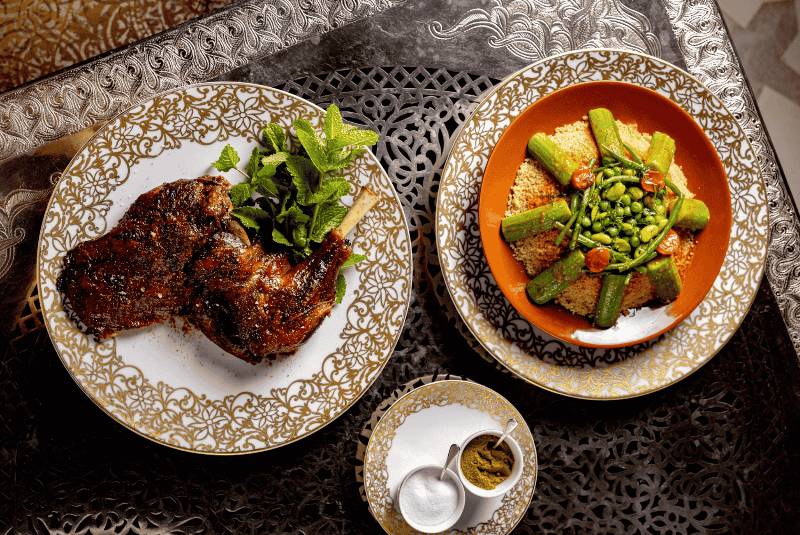
Friday lunch menus often feature a choice of meats and the restaurant's famous couscous dish, all to share
Across the restaurant's menu, storytelling is a priority. Berber tagine with chestnuts and black truffle or pigeon pastilla with Middle Atlas almonds, cinnamon and ras el hanout might arrive at the table in a heady-scented swish, along with tales about this dish's importance in Moroccan culture.
"Kitchen and front-of-house teams share the storytelling behind each dish – its origins, history and meaning – to ensure a genuine transmission to the guests," says Chef Baba. "At the same time, the service must honour each plate with the elegance and attention it deserves, so that the experience feels coherent, respectful and heartfelt."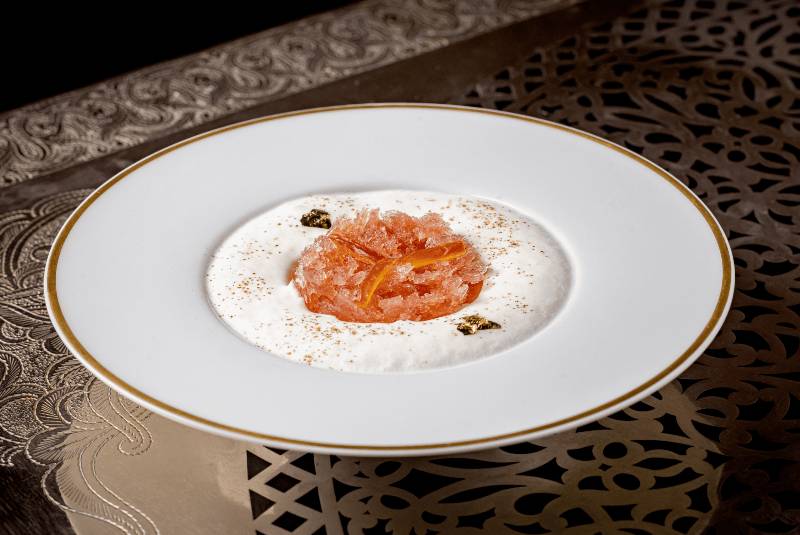
Special ingredients like dates are included in dishes such as creamy Zagora Medjool dates with fresh milk mousse and orange blossom water
Now recognised with the Art of Hospitality Award, as part of Middle East & North Africa's 50 Best Restaurants 2026, Chef Baba reflects: "This confirms that our work goes beyond serving exceptional food, it touches the heart, celebrates Moroccan traditions and brings together cuisine and hospitality in their most authentic expression."
It's clear La Grande Table Marocaine is a restaurant where hospitality doesn't end when service stops. As Messant says, for the team, creating celebration of Moroccan heritage in its fullest expression is a sentiment that's core to their values: "Hospitality is not a standard to apply, it is the heart of our profession."
The full list of Middle East & North Africa's 50 Best Restaurants will be revealed on Tuesday 2 February at the awards ceremony in Abu Dhabi.