The Ecuadorian discusses his early inspirations, distinct visual style – and what's it's really like working with his other half.
Nuema is no stranger to awards. The five-time winner of The Best Restaurant in Ecuador also boasts an internationally renowned pastry chef, Pía Salazar, winner of The World's Best Pastry Chef 2023.
Now, it may be time to invest in a bigger trophy cabinet. In December 2025, Alejandro Chamorro, the restaurant's head chef and husband of Salazar, took home the Estrella Damm Chefs' Choice Award at Latin America's 50 Best Restaurants, the only award voted for by fellow chefs. "It's a real honour," he reflects. "It's people you really admire – your peers – telling you that you're doing something right."
Here, Chamorro shares his early inspirations, his hopes for Nuema's legacy and what makes him and Salazar an unbeatable combination.
Have you always been interested in food?
Food was always that bond that brought my family together, but I wasn't interested in cooking when I was young. Lots of chefs talk about how they were inspired by their grandma, but that's not me. When I was a teenager, I started getting into cooking and I got hooked on TV shows hosted by chefs like Anthony Bourdain who were travelling around the world and getting to know places through cooking.
What was the turning point?
I was thinking about going to university and I was very interested in art. Eventually, I decided that cooking was probably the closest thing to art, and that it was probably more profitable too. 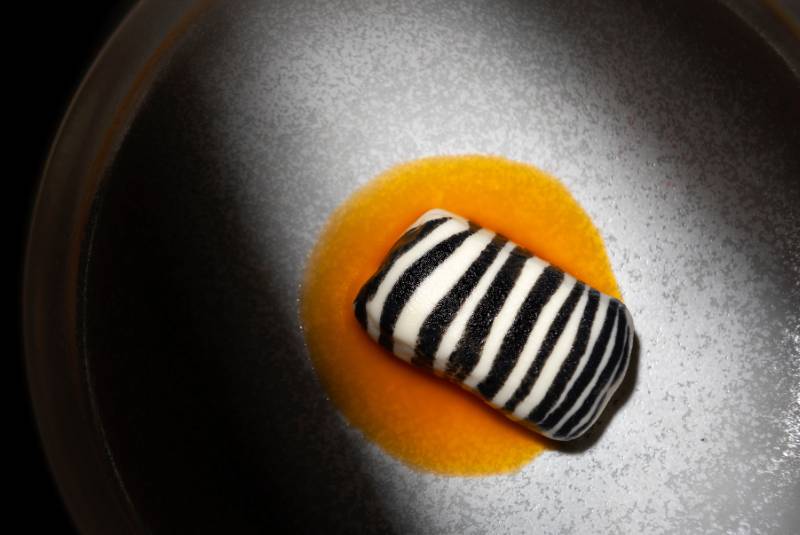
Graphic lines and striking shapes appear across Chamorro's dishes
Your interest in art is evident in your dishes today. How did you arrive at your distinctive visual style?
Your first impression of a dish is visual, which makes it a crucial element. I think finding my style was my way of nurturing my desire to be an artist and translating it into cooking.
With my dishes, I try to be very geometric. I love taking an ingredient's natural shape and using it to make mosaics. Other times, it's about using an ingredient's existing form to create something simple and beautiful. I think getting the most out of an ingredient can also be about using its natural form in the best way possible.
Why is it important for you to promote Ecuadorian cuisine?
For me, it's very important for a chef to be a messenger, an ambassador for their region. The memories you're born with and everything that surrounds you as you grow up, all those different flavours create a combination of associations that make you different.
Since I was a young chef, I wanted to help the world see everything that Ecuador has to offer. Undoubtedly, our greatest strength is our biodiversity. We have such an abundance of products and distinct regions. I want Ecuador to stop being a hidden gem; I want to show the world that we're waking up and starting to feel truly proud to be Ecuadorian.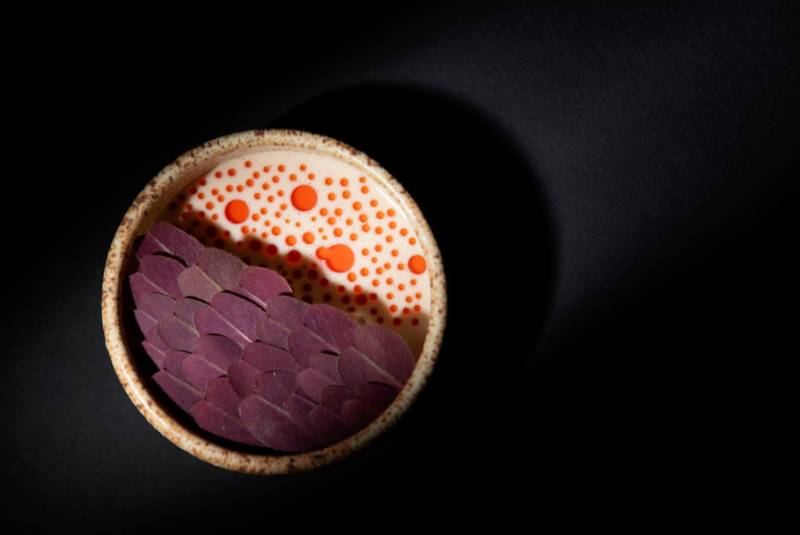
From savoury to sweet dishes, Nuema celebrates Ecuador's remarkable biodiversity
Countries surrounding Ecuador have enjoyed a gastronomic revolution in recent years. How has that impacted you?
Our neighbours have shown us a lot. I experienced the culinary revolution in Peru first hand, because after I graduated, I went to work at Astrid y Gastón, which was the best restaurant in Lima at that time. I always thought we could do the same thing for Ecuador by working with native produce and local flavours. I wanted to give Ecuador a voice.
What would you like more people to understand about Ecuadorian food?
That our cuisine is both diverse and decentralised – there are lots of important things happening outside of Quito. On the coasts, you'll find dishes based on flavours that predate the European conquest of Latin America, and we also have Andean cuisines and Amazonian cuisines.
If you come to Ecuador, you'll probably try something you've never tried before and which you may never be able to try again. For me, this is the new luxury.
You opened Nuema 11 years ago. How has the food scene in Ecuador changed since then?
Before my generation, most chefs were taking inspiration from European cuisines, and the dining scene was more about hotels than restaurants. About 10 years ago, a new generation of chefs started opening their own restaurants with a philosophy grounded in working with local products to show a new vision of Ecuador. Now, we have a range of restaurants which show the culinary richness of Ecuador, from fine-dining establishments to bistros.
Nuema is a joint project with your wife, Pía Salazar. What's it like to work so closely with your partner?
It's great. We really complement each other. Pía is a little bit more involved in the administrative side and brings balance to things, whereas I get carried away creatively sometimes. She's the one who always makes sure things get done. 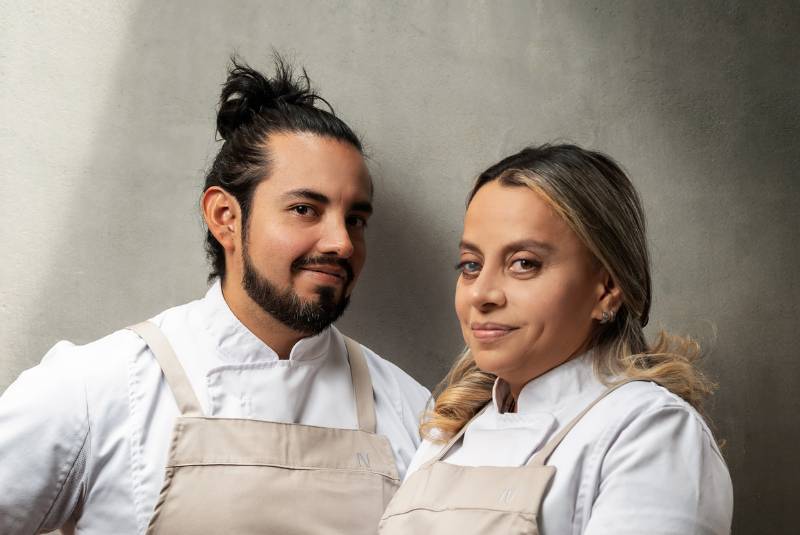
Nuema is named after Chamorro and Salazar's children: Nuria, Emilio and Martín
Do you inspire each other?
Completely. Pía thinks like a savoury chef when she's making her desserts. I've always admired that even when she's making very complicated dishes, she takes a simple approach. And then in return, I think I give her ideas for the visual presentation of her desserts. I'm able to see how a dish might end up looking, a bit like an architect can picture the end results. Together, we design menus where the sweet courses are every bit as interesting as the savoury ones and often we build to a high point with the desserts. Some restaurants struggle to make the sweet courses as interesting as the savoury ones, but I think our ability to build across the menu shows how strong we are as a team.
You've been a leader in the Latin American food scene for many years now. Do you think about your legacy?
I hope Nuema's legacy can be a story of two chefs who believed in Ecuador, who helped to bring Ecuador out from under the shadow of other great cuisines.
We recently started a multidisciplinary research centre called Tónomo, which will help us learn more about native ingredients, preparations and producers. This will also be part of our legacy.
Any words of advice for the next generation of chefs?
I would tell them to stand up for fine dining. I think every corner of the world should have spaces where we can reflect on our produce and our origins in a passionate and artful way. We also need to step out of our comfort zones and ask ourselves, 'How can I improve the lives of the people who come to my restaurant, my producers, my team, my community?'
I think that's my advice: always stay curious.
See all the special award winners and the full ranking of Latin America's 50 Best Restaurants 2025.