Riding the wave after reeling in the Estrella Damm Chefs' Choice Award 2025, as part of North America's 50 Best Restaurants, Michael Cimarusti, chef-owner of Providence in Los Angeles, reflects on the voyage that shaped him and what lies ahead.
The course that New Jersey-born Michael Cimarusti charted through the culinary world began in Rhode Island. Here, he spent his childhood summers fishing on his grandfather's 17-foot vessel in the Atlantic Ocean. These jaunts were not only a way for Cimarusti to bond with his grandfather, they also taught him a deep appreciation for the sea. This manifests itself at Providence, which landed at No.47 on the inaugural North America's 50 Best Restaurants 2025 list.
The 1991 graduate of the Culinary Institute of America is a preeminent authority on seafood in American fine dining. Cimarusti opened Providence in 2005, using simple but exacting cooking techniques to showcase high-quality, wild seafood that mostly swims in American waters.
An early review of Providence in Gourmet magazine steered Cimarusti into the sustainability space and today he's a leading champion in that arena. The restaurant mirrors his commitment to sustainable sourcing with a rooftop garden for produce, beehives for crop pollination and products packaged in glass or metal instead of plastic.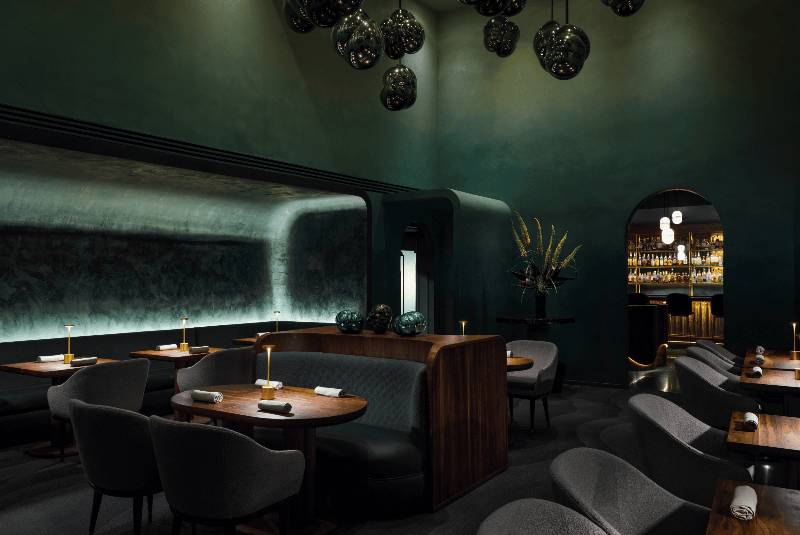
Providence's interiors continue the seafood-focused theme with plush yacht-like banqettes and dark wood finishes
Here, the passionate chef discusses life lessons from American culinary greats, his holistic approach to sustainability and why looking to the past could be the key to a better future in the kitchen.
You started out working in fine dining with Larry Forgione at An American Place and Wolfgang Puck at Spago. What are some of the most important lessons you learned from these chefs that you're still using today?
With Larry, 100 per cent of what I learned from him was the importance of sourcing. His restaurant, An American Place, was a groundbreaking restaurant in New York City and Larry would have ingredients coming in from all over the country, but everything was of absolutely impeccable quality.
Wolfgang was my introduction to Los Angeles. I left New York City and moved to Los Angeles and Wolfgang was my first job. I only worked for Wolf for about a year at the original Spago and it was where I began to learn a little something about what California cuisine meant. Wolf had very strong relationships with local farms – specifically Chino Farms, about 100 miles south of Los Angeles – and we got incredible products from them.
What inspired you to open Providence?
Throughout my career, it was always my intent to someday have a restaurant like [Providence]. I'd only ever really worked in fine-dining restaurants and I always thought at some point I would have one of my own. It's not only a goal of mine, but also my wife, Crisi Echiverri, who's also my partner in the business and my other partner, Donato Poto, who runs all the front-of-the-house operations.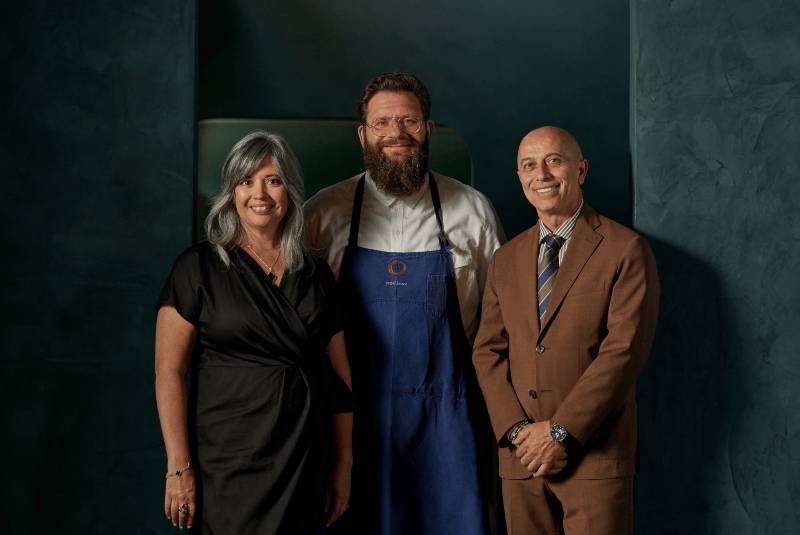
Cimarusti, Echiverri and Poto have worked together for the past two decades to make Providence the poster child for LA fine dining
How would you describe your cooking philosophy?
My philosophy is definitely driven by sustainability, but also by working with the very best ingredients that we can find, which we then do our best to highlight in a modern and simple way. We try not to get in the way of the flavour of the incredible ingredients that we're fortunate enough to work with.
What signature dish exemplifies this philosophy?
I'm sitting right now at the chef's table in the restaurant and right beside me is our fish tank, which is full of live Santa Barbara spot prawns. We salt roast the prawns in a very hot salt with rosemary and that's it.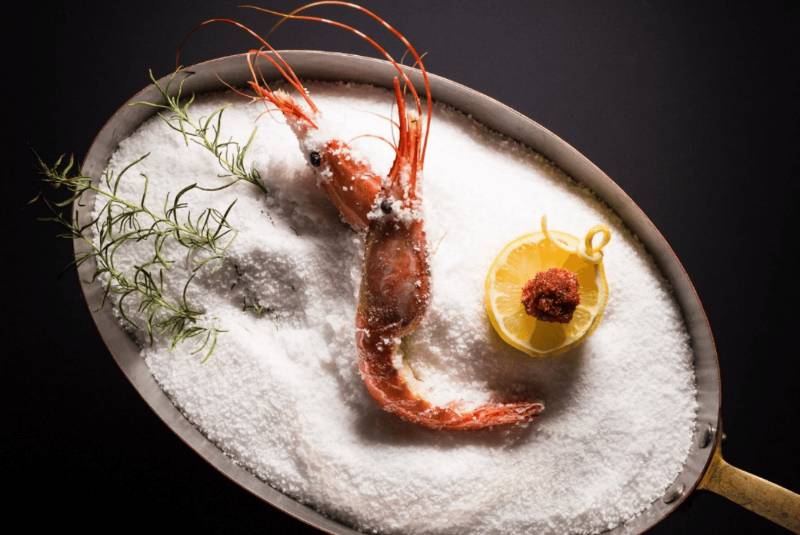
Diners are likely to find Californian spot prawns on the restaurant's multi-course tasting menu between February and October, when the local crustaceans are in season
That has certainly become a signature dish, but it has to do with the idea that prawns are among the very best ingredients in the world. This technique of very quickly salt roasting them means that by the time they get to your table, the prawns were alive maybe three or four minutes before you're eating them.
Where did your focus on sustainability come from?
In one of the first reviews that Providence ever got, which was in Gourmet magazine, editor Caroline Bates called us out for serving blue fin tuna. This was 2006 or 2005 and, at that time, blue fin tuna was in a bad spot. They were threatened in the Atlantic, they were threatened in the Pacific, and I just wasn't as well versed in all of these issues as I am now.
In the review, she said: "I would have loved to have enjoyed the blue fin tuna that Providence was offering, but I just couldn't do it with a good conscience." I read that sentence and I thought about it, started doing research and thought about how big of a mistake it was to have that on our menu, which started me off on this journey.
That's when we started composting and getting more serious about recycling. We also started the garden and started raising bees and doing whatever we could to try to have a little bit of a more slightly more holistic view of what sustainability is.
What are your thoughts on winning the Estrella Damm Chef's Choice Award?
I was blown away. Obviously, I'm honoured and I was overjoyed when my name was called. Honestly, I don't really know how to take it because I just keep my head down and do what I do.
I'm so happy, I'm over the moon. It's an incredible honour. I'm thankful and grateful for it, but it took me by surprise for sure. It makes me feel like we have to give even more and we have to set more of an example and find ways to be worthy of that honour.
What do you love most about being a chef?
The opportunity to mentor young cooks, to train young cooks. I want them to understand what old-school rigour in real kitchens is like, but I also want them to feel like they can come into the workplace and not feel anxiety. I try to keep a very light mood in the kitchen, with people feeling comfortable and able to laugh and enjoy their work. Back in the day it wasn't always like that.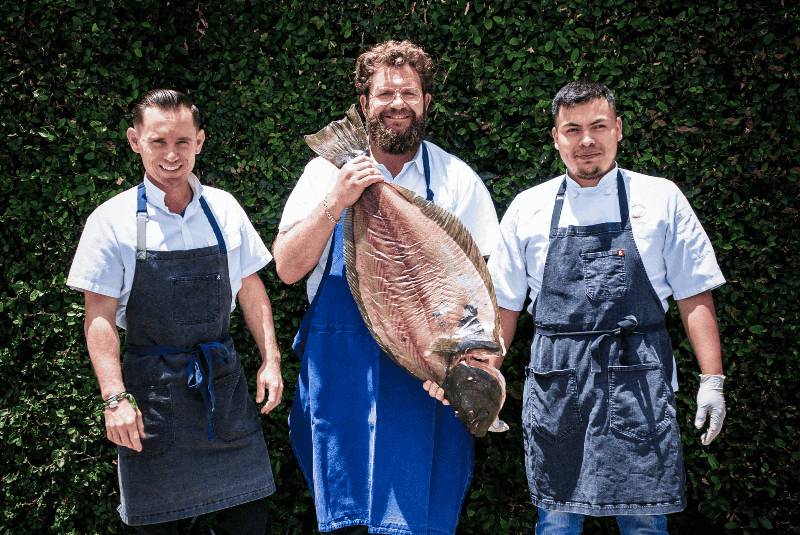
Cimarusti's ongoing support and mentorship of young chefs makes him an inspiring figure among the culinary community in the US
Learning how to cook is one thing, but there are all sorts of life lessons that young people need to learn that they can also pick up in the workplace. Something I try to focus on is creating an environment where they're learning about cooking, but they're also learning about professionalism, life, responsibility and integrity.
What is one thing that has remained constant throughout your career?
Evolution. The cooking that I do now is certainly reflective of my past, but it's ever changing. We're moving forward, exploring new flavours and techniques, but I always have an eye on my training and the chefs that moulded me into who I am. I feel like when young cooks fail to look back far enough, it hinders their development. The chefs that were big when I was a kid have earned a place far into the future of gastronomy.
It's up to chefs like me, chefs of my generation and chefs in the generation coming up right now, to make sure that young cooks don't forget about the contributions that all those chefs made. Our industry has changed for the better and young cooks today are coming up in an industry that's fairer, more inclusive and more sustainable. It's up to the next generation to continue that progress, but not to forget about where the industry came from.
Discover the full list of North America's 50 Best Restaurants 2025, sponsored by S.Pellegrino & Acqua Panna.