
The winner of the Champions of Change Award, as part of Middle East & North Africa's 50 Best Restaurants 2026, Muna Haddad, is on a mission to make tourism a force for good.
Muna Haddad grew up travelling to under-the-radar parts of Jordan. Years later, after studying tourism, she completed a master plan for the town of Umm Qais in the north – a hilltop village perched nearly 380 metres above sea level, with panoramic views stretching over the valleys, the shimmering waters of Sea of Galilee and the far reaches of the Golan Heights. When her plan failed to come to life, she returned with a different approach: build it herself from the ground up and prove it works. That's how Baraka Destinations began.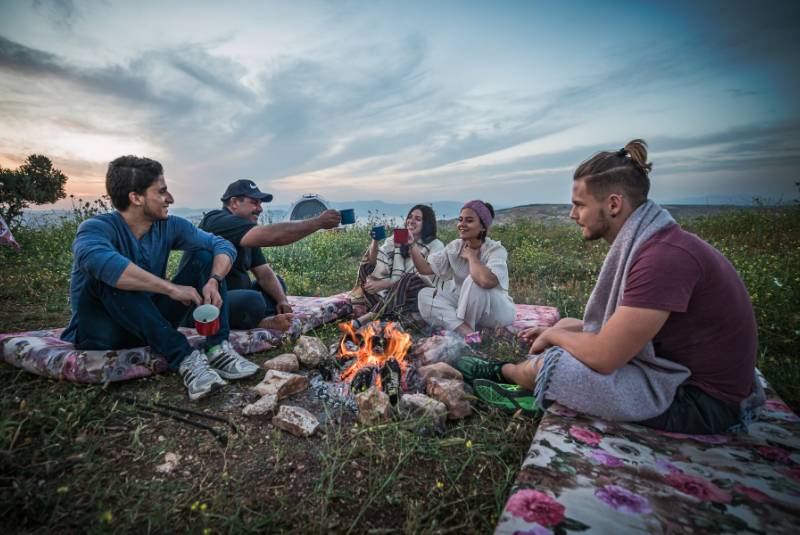
Through Baraka Destinations, guests explore the area of Umm Qais in Jordan with authentic and community-led travel experiences
The town in the north of the country is located at the border of three countries, where older residents still remember driving straight through to Syria to shop. The village sits on the ruins of ancient Gadara, surrounded by the Yarmouk nature reserve. As the local population are agriculturalists, the cuisine is rooted in the land – exemplified by makmoora, a traditional olive-oil-steeped bake of thin dough encasing chicken, onions and a heady blend of spices.
Haddad has just been awarded the inaugural Champions of Change Award, as part of Middle East & North Africa's 50 Best Restaurants 2026, recognising her work with local communities through sustainable tourism in Umm Qais and beyond. Over nearly two decades, her model has directly benefitted more than 150 families across rural Jordan, with 73 per cent of tourism income remaining within the communities themselves.
You've just been recognised with the Champions of Change Award, as part of Middle East & North Africa's 50 Best Restaurants 2026 for your impact on sustainable travel. Beyond the personal honour, what does this recognition mean for the communities you work with, and for the future of responsible tourism in Jordan?
It makes a very big difference when an entity like 50 Best creates a platform to highlight this kind of travel. I think it's important that this kind of award exists in the first place. I hope it inspires others, and that it encourages people already doing this work to see that it matters. With all the difficulties it comes with, it's worth it – not just from a recognition perspective but from a shift in market interest. The business will come.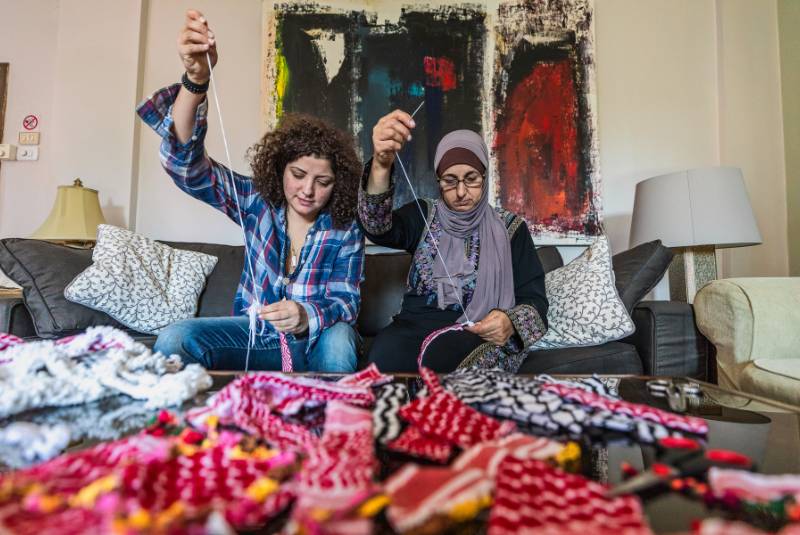
Hadab, the traditional craft of creating the decorative fringes or tassels on the edges of keffiyeh, a Middle Eastern headdress
This is the first time I've really sat with an award we've received. I'm proud of us and what we've done over the years. It's a big deal for our community too. I hope it puts this tiny little forgotten village on the map and that people will visit them and meet them. Every opportunity we have to shed light on who they are and what they believe is important.
You design experiences rooted in the land, from olive harvesting and cooking to storytelling by a beekeeper and other producers. Why is food such a powerful entry point for travellers to understand the place?
There's a circular economy to it. I think a lot of the food that we're used to in urban cities is packaged and there's a disconnect between the producers and the items on your table. Whereas when you go to more rural areas that are farmer-centric, the food becomes so much closer and you meet the farmers, and the person serving you the food and putting the food on your table has more than likely picked the food themselves from the farms. So there's a much deeper connection to the people through food.
What is it that you hope guests take away from meeting the people behind the ingredients? What will they learn about Jordan and also potentially themselves?
It's a curated, deeply researched experience, and the first thing we do is shift power dynamics. It's not poverty tourism: you're not visiting someone to have pity on them. Yousef, our beekeeper, is the champion. He becomes the teacher. When you meet him, you realise very quickly he's an expert who knows everything about bees, honey and the land.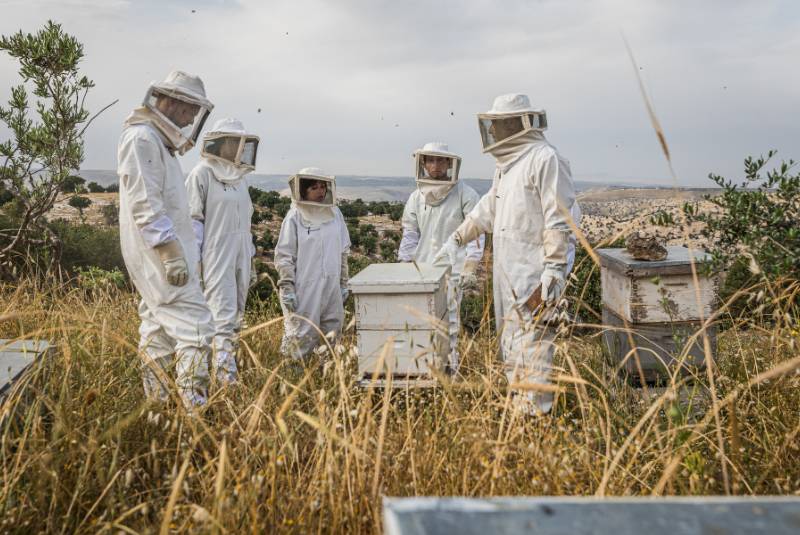
Guests learning the significance of bees through a very physical experience
The people become guides to a new way of thinking. With beekeeping, for example, guests understand the global significance of bees, but they're learning it through a very physical experience. Nine of our guests have actually become urban beekeepers because of Yousef. It leaves a much deeper impact.
We also shed light on seasonality, why it matters, what it means for farmers, and the preservation methods used to extend a season. Guests take that understanding home with them. The experience isn't fluffy; there's depth, and it shifts people's behaviour.
Your model keeps more than 70 per cent of income within local communities. What were the biggest challenges in building an economic system that truly benefits residents?
Our accommodation is an anchor, and then we co-create micro-enterprises around it – beekeeping, hiking, biking. We co-own them with the community, and over time they start owning them fully. It's a build-operate-transfer model.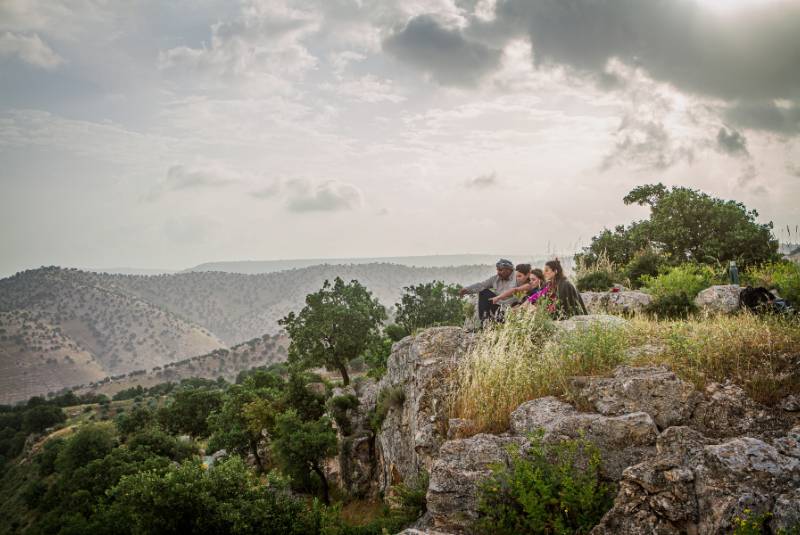
Hiking in Jordan reveals stunning landscapes, rich wildlife and the beauty of challenging trails like Tal Sartaba
Then there's a third layer: the localised supply chain. We invest in upgrading the dry cleaners, water filtration, farms and shops. We fix the kitchen of the woman who makes jam and train her so we can buy from her. There's an infrastructure component and a training component.
One of the biggest challenges was shifting the mentality of 'charity'. This is not a charity. My mission is that tourism as a force for good becomes mainstream. When we started, we were considered tree huggers – the charity-doer tree huggers. Now we're at the table with big businesses, having real conversations about transforming the industry. That shift has been exciting.
Training and mentorship are central to your approach. Which skills or mindsets most empower people to run their own enterprises sustainably?
We shy away from the word 'empower' because it implies we have the power and give it to them. Our methodology honours the knowledge already there and shifts power dynamics.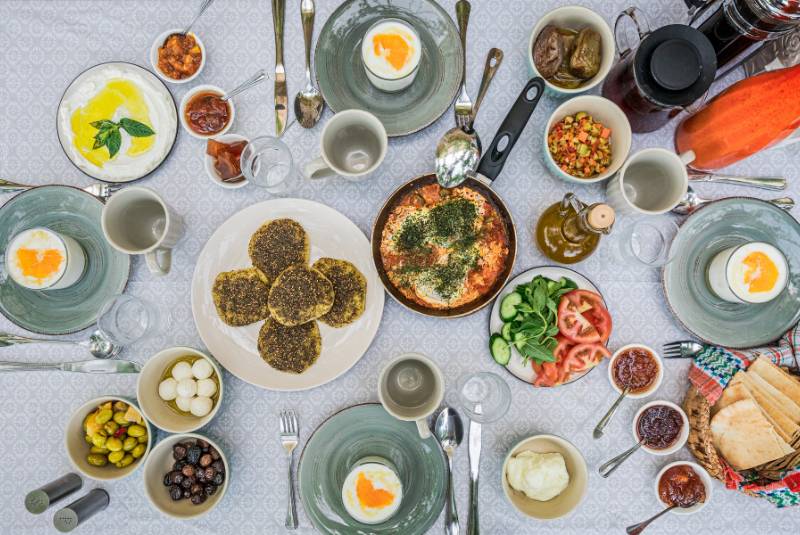
Of course, there's lots of fresh northern Jordanian cuisine to try
In communities where there's a food component, they often want to make pizza because they think that's what foreigners want. One of the first things we do is help them rest in their value and to see the worth in what they already have and recognise that this is exactly what's worth sharing.
Then we work on the technical side: food handling, financial management, marketing, sales, storytelling, English. Many people we work with aren't used to having abundance, so managing money is important, especially with seasonality. We use different methods to help them manage income during high and low months.
As interest in purpose-driven travel grows globally, what part of your model do you hope will inspire others?
We're looking at expansion in Jordan and regionally. Since day one, we've been focused on replicability and documenting our learnings so the model can be adapted elsewhere.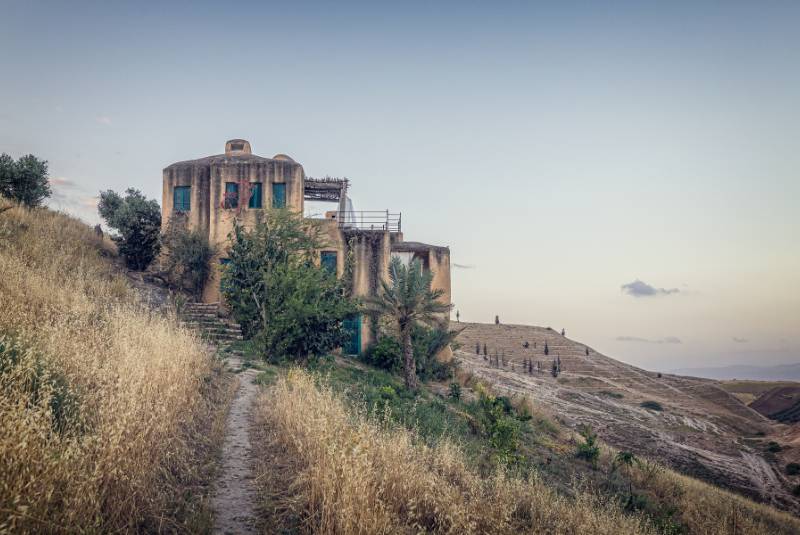
In the Pella area of Jordan, there are many archaeological sites to discover
It solves a lot of global issues. Everyone is talking about overtourism; hidden gems are a great way to move away from that. Travellers today are more educated and aware. They're not inspired by mass tourism anymore. They want meaningful, slower connections.
Checklist tourism came from an era when travel was expensive and you didn't think you'd return. Now people want to have a meaningful time and leave with something learned. That's where travellers are, and our work aligns with that.
The list of Middle East & North Africa's 50 Best Restaurants 2026 will be revealed from Abu Dhabi on 3 February.