With the sixth annual edition of Middle East & North Africa's 50 Best Restaurants coming to the UAE capital on 3 February 2026, take a look at Abu Dhabi and the surrounding region's culinary history.
Fifty years ago, the UAE looked very different to how we know it today. Sprawling metropolises have sprung up, creating some of the most advanced cities on the planet. In Abu Dhabi, locals and visitors alike enjoy access to cuisines from all over the world, but in recent years, a boom in authentic Emirati food has seen local culinary traditions take centre stage.
To understand Emirati food today, you have to look at the area's culinary heritage. Here's how this cuisine has evolved over the past 80 years.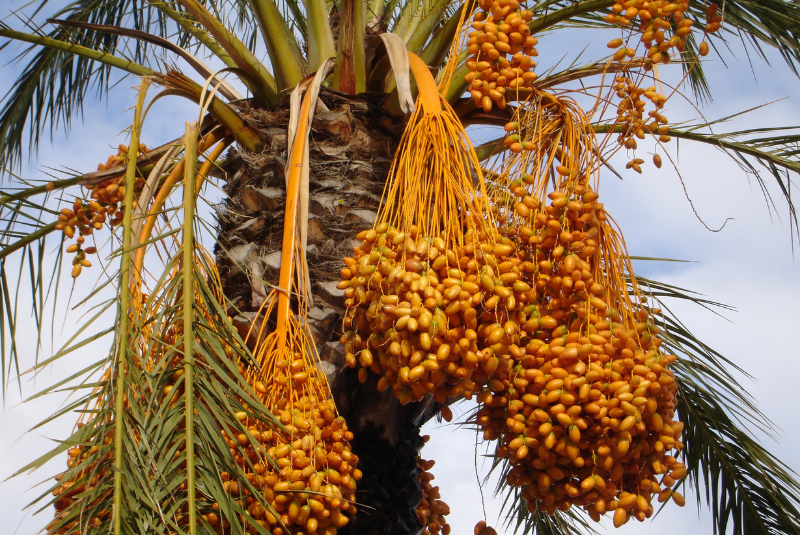
Dates, which grow on large palms, were popular among Bedouin travellers and are still grown in abundance today
Pre 1950: The Bedouin era
While there is a long history of the Bedouin people in the Emirates, the most significant event in the settling of the UAE's capital city was the relocation of the Al Nayhan tribe from the Al Ain oasis to Abu Dhabi in the 1790s. This group, who would go on to become the ruling family, were prompted to move by a discovery of plentiful fresh water in Abu Dhabi.
Mohammed Kazim, an Emirati researcher specialising in the culture of the Arabian Peninsula, explains: "There are very few written records of what was being eaten at that time. We know that in mountain areas and rocky plains they were able to grow barley, wheat and millet, as well as rice in Asir and the Al Ahsa Oases.
"The exact dishes varied from place to place. You could expect that meat – goat, sheep or camel – would only be typical of meals for special occasions like Eid or a wedding, served together with rice, bread or dough soup.
"These were dishes like haneedh [slow-roasted lamb stew], fogah [fish with rice and citrus] and tahta [layers of salty fish with rice]. Honey would sometimes be added to the meat and rice in the mountain terrain, with certain herb-like shrubs used for flavour, such as wild zaatar, sheeh [wormwood] or bardagoosh [marjoram]."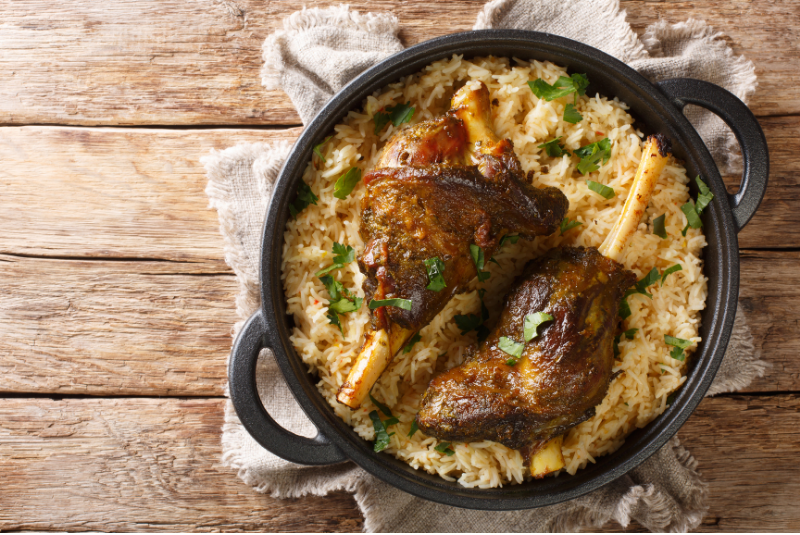
A dish of hannedh, slow-roasted lamb stew on a bed of rice
Using bags made with animal skins to churn milk, limited dairy products were also possible, including laban (buttermilk), samn (ghee) and zibdeh (butter). Meals were always homemade. Led by the women of each tribe, they cooked the stews and baked the breads over fires within a curtained off area of the family tent dedicated to cooking. Recipes were passed down through the simple process of generations working together, learning from one another.
1970s: Formation of the union
As trading increased in the coastal communities of the Emirates, souks were established for the fishers, spice traders and local farmers to sell their goods – and caféterias opened to serve the visiting traders. Emirati dishes such as ragag (crispy flat bread with cheese, honey or date syrup), chebab (pancakes) and balaleet (omelette with vermicelli noodles) were sold in these markets by entrepreneurial women, alongside more fragrant dishes from visiting traders. 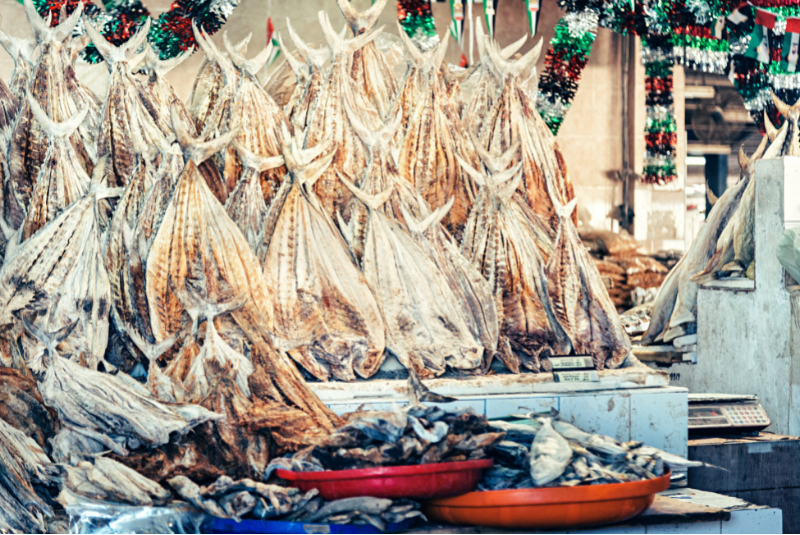
Fishers sell their produce at local markets across the United Arab Emirates
Enduringly popular for breakfast across the Emirates, these dishes can be found in both busy roadside caféterias and five-star hotels in Abu Dhabi, encouraged by the support of the government-led Emirati Cuisine Program. Cooked from a yellow batter infused with turmeric and cardamom, chebab pancakes are drizzled with date syrup and sometimes folded over cream cheese. Al Fanar Restaurant in Abu Dhabi has developed a reputation for its signature Emirati breakfast platter, which features an authentic selection of chebab, balaleet and local breads.
A new world of flavour began to slowly open up, with cinnamon, saffron, turmeric, chilli and nuts readily available, quickly updating the flavours of local food. Preserved, tinned and packaged foods were also coming into the ports, as well as fruits and vegetables such as coconut, dried beans and herbs.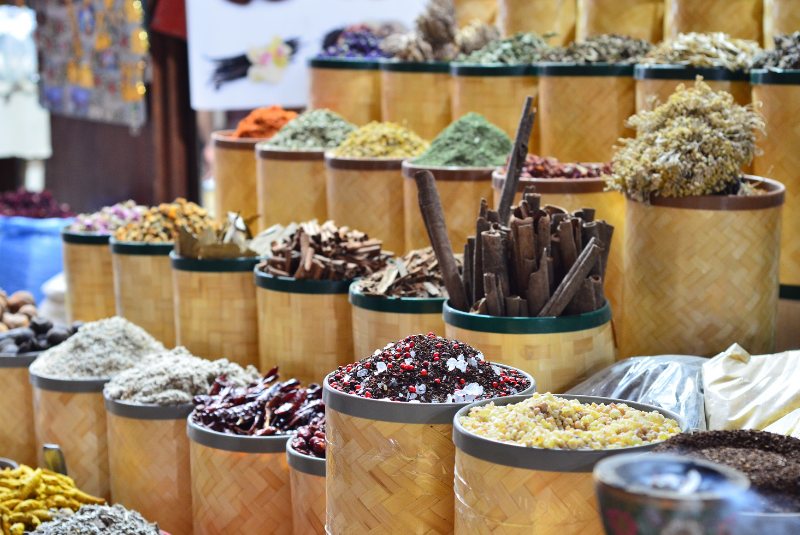
A vast array of spices are sold at local markets, including cinnamon, saffron and turmeric
1990-2010: High speed food
The evolution from Emirati towns into cities saw its peak in the 1990s and early 2000s. Exciting, foreign concepts arrived that reflected every corner of the world. Korean, Ethiopian, Irish, Pakistani and Filipino restaurants popped up with great success. During this period, pretty much the only way to enjoy an authentic Emirati cuisine experience was to be invited to an Emirati home for Friday lunch.
Even during this time of international expansion, authentic Emirati dishes were cooked using the same techniques, at home, for special occasions. Home-cooked favourites included thabeeha (a whole goat cooked over spiced rice and served with broth and laban), aseeda (pumpkin cooked with roasted flour, cardamom and ghee) and machbous (fish or goat, loomi and tomato stew served with rice).
2010-2020: Preservation
Home cooks and families continued to keep recipes from the past alive. Hotels wanting to offer holidaymakers some Emirati dishes had already started to offer balaleet and ragag at breakfast buffets and 'Arabic' restaurants were including a short section of Emirati dishes the menu amid favourites from Syria, Lebanon and Iraq.
Though much fewer in number, independent restaurants started to focus more on offering the Bedouin dishes created during those early days of the Emirates. One such success story is Al Fanar, which now has five locations across the UAE.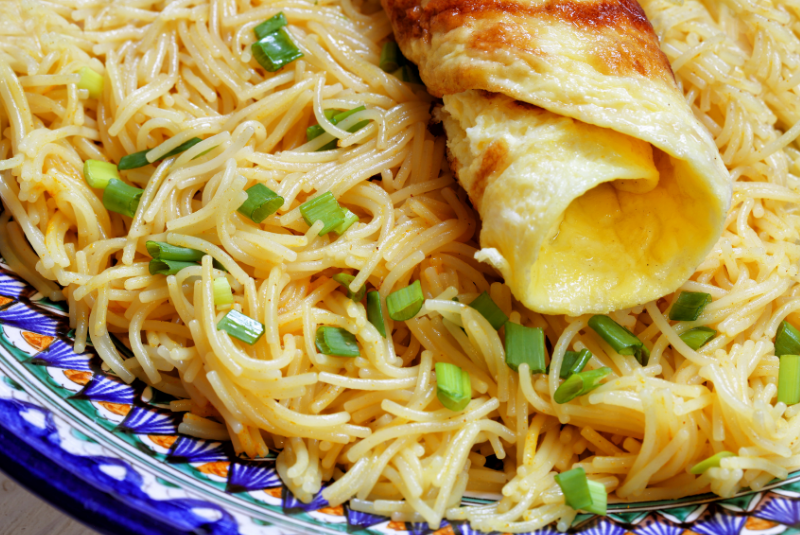
Balaleet, made with vermicelli noodles, sweetened with sugar, cardamom, rose water and saffron, topped with an omelette, is a popular breakfast dish
Founder of Lento restaurant in Abu Dhabi, Faisal Naser was studying science in the United Kingdom when he started to think about turning his cooking hobby into a career. "I wasn't able to tell my parents that I was working part time in restaurants in the UK and wanted to take it more seriously," he says. "When I went to England to study genetics, I was cooking Emirati food for other Arab students who were missing home – but cooking was just for home.
"With the help of social media, there was a gradual acceptance of Emiratis working in the kitchen and eventually it became my full time job."
Chef Naser has found various ways to integrate what he learnt from older generations into his cooking. "I learnt classic Bedouin techniques at my father's side, including hanging an animal to dry after it is slaughtered. This helps to achieve more tender meat and crispier skin. I've also been able to source a type of thoom jabaly [mountain garlic] that I use when pickling, and still use loomi [dried limes] with a microplane to add a citrus fragrance to finish dishes."
His casual restaurant in Abu Dhabi serves mostly burgers to the customers willing to queue up for them, made with a blend of 34 spices and served in Hokkaido milk buns, staying true to its roots, but with one eye on the future.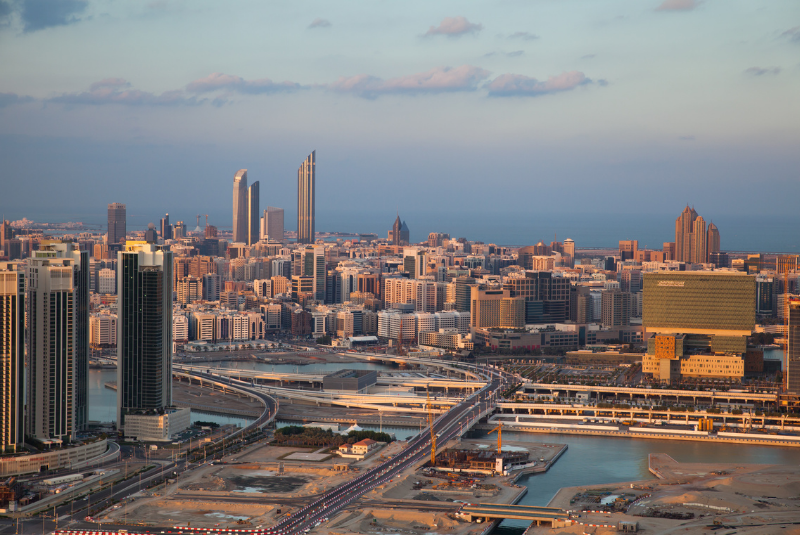
The Abu Dhabi skyline has risen quickly over the past decades
2021 and beyond
Given the massive cultural shift opening the path for young chefs, it's perhaps too soon to pigeonhole Emirati cuisine.
From chefs and diners alike, there's a huge optimism about the future of Emirati food in Abu Dhabi. Local food influencer Nashwa Khurram has noticed an uptick in the use of traditional ingredients such as saffron, cardamom, hammour (a kind of grouper), dates and camel milk, which is being incorporated into ice cream and gelato. She has also seen traditional dishes like luqaimat (sweet dumplings or fritters), balaleet and machbous increase in popularity.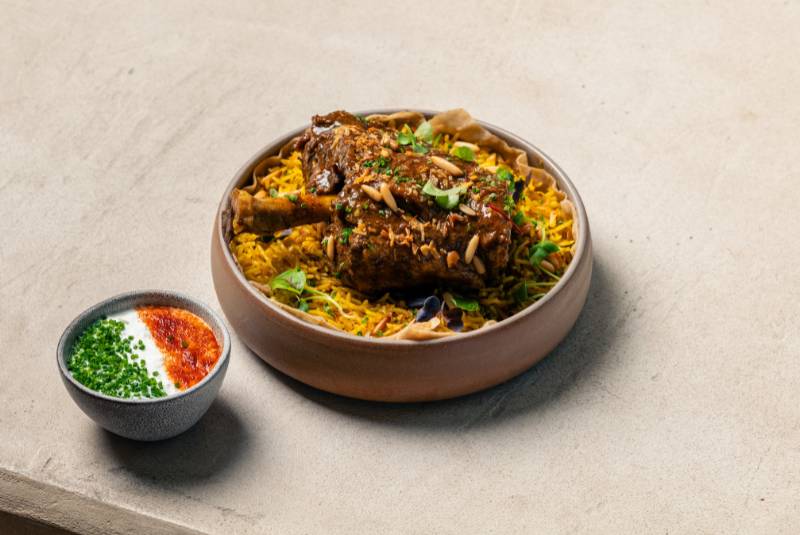
Dishes at Erth Al Hosn use modern techniques to elevate traditional Emirati dishes
As Arivukkarasan Ravikkumar, executive chef of Erth Al Hosn says: "In fine dining, classic Emirati recipes are being thoughtfully reimagined through modern techniques and refined presentation, incorporating methods such as sous vide and elements of molecular gastronomy. At the casual level, street food concepts and cafés celebrate authenticity by serving beloved Emirati bites including regag, samosas and dates stuffed with nuts, making tradition accessible to a new generation of diners.
"Sharing Emirati culture and traditions with the world, while continuing to innovate and push culinary boundaries, is a true privilege. We are not simply cooking; we are preserving heritage and presenting Emirati cuisine as an exceptional, globally relevant culinary experience."
The full list of the Middle East & North Africa's 50 Best Restaurants 2026 will be revealed in Abu Dhabi on 3 February.
Additional reporting by Olivia Simpson