As executive director at Zero Foodprint Asia, chef and activist Peggy Chan tackles one of the biggest problems in the food system by helping farmers to repair their soil.
When Peggy Chan went to culinary school in 2003, she learned everything required to become a chef, "from turning tenderloin to searing foie gras to tempering chocolate". One thing was missing from the curriculum though: sustainability.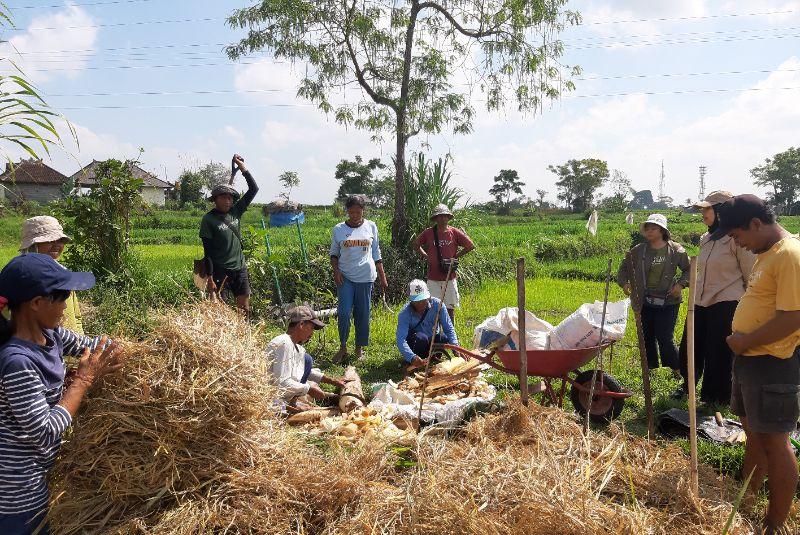
"I picked up all of the skills needed to survive a very challenging industry – or so I thought," Chan said in a 2020 TEDx talk. Students weren't shown how to source ingredients, and there was next to no teaching on nutrition, she explained. Having hired chefs fresh out of culinary school at her trailblazing Hong Kong restaurant Grassroots Pantry, she knew little had changed in the interim. "It's a joke for a profession tasked with feeding people."
Fast forward to 2026, and sustainability and nutrition are at the heart of everything Chan does. As executive director of Hong Kong-based non-profit Zero Foodprint Asia, she asks restaurants and hotels to pledge 1 per cent of their sales, which goes towards helping farmers to set up regenerative practices like composting and crop rotation. The model is based on California-based non-profit Zero Foodprint (ZFP), whose founders Chan met in 2018.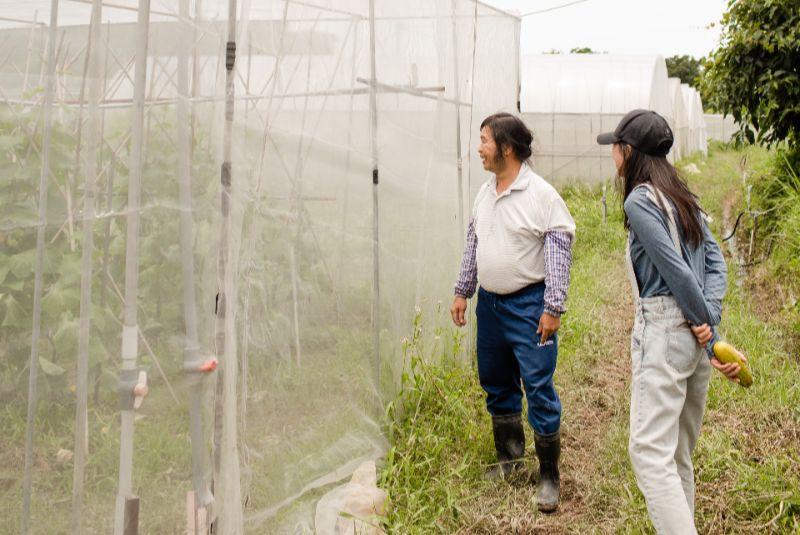
Now in its fourth year, ZFP Asia has granted more than HKD $8 million (US $1m) to projects in Hong Kong, Thailand, Malaysia, Nepal, Indonesia, Singapore and the Philippines, helping farmers to work more sustainably, while educating restaurants and consumers too.
From the ground up
It all starts with soil. When soil is healthy, it acts as a natural 'sink' that draws down excess carbon, reducing the impact of climate change. However, with half of the world's topsoil lost due to industrial agriculture, this function can't be performed. That's where ZFP Asia comes in.
"Industrial systems have always told us the only way to feed the world is industrially," Chan says, explaining that the chemicals and fertilisers used in industrial practices have killed off large parts of the soil's microbiome, leading to less nutritious crops. "Now we know that's not true. We can restore soil health and grow tonnes of nutritious food."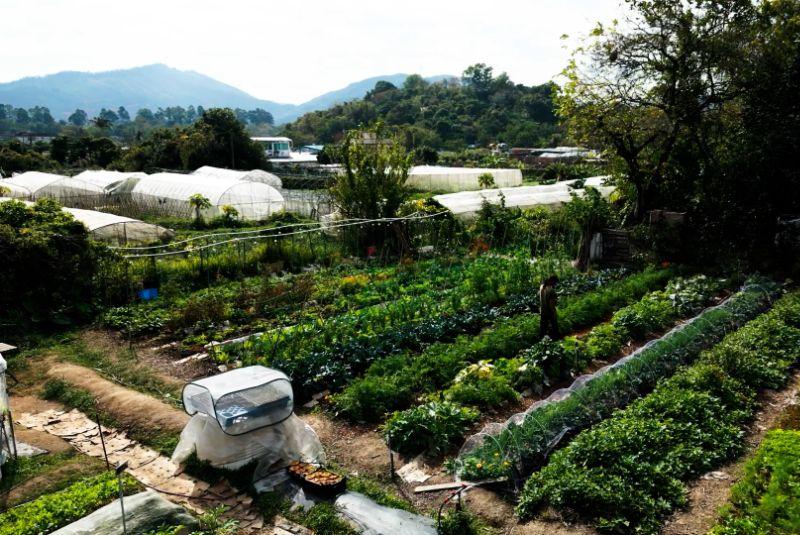
When ZFP Asia began, its beneficiary farms in Hong Kong measured around 2 per cent of soil organic carbon (SOC), an indicator of soil health and fertility. After three years, the organisation has helped increase SOC to 12 per cent through regenerative farming. It has also extended the harvest by up to two months, producing healthier crops with lower costs.
"The farmers are seeing the difference," Chan says, speaking from her home in Penang, Malaysia, where the organisation is expanding. "This is the way their grandparents farmed, so why are we not being recognised? The government needs to recognise that and protect farming in such a way that future farmers can grow productively but also protect people's health."
Beyond restaurants
Chan has always dreamed of saving the planet. Growing up with a connection to nature and a love of animals, she went vegetarian early in life, and when she learned of the problems of industrial farming, she wanted to tackle that too. At Grassroots Pantry, she created a sustainable business serving plant-based cuisine that was good for both the planet and her customers. But, somewhere along the way, she realised if she wanted to make a bigger impact, she needed to go beyond running a restaurant.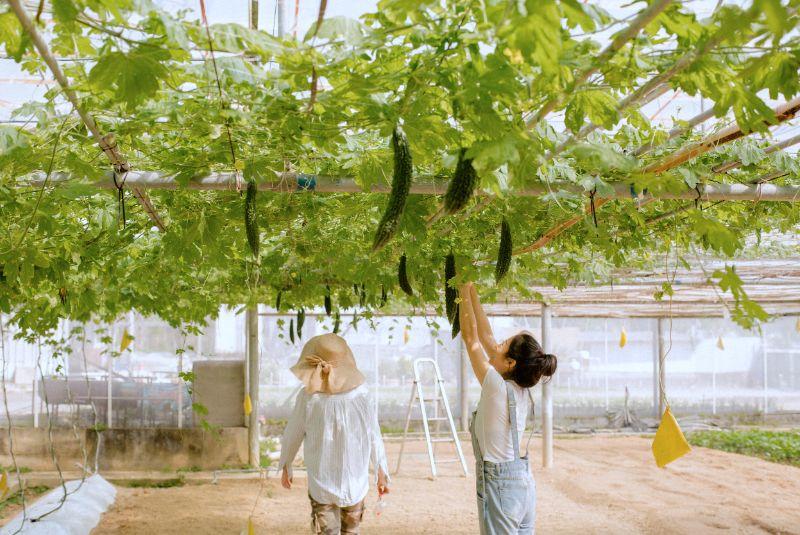
"There's only a very small handful of restaurants that can actually dedicate their time to sourcing locally from small farmers," says Chan, who grew up between Hong Kong and Canada. "It's not enough of a shift to change the system and the way we procure food. It's wonderful that our little restaurant was buying all the good stuff, but what about the next restaurant, and how can we get the next 100 acres of farmland to become more sustainable?"
How to work smarter
In 2018, while still at the helm of Grassroots Pantry, Chan spoke at a food festival in Australia. It was there she met Anthony Myint and Kara Leibowitz, the founders of ZFP. Initially consulting them on how to make Grassroots more sustainable, she soon grew more interested in the bigger picture. In 2019, she closed her restaurant and pivoted to Grassroots Initiatives, a consultancy helping other restaurants and food businesses to become more sustainable.
But in 2020, the world went into lockdown and restaurants ground to a halt. Many countries, including Hong Kong, were pledging to achieve net zero to help slow global warming. Chan talked to Myint about educating Asians around regenerative farming, and how to bring funds to farmers to help them grow better. These conversations turned into the first pilot programme for ZFP Asia.
"Changing consumer habits is very slow," Chan says. "The restaurant was a great way to inspire others to do more, whether it's their own diet and personal choices or just a willingness to learn more about food in general. But the restaurant, in terms of the amount of effort and work that's involved to create the social and systemic impact that I wanted, is difficult. That's why a pivot worked well: first consultancy, then leading ZFP. With nominal effort, we can create an enormous impact. It's working smart instead of just working hard."
Together, not apart
The challenges in Asia are different from those in the US, and while ZFP Asia follows the ethos of its US counterpart, the organisations operate separately. Farmers and restaurants in the US are typically more 'ready', Chan says, but in Asia, there's a lot of education to be done before chefs and restaurateurs understand the importance of regenerative farming.
"One of the struggles is to get the industry excited around not just soil health but also the connection to food, and the honour, respect and reciprocity that we should have with our farmers," she says.
Chan hopes to use the grant from the Champions of Change Award to raise awareness of the importance of restoring soil health, generating interest in chefs and restaurants and encouraging them to pledge towards ZFP Asia's projects. She also knows real change can't be made on an individual level.
"For a long time, especially pre-Covid, our industry operated very much on individual action: individual restaurants, individual chefs, individual sourcing choices," she says. "What emerged through Grassroots, and later through Zero Foodprint Asia, was a shift toward collectivism. The question became: how do we do more good together? By pooling resources, aligning incentives and working collaboratively across restaurants, diners, farmers and communities, we can create systemic change rather than relying on a small number of 'good actors'."
Future plans
Aside from her collective work, Chan has personal goals too. Since having her first child in 2023, she has become more passionate about women's health and pregnancy. She is studying naturopathy and eventually wants to help women and children with nutrition. She also dreams of starting a farm-based bed and breakfast that would contribute to its local community.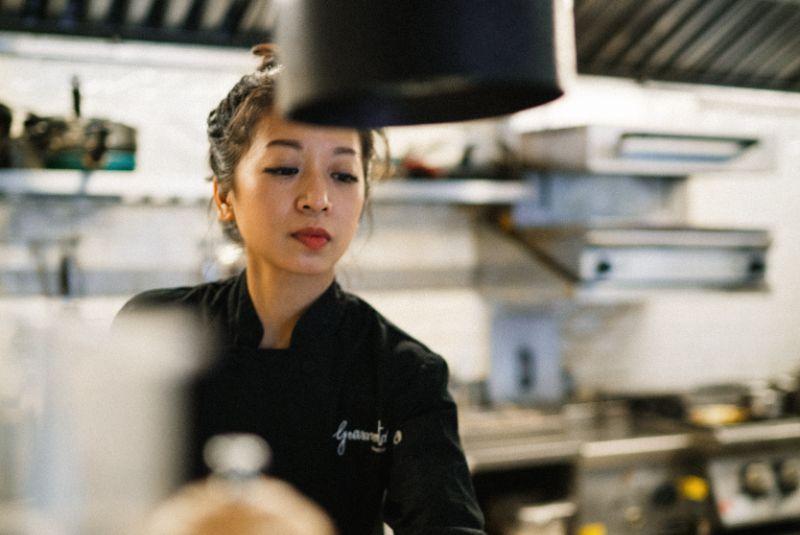
As for winning the Champions of Change Award, she says it comes at a turning point in both her life and her career.
"The last 20 years were really about doing – taking action and having the energy to take risks and create impact, and running the restaurant to inspire people in that way," she says. "The last two years have allowed me to slow down and figure out what the next 20 years will be. It's great timing."
With Zero Foodprint Asia, Chan has planted a seed for change that can only grow in one direction.
Peggy Chan is the winner of the Champions of Change Award, as part of Asia's 50 Best Restaurants 2026. The full list of restaurants will be revealed from Hong Kong on 25 March 2026.