For nearly a decade, Kyle and Katina Connaughton have been creating a new kind of California dream at their Sonoma County restaurant – the blueprint for sustainable dining. Now, as winners of the Sustainable Restaurant Award, as part of North America's 50 Best Restaurants 2025, chef Kyle Connaughton shares the intricate ecosystem that makes SingleThread so impressive.
It all starts at the farm
SingleThread's kaiseki-style tasting menu is entirely dependent on the produce harvested that day from the restaurant's 24-acre farm. Run by head farmer Katina, the farm produces most of the ingredients used in the kitchen. "The restaurant is a reflection of the farm, not the other way around," says Connaughton.
Every day is different
Instead of starting with an idea and finding the ingredients, chefs begin with the harvest. "We tell the story of today, so the guest is experiencing what is happening on that particular day," says Connaughton. "We harvest seven days a week and we're open seven days a week, so the guest is really experiencing a true and accurate reflection."
Diners are encouraged to live in the moment
Guests are not only treated to a strong sense of place through everything, from ingredients to flowers on the tables, but also to a specific point in time. "We want to connect people who have very busy lives, who are doing a lot and always thinking about the future, to being very present in that moment," Connaughton says. "In Japanese, there's a very famous saying, 'ichi-go ichi-e', which means 'one chance, one encounter'... we just do that."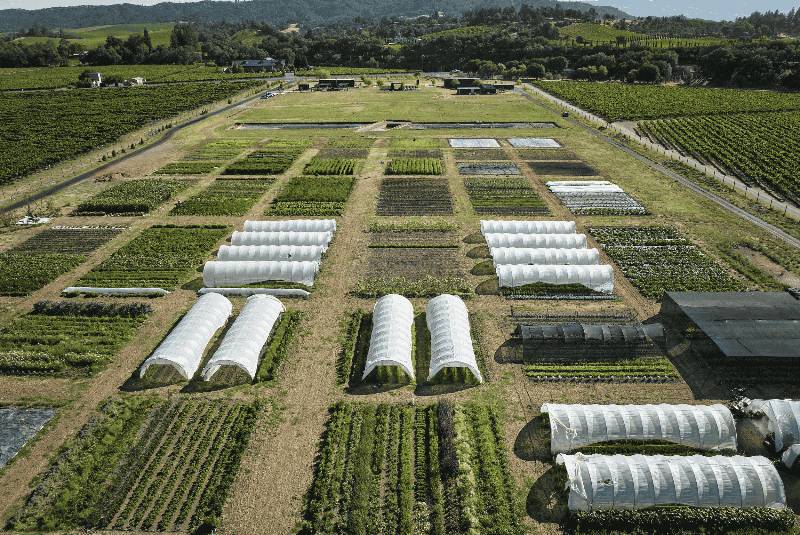
Produce grown on the farm includes Kyoto carrots, tomatoes and nasturtiums
Getting outdoors is part of the experience
SingleThread offers tours of the farm every day at 11am and 6pm for guests to visit before or after their meal. "Guests can see where the ingredients come from, see the practices, be outdoors, feel a sense of the weather and the terroir and then connect that to the menu," says Connaughton. "[The dining experience] is so much more fulfilling when you have that connection. The food just tastes different."
Investing in the soil means better flavour on the plate
Much emphasis is put on slow farming and maintaining healthy soil at SingleThread. This not only benefits the local ecosystems, but creates a better product, says Connaughton. "Our philosophy is building healthy soil and healthy produce as a result. The nutritional density translates directly to flavour. That's the biggest thing we try to teach guests when they come to the farm. A conventional carrot next to a carrot that Katina grows – there's no comparison."
Rest is as important as work
"When you walk out to the farm, you see that pretty much at all times, 25 per cent or more of the land is actually in rest," says Connaughton. The farm rotates 'growing blocks' in a grid system, rotating crops, covering ground to hold moisture and rest the beds, and using cover crops like peas, fava beans, oats, buckwheat, mustard and treating beds with composting before planting again. "We farm in a very slow way within the growing blocks," he says.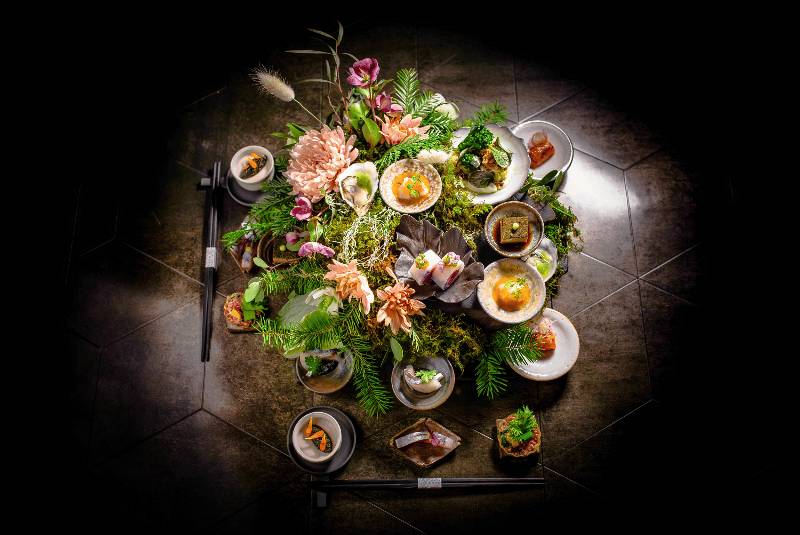
SingleThread's Japanese-inflected tasting menu showcases the biodiversity of Sonoma County
Water systems are key
The farm is located on a high water table, which while is technically not good for farming due to high levels of groundwater, Connaughton explains, it means the farm is able to operate outside of official water systems. "We don't use any municipal water. It's all wells. But despite having a lot of access to water, we still practice drought-tolerant farming. So we don't use overhead watering, we use drip irrigation."
Waste isn't a concept
Back in the kitchen, waste consideration is integral to the restaurant's way of working. "We're able to utilise everything, so waste is not really, truly waste. It really does drive the way we think and the way we cook," says Connaughton. Ingredients arrive at the restaurant from the farm ready to use, without the trappings of cardboard or plastic. What is lost through trimming or preparation is saved and turned into compost, returning through the permaculture centre at the farm.
Abundance is carefully considered
"At the farm, we have a kitchen that's dedicated solely to fermentation and preservation," says Connaughton. These creations make appearances on the restaurant's menu, but there's also a farm shop selling jams, pickles and sauces. "In the summer we have an abundance of things, so we're drying tomatoes, we're drying plums so we can do a dried plum dish in the winter. We have this larder we're always responsibly managing," he explains.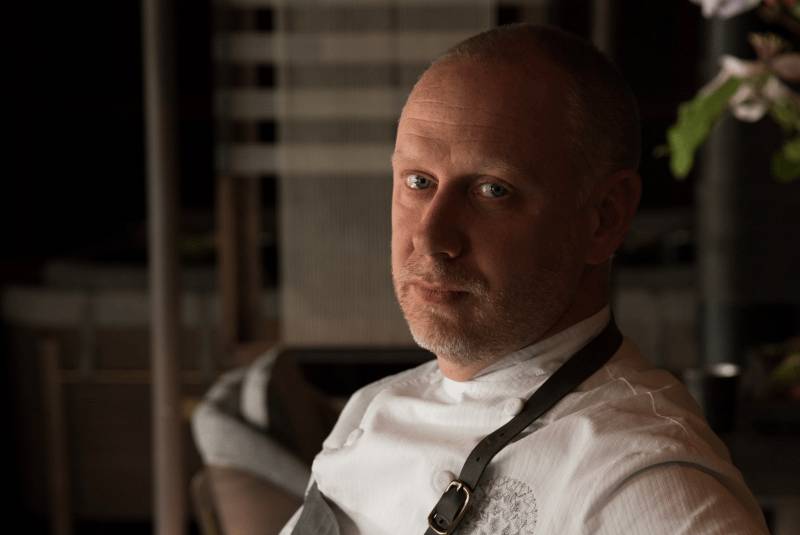
Prior to opening SingleThread, Chef Connaughton worked as head chef of research and development for the Fat Duck Experimental Kitchen
Fermentation doesn't just happen in the kitchen
No chemicals are used on the farm, with the team opting for house-made remedies instead of industrial solutions: "We make a number of different fermentations that we use either for soil amendments or as topical spray to go on to plants. That will typically be some combination of chillies and garlic because a lot of the pests that we encounter out here really don't like anything that has any kind of capsaicin spice to it. That keeps the cucumber beetles away," says Connaughton.
Innovative planting keeps pests at bay
Instead of using pesticides, SingleThread farmers use a companion planting method to protect precious produce. "We have a certain flower that attracts a pest, so they all go to that plant rather than something like a cucumber that's very susceptible," says Connaughton. The same technique is employed to encourage pollination: "Crops are arranged to attract certain pollinators – bees and butterflies in particular."
Important work goes on underground
In addition to the above-ground team, a large body of work goes on beneath the soil: "We have a whole worm-a-culture centre. We're composting – we have these long troughs that we build with thousands of worms and we get this very potent, beautiful soil that we use to amend the beds," says Connaughton.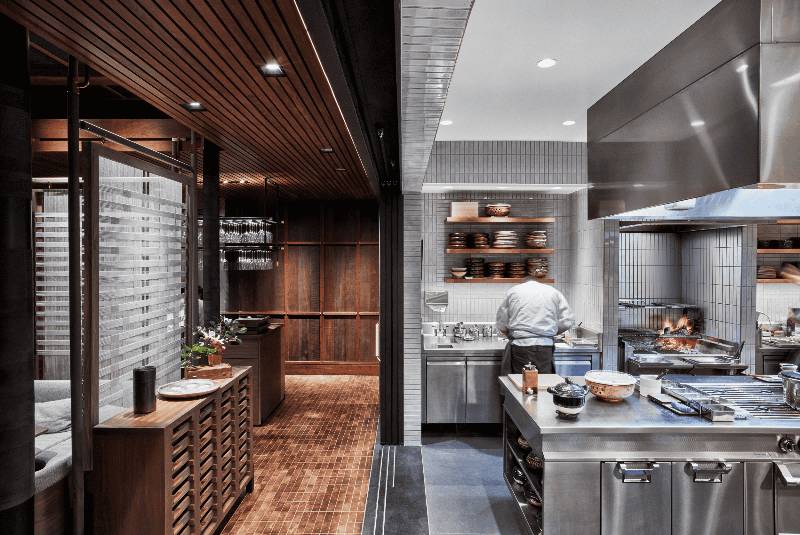
The kitchen prioritses creating very little food waste, making use of fermentation techniques and composting
Outside sourcing is part of the mission
Ingredients like mushrooms, peaches and seafood are sourced from other producers intentionally. "If our mission is about biodiversity, we promote more biodiversity in our region and we have an economic engine that can help do that," says Connaughton. "We want to support other farmers, so it's never been a goal of ours to grow 100 per cent of the produce that we serve in the restaurant."
Perfection isn't a priority
"It's typical in really high-end restaurants to want this perfect, beautiful cut and then just throw away the rest. We don't want to manipulate [produce] beyond recognition in an effort to just be creative," says Connaughton.
The impact spreads far and wide
SingleThread runs a community-supported agriculture programme where subscribers collect a box of produce every week, as well as operating a system with 'gleaners' who harvest excess crops and donate them. "We also donate to Sonoma Family Meal, which is an organisation that we helped start here that makes a number of different donation meals and provides youth programmes in culinary training," says Connaughton.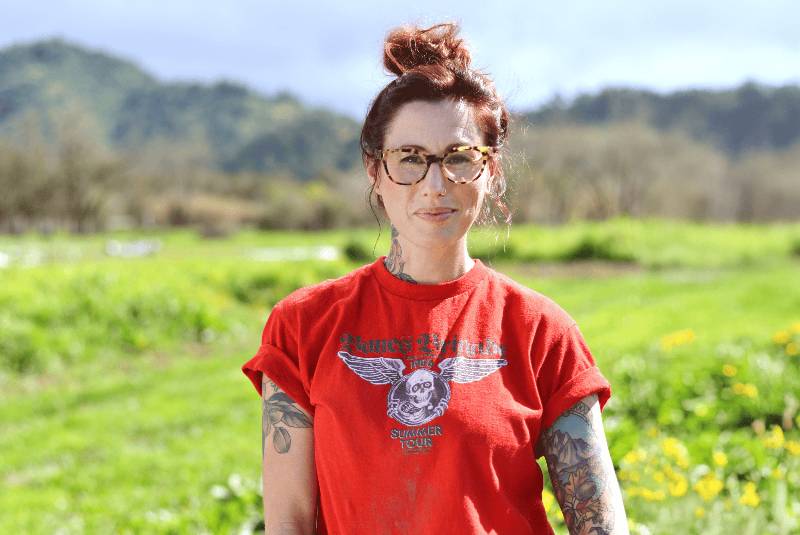
In her role as head farmer, Katina also takes charge of the estate's greenhouses, heirloom orchards and bee hives, as well as the foraging programme and floral design department
Creating the next generation of thoughtful leaders
SingleThread's highly committed approach to sustainability attracts talented staff from across the country. "We've created this mission that says we are responsible for mentoring the next generation of thoughtful leaders for the industry," says Connaughton. Initiatives like the restaurant's monthly kaizen award, based on the Japanese idea of 'kaizen' meaning 'good change', celebrates team members' efforts to improve, rather than a sales or promotion-based award system.
Day-by-day culture
SingleThread's present-minded ethos seeps into the restaurant's culture: "You don't learn a skill overnight. It's small, incremental steps you take every day, so we recognise that," says Connaughton. "That's why when we win a big award, we take that day to celebrate, but it doesn't become the identity of what we're doing. It's just like, 'hey, that's a celebration of what we did yesterday. Let's focus on what we're doing today and tomorrow.'"
Discover the full list of North America's 50 Best Restaurants 2025, sponsored by S.Pellegrino & Acqua Panna.