Find out what 50 Best's audit partner, The Sustainable Restaurant Association, looks for in evaluating entries for the Eco Hotel Award, as outlined by head of communications Jocelyn Doyle – and discover why Desa Potato Head Bali is this year's clear winner.
Originally opened in 2010, Desa Potato Head Bali was reinvented in 2016 to bring to life founder Ronald Akili's new vision for what a hotel should look like: a business that's not just sustainable, but regenerative, actively creating a positive impact.
At Potato Head, this includes the ambitious goal of becoming a zero-waste property, which is now tantalisingly close. "We're not zero waste yet and honestly, we might never get there completely," says Akili. "But we've made huge progress: today, 99.5 per cent of our waste is diverted from landfill." And this figure stands despite the village welcoming more than 1,000 guests every day.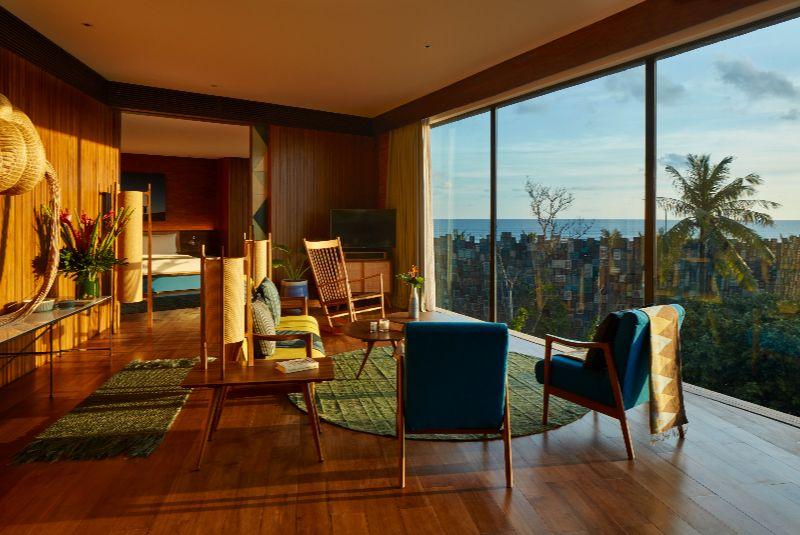
All 168 rooms on the property feature recycled-brick walls, patchwork rugs and eco-friendly luxury amenities
Waste must be full circle
When you hear the phrase 'eco hotel', environmental footprint is likely the first thing that comes to mind, and circularity is what's really firing the Desa Potato Head engine. Single-use plastics have been banned on-site since 2017; anything truly unavoidable is given a second life in the Waste Lab, with materials reinvented as anything from coasters and water glasses to furniture. Even some of the hotel buildings were constructed from discarded bricks and plastics.
A dedicated zero waste chef works across all restaurants to ensure creativity and efficiency, and staff take regular masterclasses on zero-waste cooking. Every guest is gifted a Zero Waste Kit upon arrival and invited to join a free daily 'Follow the Waste' tour to see circularity in action. 
Waste is converted into colorful terazzo-tile-style coasters and soap dispensers
The hotel's most impactful project has been its Community Waste Project, a collective waste centre opened in 2024 in collaboration with other local businesses. Knowing that proper separation is critical, Potato Head shared its expertise with partner businesses, ensuring success. "Our proudest achievement isn't just reducing waste within the Desa, it's sharing what we've learned beyond our walls," says Akili.
Now processing up to five tonnes of waste each day, this has hugely expanded the hotel's impact, building a cleaner future for locals and creating new jobs in the process. All profits from the sale of upcycled products are reinvested back into the community. "The idea is that the model keeps improving and scaling, helping the island – not just us – move closer to zero waste."
Community matters
A dedication to championing the local community has become essential to holistic sustainability when it comes to hotels. The social side of sustainability is often overlooked, but hospitality is built around people; a hotel cannot truly be sustainable without considering how it impacts guests, staff and locals. "A community gives a hotel its soul. Without it, a property is just another building," says Akili. "We see ourselves as part of the ecosystem, not separate from it. We collaborate with local initiatives and open our spaces for community projects, from waste education programmes to cultural workshops and creative residencies. Our goal isn't only to host guests, but to give something meaningful back to the place that hosts us." 
Guests of Potato Head Suites and Studios can attend the daily all-levels yoga sessions for free, and community members are also welcome to join with a donation
The hotel's Sweet Potato Project distributed over 38,000 meals to those in need throughout 2024, and employees take part in farm work, donation drives and beach clean-ups. "Change only happens when people understand why it matters," Akili says. "That's why we start with our own team first. When they truly live and breathe the purpose, when they feel connected to it, they naturally share it with our guests and community." The hotel makes staff wellbeing a priority, too. "We want to ensure everyone who works with us grows, not only in their craft, but in quality of life: health, wellbeing and financial stability."
Sense of place
Highlighting provenance can be a particularly powerful part of the sustainability strategy for hotels, supporting local economies while offering guests a unique taste of culture and heritage. "Provenance connects what we do to where we are," explains Akili. "From the moment they arrive, we want guests to feel the spirit of Bali through the food, the people and the stories that make this place special. It's about being relevant to the destination, not recreating something that could exist anywhere else in the world." 
Repurposed shutters make up the exterior of the Community Waste Center on site
Desa Potato Head's pride in its identity is evident from the moment a guest is offered jamu (a traditional Indonesian herbal drink) at check-in, and reflected in every procurement decision. The kitchens work closely with Balinese farmers, supporting regional biodiversity by featuring native plant species wherever possible. Sourcing from the island's craftspeople helps to preserve heritage skills; for example, its suites were built using hand-pressed temple bricks, a traditional Balinese construction method. "We're not just buying ingredients or materials; we're creating a circular system that gives back. That's how we build a positive, regenerative loop instead of a negative, extractive one."
It's about progress rather than perfection
The most important part of what defines a responsible business is a commitment to continuous improvement. Perfection isn't achievable: sustainability is simply about taking one step forward at a time. Transparent communication is a key part of this, helping to educate customers, motivate staff, and inspire wider industry change. "We don't tell stories for marketing: we tell them to inspire others to be part of this movement," says Akili. "Transparency builds trust; trust creates action." 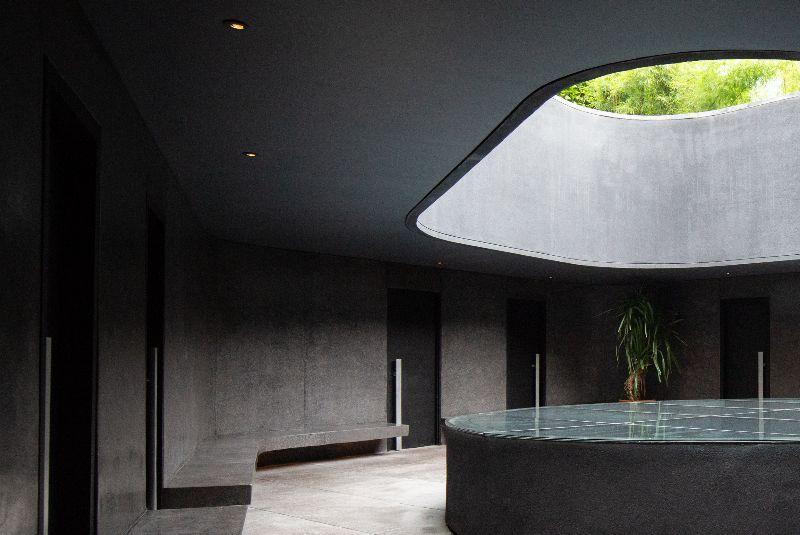
The spa offers traditional wellness treatments by Balinese healers, who use energy to restore physical and mental balance
Dedication to the journey is what counts – and that's not limited to high-end resorts or unique destinations. Any hotel that is prepared to keep learning and taking tangible, measurable steps towards a more sustainable future is an eco hotel. "We'll keep refining every part of what we do, from procurement to product design and daily operations, to make it as regenerative and circular as possible," says Akili.
"We'll keep sharing what we've learned and inviting others to join us in creating regenerative change. Choose progress over perfection. It doesn't matter how big or small; what matters is that you just start making changes."
Build your wish list of ultimate stays across the globe with The World's 50 Best Hotels, and follow us on Instagram, Facebook, X and YouTube.