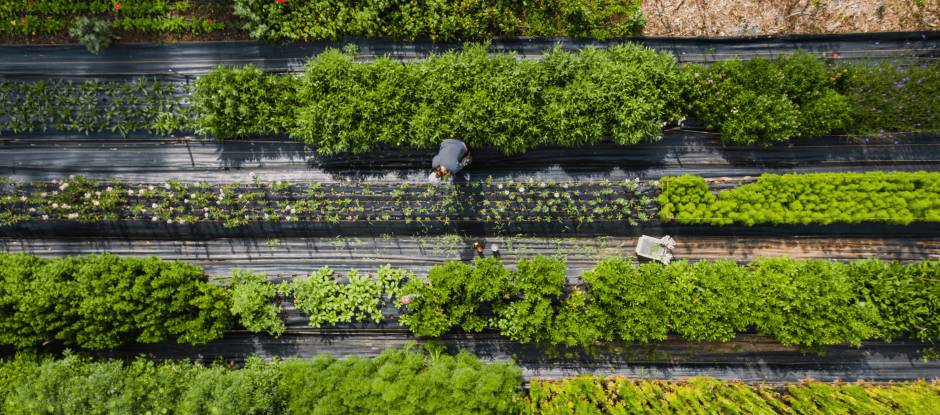
From stricter regulations to shifting industry values, here's how restaurants worldwide are reframing sustainability.
Sustainability has long been a buzzword in the restaurant world. However, for both chefs and diners, the definition of a 'sustainable restaurant' hasn't always been clear.
In a global landscape that includes world leaders deprioritising climate targets and diversity and inclusion initiatives, and economic conditions that makes running a restaurant more challenging than ever, what does it mean to be a restaurant prioritising progressive practices in current times?
Earlier this year, one of the most recognisable signifiers of a sustainable restaurant, the Michelin green star, was retired. Launched in 2020, it was awarded to restaurants prioritising eco-friendly and ethical practices, assessed via an online questionnaire.
As of the end of 2026, restaurants awarded the star in its six-year tenure (the shortest lifespan of an accolade in the brand's 126-year history) will no longer be able to advertise their green star status. In its place, a new editorial platform named Mindful Voices will appear on the Michelin website.
"We believe we are now seeing the beginning of an era in which vague or empty sustainability claims will be very much left in the past," says Juliane Caillouette Noble, CEO of the Sustainable Restaurant Association (SRA).
Increasingly tight legislation around greenwashing, particularly in the European Union (EU), mandates that sustainability claims need to be transparent, with clear reasoning, and contain tangible evidence backing up any kind of 'green' claim.
"Michelin's recent announcement that they are retiring their green star is just one casualty of this seismic shift. [...] The tidal wave is coming for those potentially misleading environmental claims and labels," says Noble.
The update caused ripples within the hospitality community, creating questions around how and why a restaurant is recognised and rewarded for its ethics and practices.
Change for good
While interest in recognising sustainable restaurants is currently in vogue, the industry has been asking these questions for years: in 2010, the SRA launched its Food Made Good framework to tackle this issue.
Nobelhart & Schmutzig in Berlin takes a proactive approach to sustainability across the SRA's three core pillars
"At its core, Food Made Good is set up to define 'sustainability', or as we would say, to define a restaurant that is 'good' for both people and the planet. There are 10 points to the framework, and therefore a sustainable restaurant will celebrate provenance; support farmers and fishers; serve more plants and better meat; and source seafood sustainably. It will treat staff fairly; feed people well; and support the community. And, finally, it will reduce its footprint; reduce, reuse, recycle; and waste no food. These are the aspirations of a sustainable restaurant," says Noble.
The framework is applicable to any style of restaurant, anywhere in the world. The self-completed questionnaire assessment evaluates restaurants on the impact across sourcing, society and environment, requiring evidence and documentation to back up claims to meet the standard.
Constant evolution
As with most lists, rankings and recognitions, there is always work to be done to maintain and improve within the framework.
"A commitment to continuous improvement could be described as the final pillar [...]. As a restaurant or hotel operator, it's important to recognise that this work will never be 'finished'; a truly sustainable business will keep taking tangible, measurable steps forward with dogged determination to keep doing better, year after year," says Noble.
This sentiment is echoed by Billy Wagner, owner and sommelier at Berlin's Nobelhart & Schmutzig, winner of the Sustainable Restaurant Award 2024, as part of The World's 50 Best Restaurants.
"Sustainability means to work on yourself," he says. "It's a little bit like going to therapy. It's not going to end when you've done one or 20 hours; it's always moving."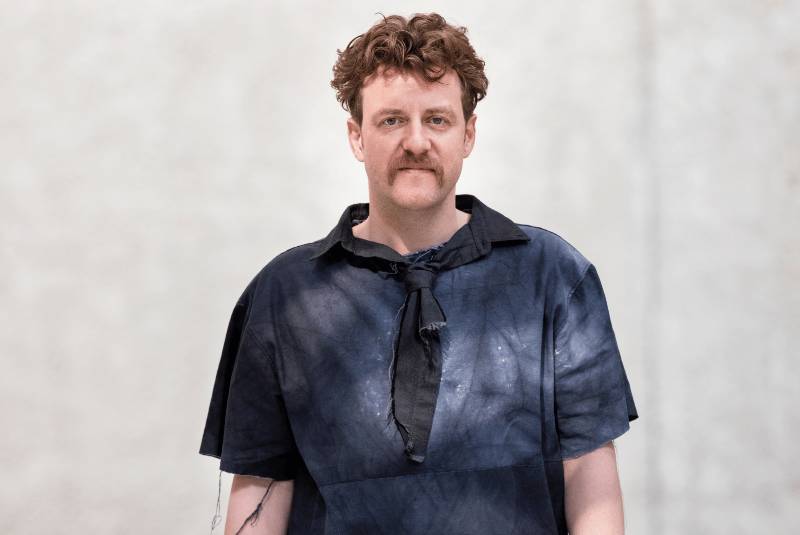
Wagner and culinary creative director Micha Schäfer have created a comprehensive Guide of Conduct to create a safer workplace
The restaurant, which prides itself on being 'vocally local' and no longer serves fish or seafood because it cannot guarantee traceability, recently updated its Guide of Conduct to include guidance on alcohol and drugs.
"It's about how people are working when they're in an industry where getting high is practically part of the business model. [...] We didn't include it at first, but that's what I mean about developing. It's the core part of sustainability," he explains.
People-first approach
There is also growing awareness among diners about the social side of sustainability, an element that's just as crucial as waste management and closed-loop sourcing.
"I think the recent spotlight on the history of abuse behind the scenes in this industry has really served to underscore what we at the SRA have been saying for years. For any industry, but especially one built around social interaction, it is simply not sensible to consider a business 'sustainable' without looking at how it impacts the people in its orbit: staff, guests and wider community," says Noble.
A decade ago, the SRA updated its mission to reflect changing times – a sustainable restaurant should be working towards being part of an industry that's both environmentally restorative and socially progressive.
"Fine dining has long been the worst culprit for treating staff poorly, with the implicit suggestion that it is impossible to provide exceptional food and service in a high-pressure environment without some degree of suffering attached," says Noble. "However, we are seeing a new generation of chefs who are lighting the path forward, showing a new model for leadership."
Previous winners of the Sustainable Restaurant Award exemplify this new brigade. The accolade is given to the restaurant on either the 1-50 or the 51-100 extended list for any 50 Best ranking that achieves the highest environmental and social responsibility rating as determined by the SRA. At Celele in Cartagena (winner of the Sustainable Restaurant Award, as part of The World's 50 Best Restaurants 2025) there is a strong emphasis on team well-being and development, with schemes such as an interest-free loan fund which can be used by employees who wish to improve their housing conditions.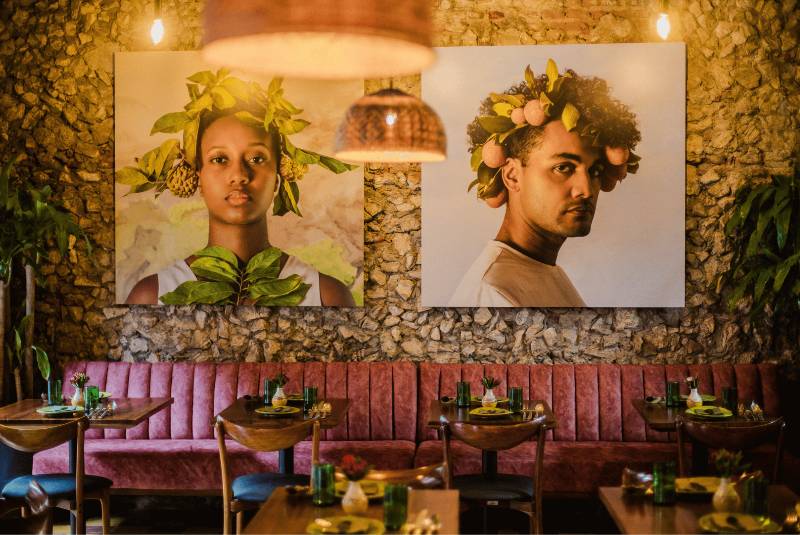
Education is also key to Celele's sustainable practices, with the team conducting ongoing research into local ingredients
At San Francisco's Atelier Crenn (winner of the Sustainable Restaurant Award, as part of North America's 50 Best Restaurants 2026), staff members receive their wage for any days spent at the restaurant's farm, making it easier for staff to prioritise time away from the kitchen, as well as offering reimbursement programmes for additional educational opportunities.
Measuring up
While behind-the-scenes staff treatment has only recently been thrown into the media spotlight, terms describing the founding philosophies and operational practices of restaurants – farm-to-table, locally sourced and zero-waste – have long been signifiers of a restaurant's supposed sustainability credentials.
According to the SRA, well-considered checks and measures need to be put in place to back up these claims. "From every standpoint – environmental, social, legislative and even the long-term survival of the sector – it's no longer enough for sustainability to be vague or simply an aspirational 'nice to have'," says Noble.
"This work now needs to deliver real change through tangible, transparent and ongoing action. To accomplish this, we believe strongly that the sector needs a robust framework, combined with practical guidance and accountability to taking action – and not all ESG frameworks are a good fit for the very specific demands and nuances of kitchen operations. This is where the Food Made Good Standard comes in: a framework designed especially for hospitality businesses, with the explicit goal of helping the sector, as a whole, evolve," she explains.
Wagner agrees, saying it's crucial to affect real change rather than rely on appealing sounding yet empty phraseology. "[We need] the idea of really making things better and more transparent; really testing yourself and asking yourself questions which are maybe not so comfortable," he says.
"I'm very happy with the work that the SRA is doing, and so I believe in their system because that's the only system of how you can do it – really looking at yourself and checking what you can do better."
From process to plate
Restaurants including Nobelhart & Shmutzig, and many others across the world, work incredibly hard to work towards a more sustainable future, but how these efforts translate to diner experiences can be difficult to illustrate.
"I think there is a better understanding of sustainability than probably at any other time in the past, but some elements inevitably get more attention than others because they make for more compelling stories," says Noble. "Guests are often keen to learn about provenance because we are drawn to romantic stories about humans on the land, but are less interested in the finer details around carbon metrics," she continues.
Storytelling is key to Atelier Crenn's 'Poetic Culinaria' concept
While it is unrealistic to expect diners to understand the huge amount of work that goes into creating a sustainable restaurant, the culinary community can play a role in closing the knowledge gap. "[Restaurants can act by] broadening their storytelling to include every part of their sustainability work and bringing their customers along for the journey. They can also be honest and authentic in the claims that they make, and curious in their drive for improvement," says Noble.
Spread the word
While sustainability storytelling through the vehicle of brilliant dining experiences and exceptional hospitality are key, external recognition also plays a part in driving change.
When a restaurant enters to win the Sustainable Restaurant Award, it receives a personalised report assessing current systems, with actionable advice on how to improve.
While Wagner admits winning the award doesn't make his restaurant any more financially successful, he says recognition is important in other ways. "You don't make money with it, but you know that you are doing a better job and you have nicer people around you – and you're not completely an asshole."
Recognition for pioneering restaurants in this field is also important for creating a more collaborative hospitality sector. "Sustainability work is hard and it is ongoing; to encourage sustained, long-term change across the sector, it's crucial that we celebrate action and real progress in any business, "says Noble.
"It's also true that a rising tide lifts every boat, and we firmly believe that innovation, collaboration and knowledge sharing are the keys to creating a more resilient, future-ready sector."
Discover more about the 2025 winner of the Sustainable Restaurant Award, as part of The World's 50 Best Restaurants.