Discover five of the Malaysian island's most unmissable spots, guided by the team behind the world's best cocktail menu.
Malaysia is regarded as a food-lovers paradise, with Penang considered its culinary capital. From open-air street food stalls to contemporary fine dining spots, often located on the same street, there are few places that can match the island's breadth and diversity of tasty things up for grabs. Putting together an itinerary of where to eat can therefore prove daunting – cue the team at Backdoor Bodega with its hotspot-trotting drinks menu that doubles as a travel guide for local sights and bites.
The Backdoor Bodega Guide to Penang took home the gong of both the Asian and the global edition of the Siete Misterios Best Cocktail Menu Award; read on to hear from the bar's owner, Koh Yung Shen, and discover his five must-visit spots for those looking to create the ultimate Penang itinerary.
1) Presgrave Hawker Centre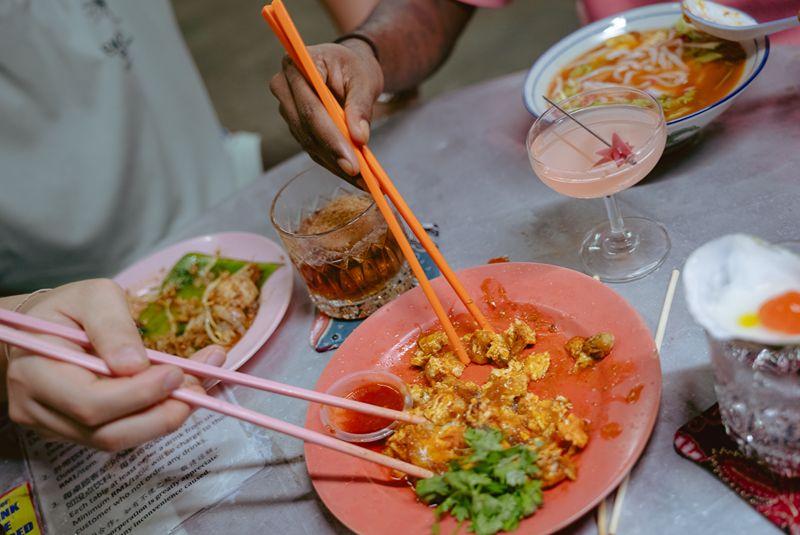
Ochien (fried oyster omelette) is a classic Penang hawker centre dish
A trip to Penang is incomplete without a visit to at least one hawker centre. The open-air spots are the lifeblood of dining culture in Penang and southeast Asia, sparing the creature comforts of restaurants for quick, affordable and delicious dishes served streetside, and Presgrave is one of the island's most sought-after.
Located in the shadow of the landmark Komtar Tower, Presgrave comes alive at night as multi-generational hawkers work shoulder-to-shoulder under glowing signage to serve up the greatest hits of the Malaysian culinary lexicon.
"It offers a roster of iconic Penang street food stalls including char koay teow (wok-fried rice noodles), Hokkien mee (prawn and pork soup noodles), chien (oyster omelette), lor bak (five-spice meat platter) and more," says Shen.
Taste it at Backdoor Bodega: The Georgetown Gimlet, inspired by Penang's spicy, sour and fishy assam laksa, supercharges gin with torch ginger flower, daun kesum (laksa leaf), galangal, lemongrass, belacan (fermented shrimp paste), tamarind and house lime blend.
2) Communal Table by Gēn 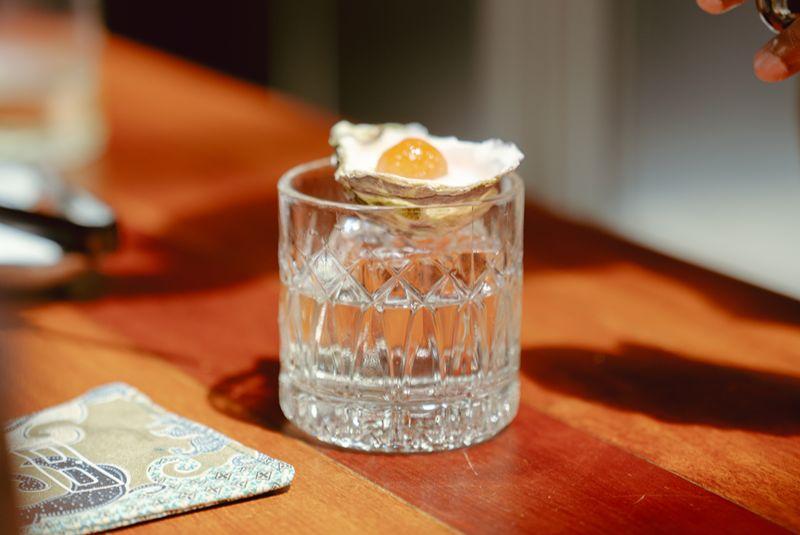
Backdoor Bodega uses oyster shells from Communal Table by Gēn for its Pearl of the Orient drink
For a more modern lens on Malaysian cooking, Communal Table by Gēn opened in 2018 as the casual, but equally playful, sister restaurant to the highly regarded fine dining eatery Gēn, helmed by chef Johnson Wong.
Inside the restaurant, each of its 24 seats face towards its open kitchen, giving diners front-row seats as the culinary team masterfully rework classic Penang flavours into contemporary, inventive and highly craveable creations.
"The restaurant champions and features unique Penang and Malaysian flavours and ingredients such as buah kulim (jungle garlic) in its cold handmade noodle dish, petai (bitter bean) in an XO-style sauce over fragrant crab-infused lemak rice and cincalok (fermented shrimp paste) in a tropical beef carpaccio," Shen explains.
Taste it at Backdoor Bodega: Pearl of the Orient, a mixture of mezcal, coriander, lime, chilli tincture and a cured yolk 'pearl', served in the oyster shells supplied by Communal Table by Gēn.
3) Ghee Hup Nutmeg Factory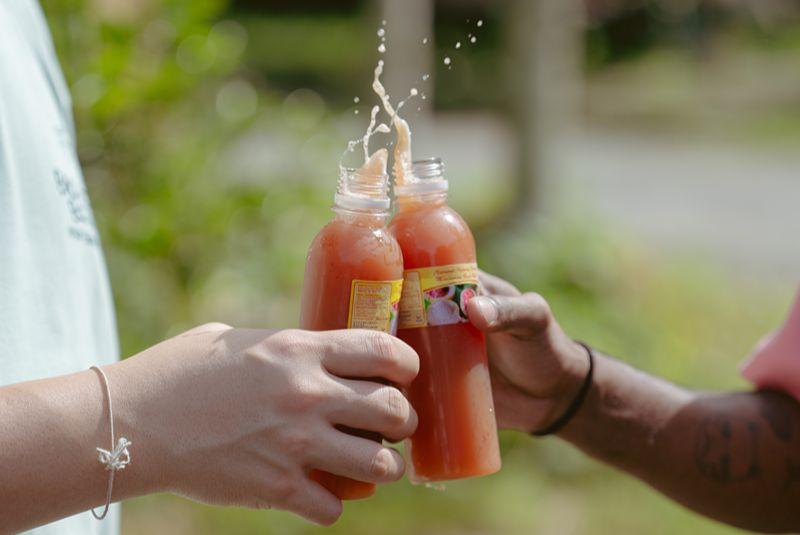
Penang is one of the few places where nutmeg is consumed as a drink
Away from the urbanised George Town, the western edge of the island tells a very different side to Penang's story. Here, the landscape is dominated by open fields of rice paddies and spice plantations alongside untouched rainforests that lead onto pristine sandy beaches.
Nutmeg forms a key chapter in Penang's culinary history, introduced to the island by British colonialists who identified the prime growing conditions. Near Balik Pulau, the main town of the area, lies Ghee Hup Nutmeg Factory, the country's largest producer of the spice, which has been operating since 1953. Today, it remains a staple ingredient, consumed in a surplus of ways beyond the common treatment of drying and grating, including as a pickled condiment and even juiced over ice, known in Hokkien as lao hao beng.
"The 82-year-old owner, Mr. Chang, still passionately explains the cultivation and the unique uses of the nutmeg fruit to visitors every day," explains Shen. "It's one of the only nutmeg farms that are open to the public to visit without a fee."
Taste it at Backdoor Bodega: The 1812 takes inspiration from la hao beng and combines bourbon with mace bitters and a Penang nutmeg saccharum (sugar cane).
4) Alan Burger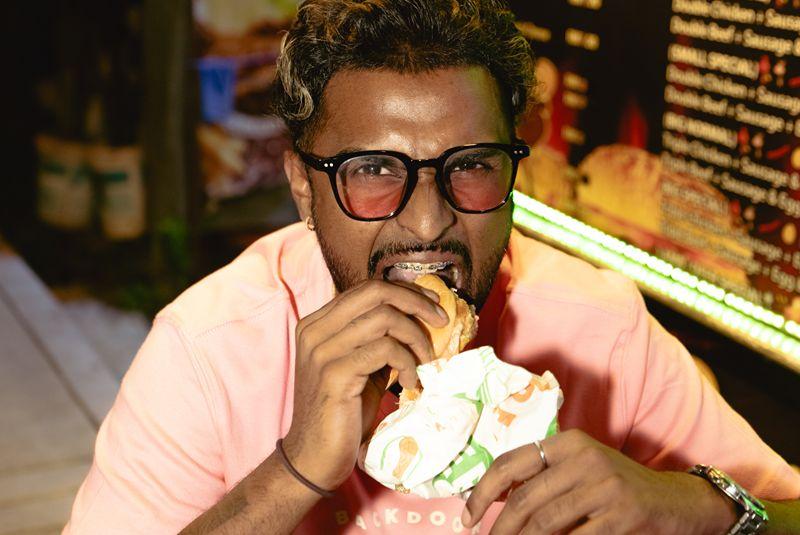
The ramly burger special has been a late-night favourite of Malaysians since 1978
Almost every food culture has its traditions for late-night – and often post-drink – comfort food, and Malaysia is no exception. Enter the ramly burger. What started as an innovative take on a western classic invented in 1978 as a way of ensuring its beef patties were halal certified, the ramly burger quickly spiralled into one of the nation's most beloved creations.
Like many of its late-night counterparts across the world, the ramly burger isn't one for neatness. The burger construction starts as expected: a soft bun, patty, cheese and assortment of sauces generously slewed over the top. The deviations unfold with the addition of an omelette that encases all everything inside the bun in an egg envelope. In Penang, Alan Burger located at Gurney Corner is the go-to, according to Shen.
"This stall has been serving up unique patty varieties such as lamb, deer, and fish until 4am each morning to supper hunters and starving partygoers since 1984," says Shen.
Taste it at Backdoor Bodega: The R.B.S, aka the ramly burger special, distills the flavours of the post-drink snack by pairing smoky Siete Misterios Mezcal with chicken stock, tomato, onion, vinegar and Worcestershire sauce, finished with a burnt cheese garnish and wrapped in a custom ramly burger-inspired wrapper.
5) Jayam Spice Mart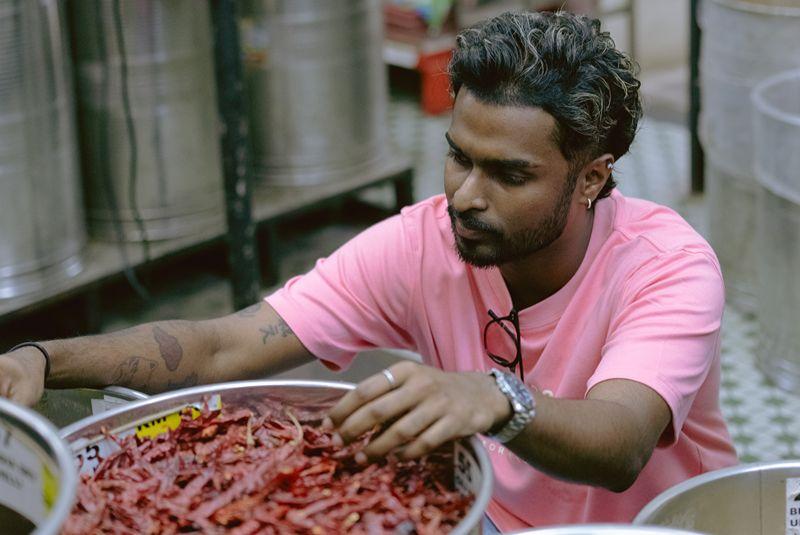
Make sure to head to Little India in George Town to stock up on spices
Just as a visit to the hawkers is a must for any food-loving visitor to Penang, a stroll through the streets of Little India is equally non-negotiable. The island holds a long history of south Asian immigration bringing with it the colourful stylings and aromatic spices that have become emblematic of the neighbourhood.
While enjoying biriyani or nasi kandar (steamed rice topped with an assortment of curries and side dishes) chased with a steaming hot chai should be the first port of call, it's just as important to weave through the plethora of shops to take a taste of Penang home.
Jayam Spice Mart is the chosen spot of Thanesh Joel, Backdoor Bodega's operations manager (pictured above), who frequents the spice haven for its range of aromatics packed high in silver barrels, many of which are used in Backdoor Bodega's cocktails.
Taste it at Backdoor Bodega: Taking inspiration from the traditional Indian rasam, a spicy and sour soup, the Rasa Rasam creates its own spice blend that majors on cumin and mustard seeds for a mezcal-based, milk punch-style concoction, bolstered by tamarind, turmeric, jaggery, lime and papadums.
The list of The World's 50 Best Bars 2025, sponsored by Perrier, was revealed on 8 October in Hong Kong.