Enter the wonderful world of Wildweed, where foraged ingredients rule the roost and the pasta is all-American.
Much like the inspiration for its name – weeds growing through cracks in the pavement – Wildweed is unexpected. This Cincinnati restaurant opened in July 2024 in an often-overlooked dining scene. Referred to by some as a flyover state, a place brushed over in favour of more well-trodden coastal destinations in the US, Ohio is part of a New Midwestern cuisine boom, and is now home to the winner of the One To Watch Award 2026, as part of North America's 50 Best Restaurants.
"Cincinnati is a market that is a little more casual, definitely blue collar. We knew that if we made a 65-seat tasting menu restaurant, it wouldn't work," says David Jackman – chef-owner of Wildweed. Jackman and his wife, Lydia, opened their first brick-and-mortar space after running a series of successful pasta pop-ups in the city and across the US for several years.
All-American pasta
The restaurant offers two distinct experiences – Jackman's creative, pasta-centric plates in the main dining room, and the 12-seat chef's table, which showcases the area's micro seasons through foraged ingredients and hyper-local produce sourcing through a 16-course tasting menu. "We play loud music and we're a vibrant and exciting celebration of what a new version of what Midwest [dining] is," explains Jackman.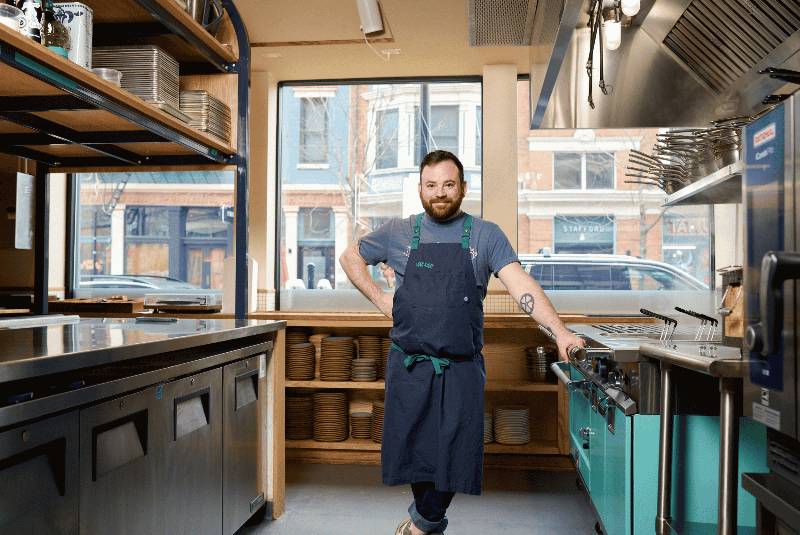
Jackman is on a mission to platfrom the very best of New Midwestern dining
Pasta might seem an unexpected medium for translating the best ingredients the Midwest has to offer, but Jackman disagrees. "We're not Italian. I'm not Italian. I've never been to Italy. We created a North American version of pasta that I think holds its own.
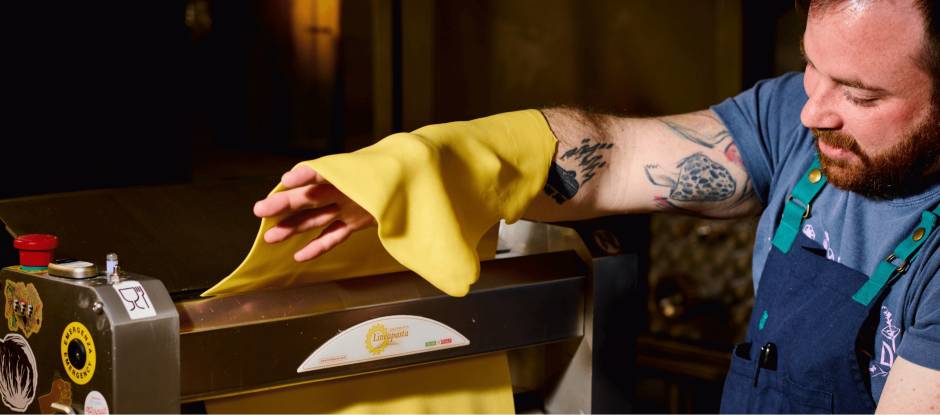
"We really push what's possible with pasta. We do lots of design stripes. We use lots of local grain," says Jackman. He's proud of their dough formulation, which incorporates local ingredients and acts as a canvas for Midwestern flavours, as well as inspiration from his travels.
"The status quo of pasta in North America is egg yolks from a carton and imported flour from Italy, which would be great if you were in Italy," he says. However, this flour commonly sits in warehouses for long periods on both sides of the Atlantic. "We try to maintain the vibrancy in our dough by securing really great quality American grain and pairing it with farm eggs from our region. I think that's what really sets our pasta apart from everyone else," says Jackman.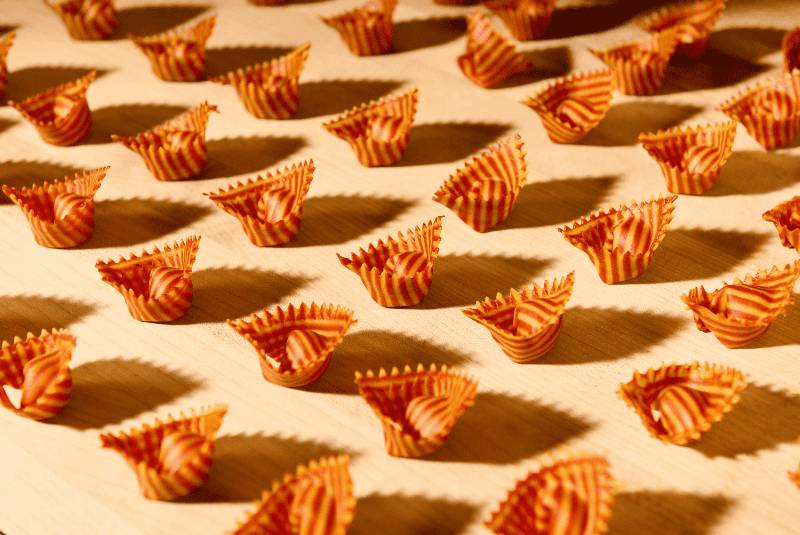
Creative pasta dishes bring in loyal locals and visiting diners alike
Keeping it local
While pasta is the star of the show, foraged and locally farmed ingredients are hardly the understudies. "We listen to what farmers have. We play with what our landscape is. We [also] have a really great region for foraging, which is a huge focus on our menu. I forage all year round, pretty much," says Jackman.
Depending on the season, diners might find fresh or pickled wild garlic, paw paw or local mushrooms on the menu. To mark the start of spring, a spinach salad with avocado, preserved lemon, shio koji, turbo crumble and herb oil might land on your table, or in chanterelle season, a caramelised courgette mezzaluna, chanterelle and golden raisin escabeche, taleggio fonduta and fennel pollen.
A focus on farmers
Other plates showcase the Wildweed team's aptitude for whole-animal butchery. "A large focus of ours is keeping dollars in our community. Not only finding affordable ways to put ingredients on the menu through foraging, but working with a few different farms around the area to provide us with whole animals as much as we possibly can," explains Jackman.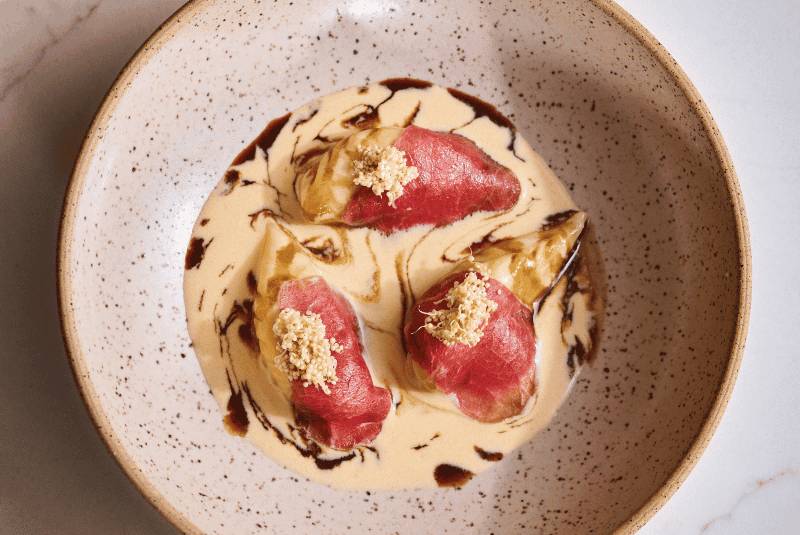
Ohio-raised beef joins Japanese green onion, quark and caramelised yeast and parmesan shoyu on a recent tasting menu plate
The rhythm of the menu fluctuates depending on availability, supported by Jackman's relationships with local farmers. "Last year we made friends with a cattle farmer – our relationship bloomed from another friendship I had," he says. "We bought half a cow recently and turned that into the menu for the month and had a focus with beef. This last Saturday, we just procured a whole pig from the same farm that does chickens for us," he continues.
Doing things differently
However, for Wildweed's loyal followers, there's no doubt about the restaurant's signature dish. "I never set out to have a signature dish. It kind of just became one," says Jackman. "We buy chickens from a farm that's within the city limits, which are served in our signature dish, the tortelli."
The bowl of red-and-yellow striped pasta parcels served with a Vietnamese-style broth, an aromatic herb salad and crispy shallots is fast becoming synonymous with Wildweed's creative approach. "I think it comes down to not trying to follow or copy what other people are doing. It's very hard in this world where everything is shared immediately," says Jackman.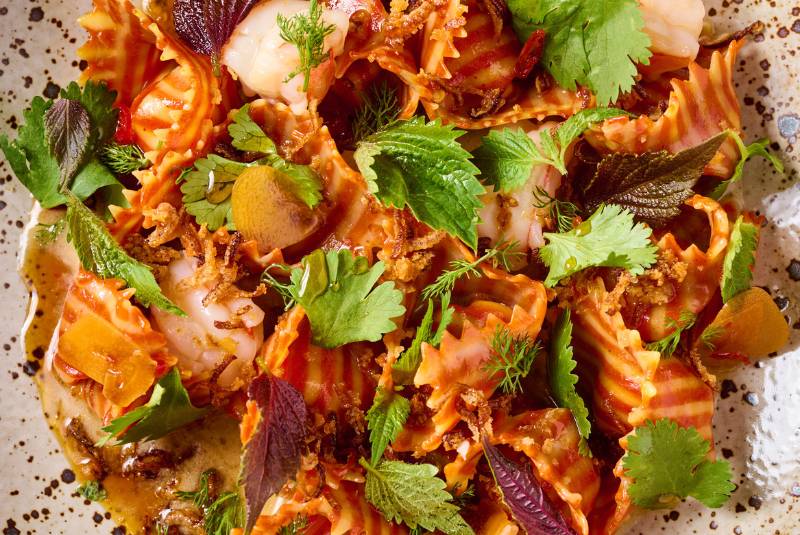
Local ingredients, quality pasta-making and global inspiration combine in Wildweed's signature dish
"I think we address creativity in a different way than other restaurants do. We try to find elements that are exceptional and taste really great and push ingredients to their full potential."
This mindset translates to the beverage programme, where many of the same ingredients featured on the menu are transformed into cocktails that complement each dish. "We share a walk-in space with the bar, so it's not secular. They're always seeing what's coming in and what is available. These same ingredients go into our beverages in different forms, so it's a collaborative approach," says Jackman. "We have a team of really talented bartenders that want to push the game a little further, and we just give them the tools to do so."
From kitchen to table
Wildweed blurs the boundaries between back and front-of-house roles in more ways than one. Diners at the chef's table can expect the same hands that made each dish to be serving them, allowing Wildweed's chefs to complete the narrative of each plate from kitchen to table. "The people who are most passionate about these dishes are going to be able to share them," says Jackman of this approach. "I wanted that because the idea of chefs being closed off in the back is a little antiquated. It's a profession that is respected now, and we need to treat it that way."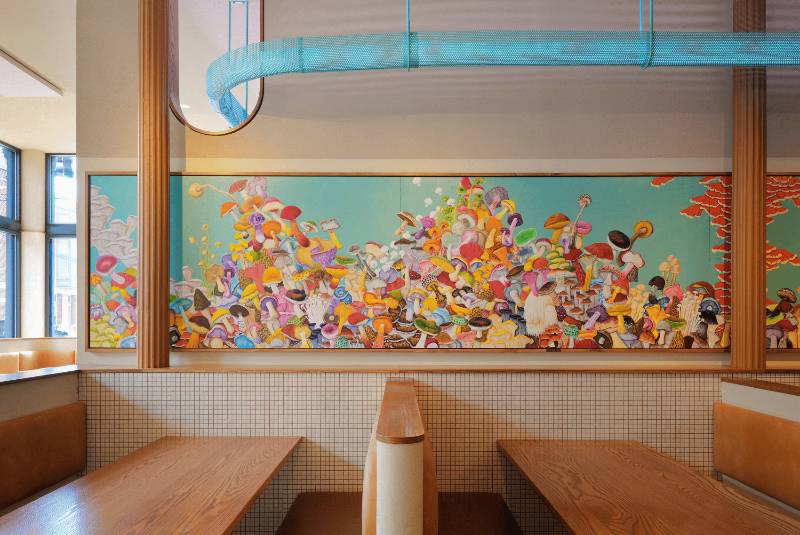
Jackman is keen to close the gap between front and back-of-house
While giving chefs the platform (and financial benefit – chefs share the service charge from chefs' table bookings with front-of-house staff) to interact with diners at Wildweed is a benefit, Jackman emphasises the importance of playing as a team: "We had a staff party the other day and we all dined together, having dim sum. Half of us then went for a hike afterwards just to look at wild edibles. Both front and back-of-house team members participated equally and had interesting questions. I think [this culture has] really made a world of a difference compared to other restaurants."
It's clear something exciting is brewing at Wildweed, particularly for the representation of a new style of Midwestern cooking. Now named as winner of the One To Watch Award 2026, Jackman hopes it will bring more people to discover the city.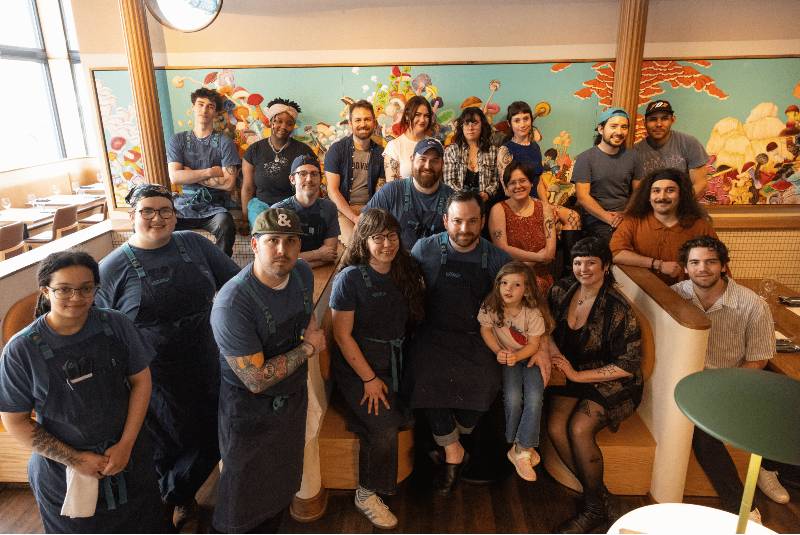
It's an exciting time for the talented team behind this year's One To Watch Award winner
"When I first found out it was all heavy breathing. Couldn't imagine it, couldn't believe it. I'm very, very grateful," he says.
"I'm excited to see what it means for our region. No-one has really been celebrated in this way. This city is part of a flyover state, so there's an understanding of 'this place doesn't get those things.' People generally skip it over and don't even consider it, so getting the visibility means a lot."
The list of North America's 50 Best Restaurants 2026 will be announced on 28 May from New Orleans.