The chance to have your bar named the best designed in the world is here! Here’s everything you need to know about the entry criteria, the judges and previous award winners.
After three years of scouring the globe for the most impressively and smartly designed drinking dens, the official Best Bar Design Award returns for 2026 as 50 Best once again invites bars to submit their venues for consideration from today.
Any style of bar is eligible to apply across the world, and bars do not need to have any prior affiliation the 50 Best rankings or 50 Best Discovery to enter. Entries will close on Monday 16 February at 09:00 UTC and the global winner will be announced at The World's 50 Best Bars 2026 ceremony, preceded by the regional winners being named at North America's 50 Best Bars 2026, Europe's 50 Best Bars and Asia's 50 Best Bars 2026.
Think your bar has what it takes? Submissions for the Best Bar Design Award 2026 are open now until Monday 16 February at 09:00 (UTC).
Form and function
The Best Bar Design Award was created to celebrate and reward bars for thoughtful design that transcends style and taste to hit key touchpoints of accessibility, sustainability and appropriateness for their markets.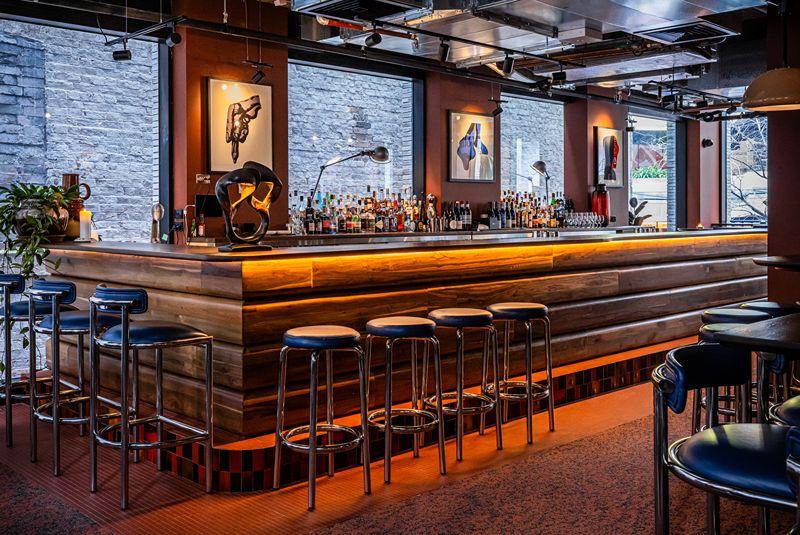
Tigra + Disco Pantera was named the global winner of the 2025 award
At last year's global awards ceremony the crown was taken by Sydney's Tigra + Disco Pantera for its clever approach to combining vintage materials with modern tech in a space that speaks to 1970s Chicago.
Crafted by Ross and Gordon Purnell, the initial idea for the bar's distinctive design came from a box of 1950s Bendigo Pottery tiles. Once destined for a coffee table elsewhere in Sydney, these tiles became the catalyst for the brother's first solo venture, with its vision brought to life by in-house designer Cass Siow.
Everything here is considered, with an ethos of reclaim and reuse at its core. Downstairs at Tigra, visitors are illuminated by electric blue Danish 1990s sconces and bathed in sound courtesy of a donated 1980s Marantz amplifier. Upstairs, the bar's distinctive stainless steel and orange leather bar seats come as part of a collaboration with furniture designer, Reddie, who work with reclaimed materials, including the traceable teak used to make the bar top.
2025's retro vibe continued in North America, with the top spot taken by Carry On in Pheonix – an immersive, 1970s-inspired cocktail bar that harks back to the golden age of aviation. Conceived by Peter Bowden and the Pretty Decent Concepts team, Carry On's 30-seat jumbo jet cabin interior was designed with complete and total immersion in mind, from the richly carpeted jetway to the boarding pass-style cocktail menu and servers clad in era-appropriate replicas of pilot and steward uniforms.
At Asia's 50 Best Bars, it was minimalism that stood out, as the expansive warehouse feel and cool, creamy colour palette of Messenger Service in Bangkok wooed the judges. Housed within a century-old shophouse, the space pays homage to its roots through a deliberate preservation of original materials – patterned terracotta tiles, exposed brickwork and heavy teak doors – as well as a 'less is more' approach to the tables and seating.
Judge and jury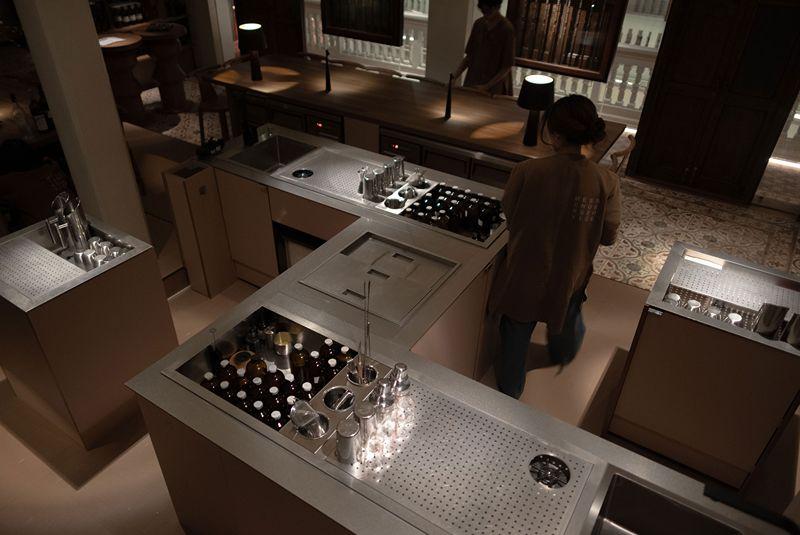
Messenger Service impressed judges with its supermarket-inspired concept
As before, this year’s entries will be judged by an esteemed panel of hospitality design experts, each of whom will assess submissions based on six criteria:
Innovation: does the design stand out and provide something new or unique to the bar world?
Aesthetics: a grading of the artistic value of the bar, including its design, shape, colour, texture, finish and engineering.
Accessibility: consideration of all guests’ access to all areas of the bar and its facilities, as well as an assessment of its safety for guests and staff.
Ergonomics: functionality of the bar space, including bar stations, access to fridges, the height of speed rail and access to back bar. How easy is it for guests to navigate and how smooth is the flow through the bar’s facilities?
Ecological compatibility: potential environmental and ecological impact of the bar, considering its use of materials and processes used in the build; how responsibly it uses energy and interacts with its environment. Essentially, is the bar built to stand the test of time?
Emotional quotient: in addition to fulfilling its practical purpose, does the design create a sense of enjoyment and satisfaction?
As well as crafting a written entry that addresses the criteria, bars will also be asked to provide photography, schematic drawings, architectural plans and a video walk-through of their venue.
Meet the judges
When the entry phase closes on Monday 17 February, six of the most creative and experienced minds in hospitality design will whittle the applicants down the final winners.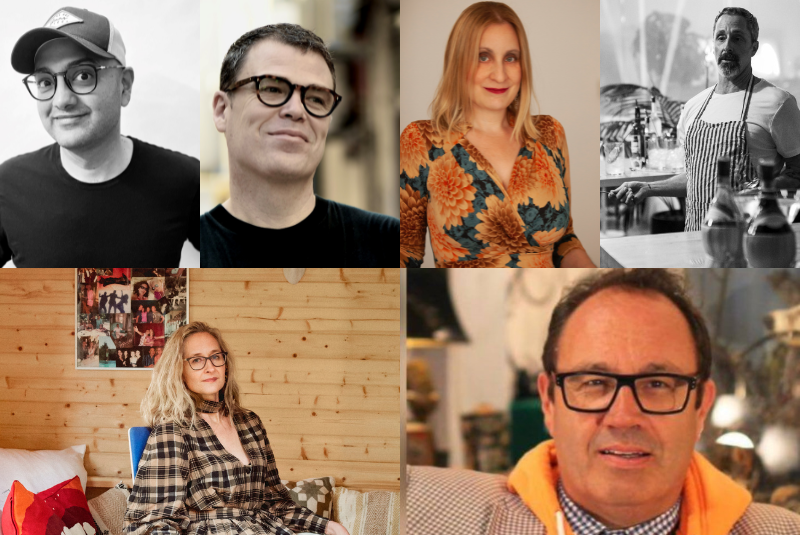
Submissions will be judged by an international panel of design experts
The judges, who helped design the award’s criteria and will select the winner, are:
Alia Akkam: a native New Yorker, experienced drinks and design journalist and self-confessed Europhile, Alia Akkam has called Budapest home since 2015. She is a contributing editor at Hospitality Design and writes regularly for Architectural Digest's AD PRO vertical as well as ICON and OnOffice. Akkam has an affinity for writing about cocktails and bars, as well as interiors, hotels, travel, food and culture. She is the author of books on gin and hotel bars, with one dedicated to tequila forthcoming.
Anirudh Singhal: after helping launch numerous trend-setting restaurants and bars, Singhal is now the man behind Speedx, a firm built to design hospitality venues from the ground up on the principles of ergonomics and comfort. Speedx has built more than 800 bars across India, making it the largest bar design and build company in the subcontinent.
Bethan Ryder: with more than 25 years’ experience in design, interiors and travel journalism, Ryder is an expert in what makes a great bar. Now the executive editorial director at leading global trend forecasting agency WGSN, she has previously held senior editorial positions at Elle Decoration, Wallpaper and Telegraph Luxury.
Paul Semple: Semple is one of two masterminds behind the hospitality-focused interior design studio MSDO. With over 20 years’ experience working around the world, including over five years leading the global hospitality team at multinational architecture firm Hassell, Semple has been based in Singapore since 2004.
Scott Baird: Baird is a San Francisco Bay Area native and a hospitality veteran. After years behind the bar at lauded venues in the US, he founded the creative agency Rococo Cantaloupe, which is designed to “make drinks, throw parties and create fun”.
Shaun Clarkson: Clarkson has headed up his eponymous London-based design agency for more than three decades, working exclusively across the spectrum of hospitality. Known for his diversity of projects and for his vivid colour palette, Clarkson has been involved in brand development for drinks brands, as well as being a former bar operator himself.
To be the first to hear about the latest news and announcements, browse the website, follow us on Instagram, find us on Facebook, visit us on X and subscribe to our YouTube channel.