The visionaries behind Eleven Madison Park and Central on their decades-long friendship, creative synergy – and how piranhas threatened to derail their latest collaboration.
In February 2026, while temperatures in New York City were hovering around freezing, things were heating up inside Eleven Madison Park (EMP). Peru's Virgilio Martínez, chef-owner of esteemed restaurants including Central and Mil, was in town for a collaboration with Daniel Humm, but it could have all gone very wrong.
"We flew piranhas in," says Martínez, laughing knowingly when asked about the reaction from border security to this unusual cargo. "That's definitely a weird ingredient for people here."
Martínez's championing of Peruvian ingredients is nothing new, and this uncompromising commitment helped him lead Central to the very top of The World's 50 Best Restaurants list in 2023. Back in 2017, Eleven Madison Park achieved the same accolade with Humm at the helm. This gives both restaurants Best of the Best status (a hallowed group of all the restaurants that have topped the annual poll of The World's 50 Best Restaurants over its history).
A shared sense of purpose
If at first they seem an unlikely pair – Humm is a Swiss chef cooking at a Manhattan restaurant, while the Peru-born-and-raised Martínez has dedicated his career to delving deep into his country's native pantry – the mutual respect and admiration is evident.
"We've known each other for around 20 years, travelling the world, speaking at the same congresses and doing collaborative dinners," Humm says. "I was lucky to visit Peru and eat with Virgilio and those dishes have really stayed with me." 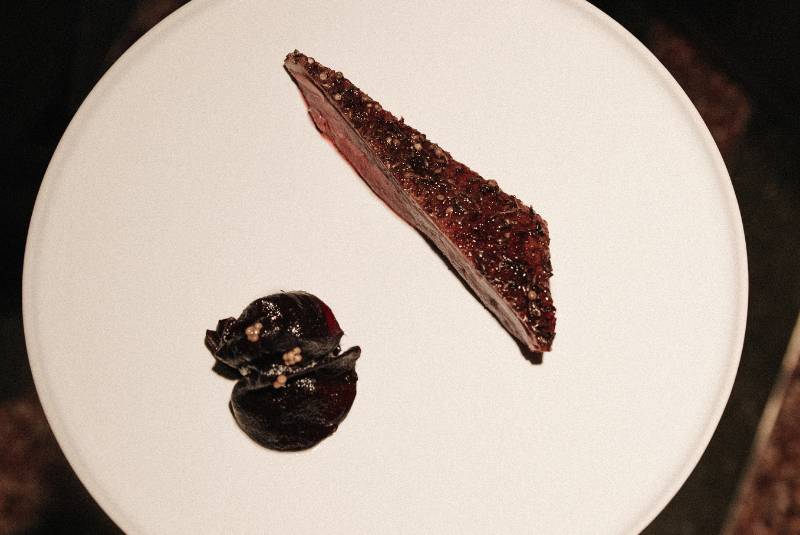
When reintroducing meat to EMP's menu, sustainable sourcing was top of mind for Humm (Image: Jovani Demetrie)
"You know, we're getting a bit older, but we're still having fun in our kitchens," adds Martínez. "I respect Daniel because he's still in the kitchen, working with his team, creating new ideas, and being responsible about the impact his restaurant has on the world. I think we have a similar understanding of our mission and a similar sense of purpose."
Both chefs are renowned for their commitment to sustainability. Eleven Madison Park famously went plant-based after the pandemic to reduce its environmental impact, before reintroducing animal proteins in late 2025.
"We've learned that progress is not linear," says Humm. "You've got to push hard in one direction and create certain rules for yourself, before eventually realising those rules don't really serve you anymore." As an example, he mentions using clams and oysters, which have a positive impact on their environment by sequestering carbon and cleaning the water in which they're found. "We've learned that things aren't black and white," he summarises.
For Martínez, choosing to use local Peruvian ingredients was a deeply personal decision. "Living in Peru and having all this biodiversity and seeing ingredients from the Andes and from the Amazon, having this rich ocean made me feel like I couldn't possibly use ingredients from other parts of the world."
Food for thought
The chefs also share an urge to question their positions. "Food is our language and food touches everyone," Humm says. "We all need it. At times I felt some guilt about it because our restaurants are obviously not that accessible, because of the price point.
"But I think learning a craft on a very high level is important, regardless of where you end up in your career. In a sense, I think restaurants like ours are like graduate schools for culinary and hospitality professionals."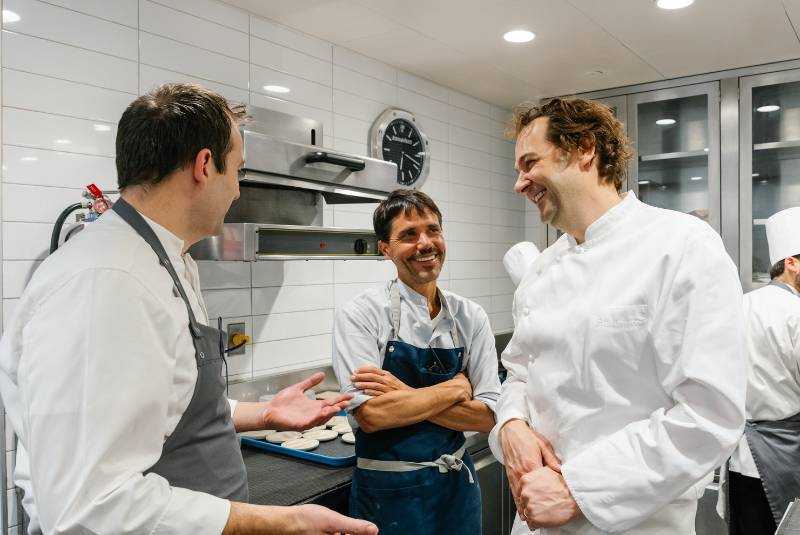
Martínez (centre) and Humm (right) have known each other for over 20 years (Image: Emily Setelin)
When he's not in the kitchen at EMP, Humm also runs Rethink Food, a not-for-profit that takes unused food from restaurants and grocery stores across New York City to help tackle food insecurity. In 2025, the organisation served 12 million meals. In addition, Humm was named Unesco's first-ever Goodwill Ambassador for Food Education in 2024, a role which has taken him across the globe visiting different key biospheres and promoting awareness of Indigenous culinary traditions and the critical role they play in sustainability and food equity.
"We're not politicians or activists, but we need to speak up," he says.
If Humm is the ambassador for this cause, Martínez is serving on the frontlines, creating and disseminating knowledge of Indigenous food practices with his transdisciplinary research centre, Mater, founded with his wife and fellow chef Pía León and sister Malena Martínez.
"We take all this ancestral knowledge, all these humble ingredients, and we reinterpret them and present them to new audiences," he says. "That's the magic of restaurants."
Despite the dedication, deeper questions arise for Martínez. "You start to think about what's happening in the world, and you question, 'What's the role of a chef nowadays? What do I want to leave behind for my community, my people, even my guests?'"
Culture clash
For a man so focused on transmitting a sense of place through his work, what was it like for Martínez to bring his taste of Peru to Manhattan? "You have to reassess things: what I do in Central might not work here in New York," he acknowledges. "You need to be aware of what people want here."
But Martínez isn't interested in just giving people what they want. "I have an agenda," he says. "I like to put new ideas into people's minds. Maybe I can't go as crazy as I can in Central since I have to respect the restaurant that has invited me. It's a balance."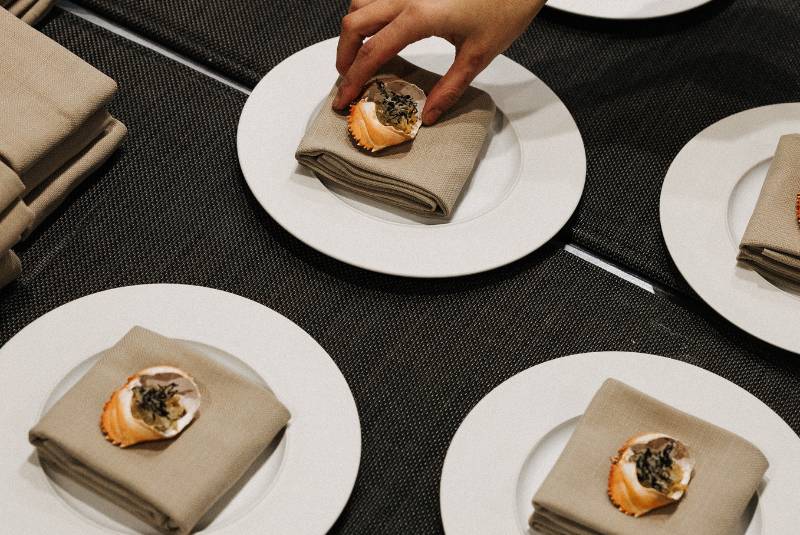
From initial invitation to the final event, this collaboration was a year in the making (Image: Jovani Demetrie)
The final menu took four months to develop, with members of Humm's team visiting Peru to get to grips with the country's techniques and ingredients. At EMP, Martínez served some dishes from his Mundo en Desnivel tasting menu, which takes diners from the Peruvian coastline up to the highest reaches of the Andes. In between emblematic Central dishes like Amazonian Savannah (featuring yacon root, piranha and bahuaja nut) and Theobroma (a celebration of cacao and its relatives) came equally iconic offerings from EMP. Tonburi, a favourite ingredient from the restaurant's plant-based days made an appearance in a dish of cauliflower, pita and zaatar, while the signature Honey-Lavendar Duck with shitake and shiso (for which Humm worked with a local farmer to breed the bird to his specifications) also made an appearance.
"Despite all the new ingredients, when I ate the dishes together I was surprised at how well the flavour-profiles worked together," says Humm. "We think about acidity, bitterness and sweetness in a similar way. There's something beautifully satisfying in how the dishes work together which means these ingredients suddenly don't feel so foreign anymore."
When two kitchen titans collide, it's easy to imagine things getting tense behind closed doors. In this case, it's quite the opposite: "It's been going so seamlessly, I almost wonder if we have pushed ourselves hard enough!" Humm says.
It's not just the opportunity to share Martínez's food with New York diners that has Humm excited about this collaboration – he sees a long-term impact, too. "I think the real reason to do this kind of thing is how much it inspires us and our teams," he says.
"I know that after this, our team is going to think differently about food and be reinvigorated."
Want to learn more about the world's greatest chefs? Dive into Heston Blumenthal's story