The modest restaurateur has had an understated yet profound effect on China's dining scene.
It would be expected that a man as successful as Zhang Yong would have an ego to match his achievements – but with Yong, that's not the case.
The restaurateur and businessman is notoriously private, rarely offering interviews despite holding the most Michelin stars for Chinese cuisine and recently being recognised with the SevenRooms Icon Award, as part of Asia's 50 Best Restaurants 2026.
Affectionately named 'Uncle Rong' by his admirers, Yong is credited with transforming China's dining scene with the creation and expansion of his restaurant group, Xin Rong Ji. Today, there are more than 30 Xin Rong Ji restaurants across China, as well as an international venue in Tokyo.
However, in true Uncle Rong style, Yong doesn't call this success. "I wouldn't call it successful," he says. "I think it's only through passion, persistence and a bit of talent that we can keep the restaurants going."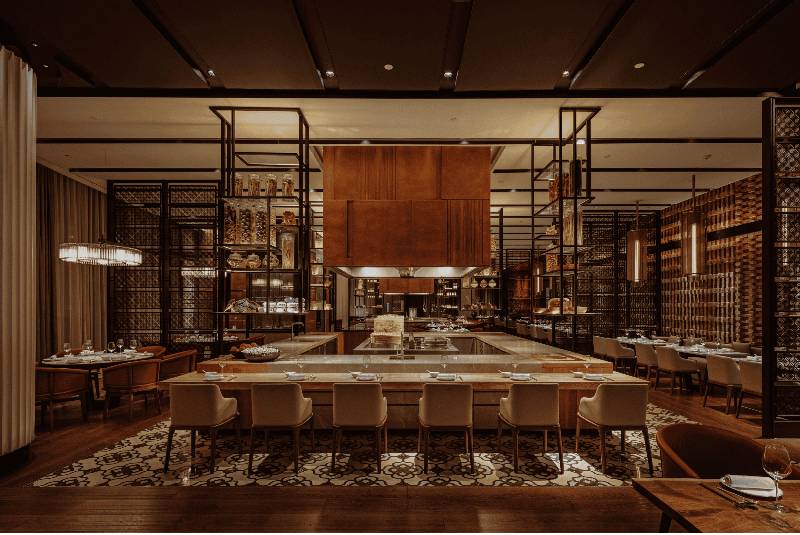
Xin Ron Ji's Xinyuan South Road location in Beijing currently sits at No.84 on the 2026 edition of Asia's 50 Best Restaurants list
Xin Rong Ji started in 1995 as a small seafood stall in Linhai, an area of Taizhou on the banks of the Lin River. Its focus was to showcase the bounty of the East China Sea, revealing the pure taste of local ingredients rather than masking them with complex flavourings. Taizhou cuisine is not codified as one of the eight great traditions of Chinese cuisine, yet Xin Rong Ji's reimagining of the style's premium seafood and subtle umami flavours has resonated across the country and beyond.
Yong describes Taizhou cuisine in two words: xian and rich. "Xian in Chinese means both 'freshness' and 'umami'. It's used as both noun and adjective. [In this case], xian refers to the ingredients – Taizhou, nestled between mountains and sea with distinct seasons, is blessed with nature's bounty," says Yong. This style of cuisine also contains richness, he says. "The flavour profile of Taizhou cuisine is robust and hearty, making it attractive to both northern and southern Chinese palates."
From a young age, a desire to share and connect through the medium of food is what motivated Yong to open his first restaurant, and to continue expanding across China. "I have a deep passion for food. My first small restaurant, opened in 1995, was created to feed myself and satisfy my taste buds," he says.
Memories of childhood also sparked the idea. "When I was in elementary school, I wasn't tall enough to reach the kitchen counter, so my mum had me stand on a stool to cook my first dish. I grew up sneaking bites of food from the kitchen."
Taizhou and its surrounding towns and cities are known for making the most of the region's ample river, mountain and sea-based produce
In 2018, after opening 12 more locations, Xin Rong Ji's Wan Chai, Hong Kong location was awarded its first Michelin star. In 2021, the Nanyang Road, Shanghai and Linhai debuted on the extended list of Asia's 50 Best Restaurants at No.61 and No.76 respectively, where Xin Rong Ji locations have been a mainstay in the five years since.
Diners across China have fallen for Rong's high-end reimagining of Taizhou cuisine, with popular dishes including a refined version of home-style braised yellow croaker and a plate of velvety roasted daikon. For Rong, it's crucial that dishes like this resonate with a wide audience. "In Chinese we have a saying, 'to the people, food is heaven'. I think good food knows no borders," he explains.
Alongside his steadily growing kingdom, Yong is a keen student of food and counts learning about China's huge range of diverse cuisines one of his life's great passions. Between 2008 and as recently as 2025, Rong has opened restaurants serving hot pot, Sichuan, Anhui, Hu'nan and aristocrat cuisines.
His work has gone some way to showcase the variety of Chinese food, beyond the Cantonese dishes most recognised in the West. However, there are still elements of Chinese culinary culture Rong wishes international diners understood.
"I would call Chinese cuisine Chinese cuisines instead because China is so vast. There is an immense diversity of cuisine types and flavour profiles, down to every village and town. Even each place's typical breakfast has its own unique characteristics," he says.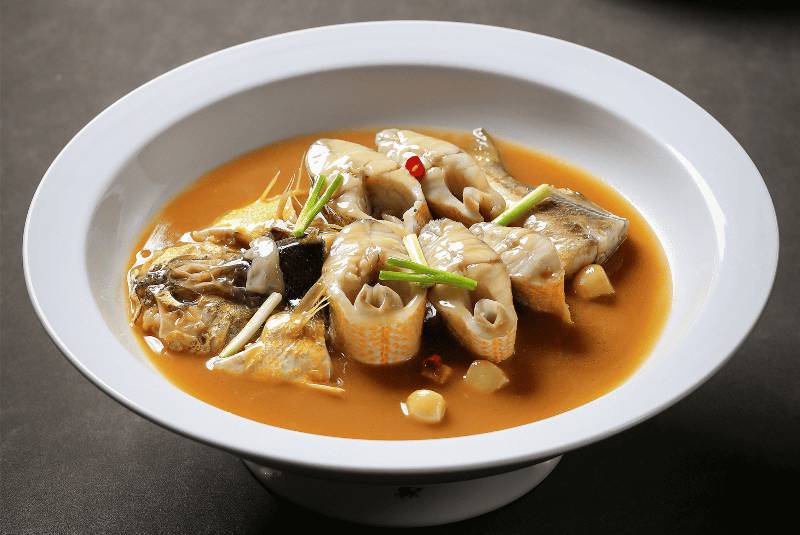
Delicate yet deeply umami braised yellow croaker is a signature regional dish featured on Xin Rong Ji menus across China
Although pride in Chinese ingredients isn't a new phenomenon in a country that has always revered its own food culture, there has been a marked shift in appreciation for regional styles, as well as a boom in Chinese fine dining in recent years. In 2026, 14 per cent of the restaurants on Asia's 50 Best Restaurants list were based in Mainland China, compared to 10 per cent in 2025 and 8 per cent in 2024, showing growing recognition of Chinese cuisine both within the region and internationally.
Yong, who while would never take credit for surging this movement onwards but has had immense influence, agrees that now is a pivotal time for chefs and restaurateurs in China. "It's going to become more exciting. Everyone loves new things and enjoys hearing fresh stories. Our regional cuisines have so much to offer."
In a culinary scene that's rapidly gaining pace, Yong is slowly beginning to operate on a different speed. He's preparing for his retirement, with one watchful eye on Xin Rong Ji. "I am working on my retirement plan. However, I hope our team will continue to strive with persistent efforts to make Xin Rong Ji brand even better and thrive longer.
"It's very heartwarming [to have won the SevenRooms Icon Award 2026]. I feel very joyful and validated. It is the best encouragement and recognition before my retirement," he continues.
While there is plenty of development and exciting new concepts coming out of China's fine-dining boom, Yong emphasises the importance of simple flavours done well, recounting his most memorable meal as a modest bowl of rice porridge and a stir-fried egg. "It was from my younger days when I got lost and was starving to the point of blurred vision. A village lady gave me food and refused taking any money. At that moment, I realised this was the true taste of life."
These formative early experiences and humble mindset are things Yong hopes young restaurateurs with ambition will take with them on their journey to success. "No matter what kind of cuisine, people will like it if it tastes good. We as restaurateurs need to make sure of it."
Discover the full list of Asia's 50 Best Restaurants 2026 and special award winners.