From the Cape to Bordeaux, a new wave of wine estates and restaurants are discovering that exceptional food and wine make for something greater than the sum of their parts.
A peacock crosses the terrace at Beyond, its cobalt blue plumage bright against vines that autumn has turned the colour of honey. Inside the fine-dining room on Constantia's Buitenverwachting estate, an oyster dressed with peri-peri and tulbaghia oil arrives alongside a saline heavy, piercing Blanc de Blancs Reserve 2019 – made by Fyn group's Service & Beverage Director Jennifer Hugé, in collaboration with neighbouring Klein Constantia (No.6 in The World's 50 Best Vineyards). This moment is a snapshot of a wider story.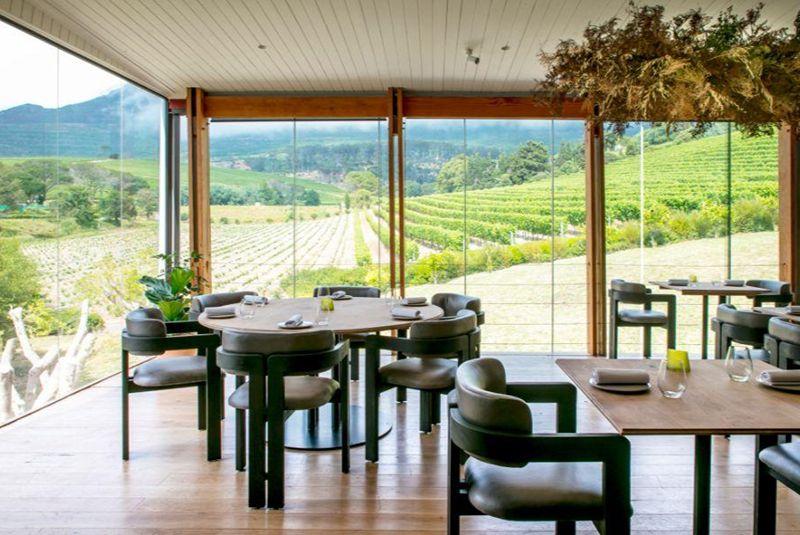
The dining room of Beyond overlooks the vineyards of Constantia
"It's quite common in the Cape for wine farms to be home to exceptional restaurants – it's a natural fit," says Peter Tempelhoff, chef-patron of Fyn in Cape Town. The relationship goes back decades. Five years after opening Beyond, the Fyn group expanded further, launching Arum at Boschendal Estate in December 2025.
For wine estates, the reasons are multifold, as can be seen in the rise of this phenomenon internationally. At Sandridge Barton in Devon, England, introducing a restaurant towards the end of 2025 was a no-brainer. "A tasting is a great way to share information, but it can be quite jam-packed within a short period of time," says Tom Wedgery, who manages operations at the estate. "Roam allows guests to slow things down, order their favourite wines from the tasting and really experience Sandridge Barton in full."
At Château Buera in Georgia (No.72 in The World's 50 Best Vineyards), a Renaissance-style palace amid private vineyards in the Napareuli microzone, Chef Meriko Gubeladze leads a menu of Georgian classics reinterpreted with unexpected textures, accompanied by wines made on site. "As both cuisine and wine have always been central to Georgian culture, they represent something more than gastronomy alone – they are an integral part of the Georgian lifestyle and identity," says Sandro Kurdadze, who manages the estate. "We always try to offer wines that pair well with fresh, seasonal dishes, while also offering qvevri wines that work better with drier and more intense dishes."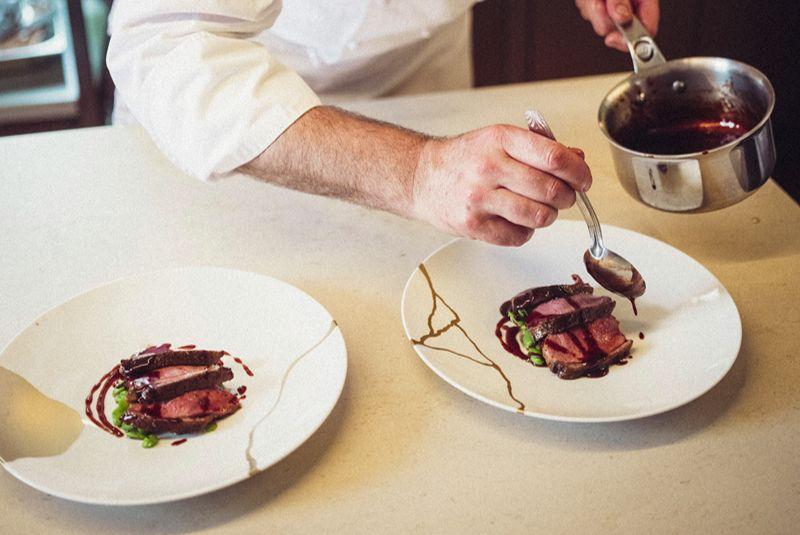
Gastronomy has become a core pillar of Château Palmer's offering (Image: Julien Mignot)
At Bordeaux wine estate Château Palmer, it was a natural extension of the estate's shift to biodynamics. This means "see[ing] things differently," says CEO Thomas Duroux. As the shift towards a broader ecosystem evolved, they became farmers and grew vegetables as well as wine: "and then the question was, what should we do with what we produce on the farm?"
Whilst the decision to open a daily, humble canteen and a separate, more exclusive table experience emerged naturally, Duroux says a serious gastronomic offering is paramount in 2026. "It is extremely important, and there are regions in the world that really started this a long time ago," Duroux reflects, pointing to the likes of Napa.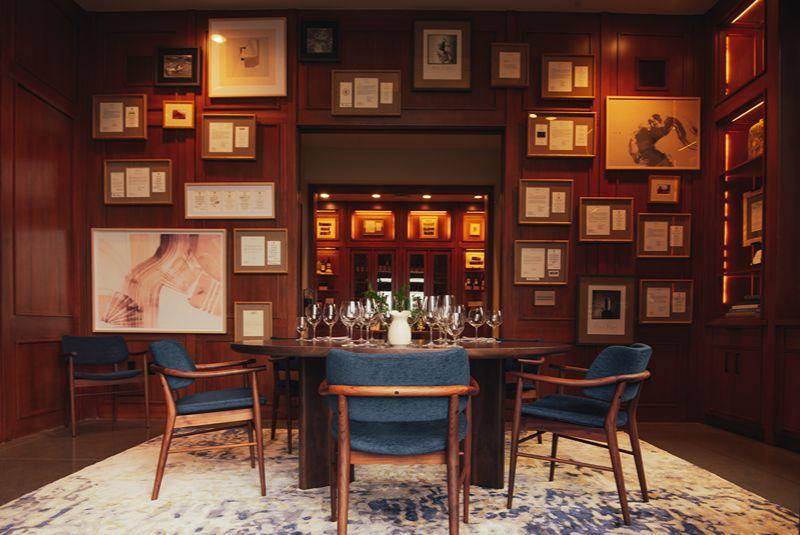
The Table Series at Joseph Phelps offers a unique wine and food programme
One Napa pioneer taking the traditional regional model further is Joseph Phelps (No.37 in The World's 50 Best Vineyards), where its Table Series weaves food, wine and regenerative farming into a single offering. "Wine is certainly enjoyable on its own, but it becomes something more meaningful when shared around a table," says Mitalee Gupte, senior director of DTC and marketing at Joseph Phelps Vineyards. "The Table Series is experiential, not transactional."
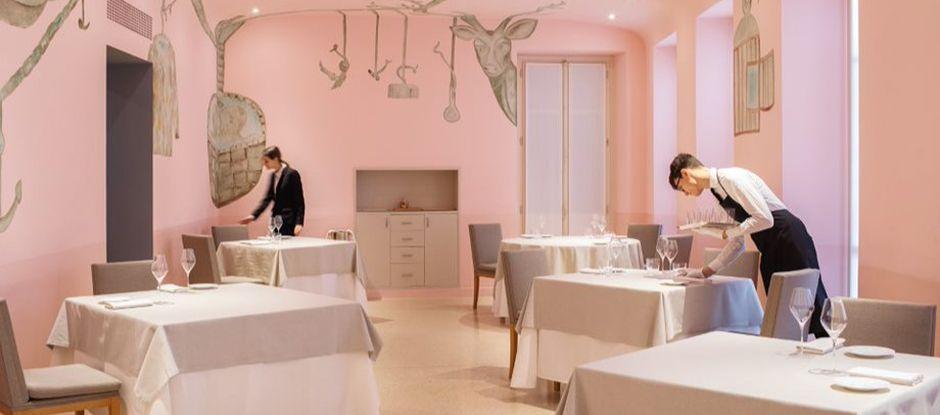
At Ceretto (No.19 in The World's 50 Best Vineyards), they go beyond, offering world-leading gastronomy, including the marshmallow-pink dining room of Piazza Duomo, currently placed at No.32 in The World's 50 Best Restaurants. "Our definitive moment came in the early 2000s when we acquired an 18th-century building in the heart of Alba," says Roberta Ceretto, the estate's director of communications and marketing. "We felt a profound need for a space that could translate our winemaking philosophy into food... When we met Chef Enrico Crippa, it was a revelation."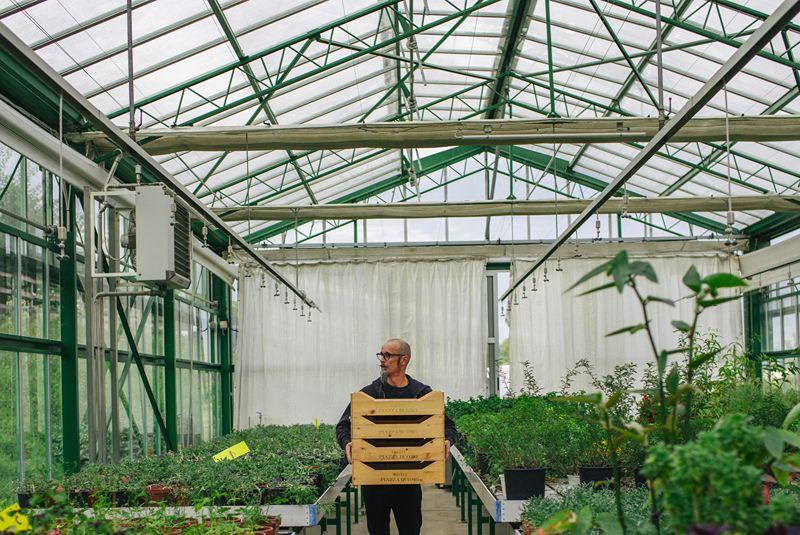
Chef Enrico Crippa of Piazza Duomo works in partnership with Ceretto vineyard
The relationship between chefs and estates is symbiotic. At Beyond and Arum, chefs within the group were given space for self-expression while adapting to the environment: "Each concept felt right for the farm it belongs to. We started by looking at the ethos of the farm, the landscape, the guests who visit it and the type of experience they were seeking." Miles Tuddenham, general manager and co-founder of Roam at Sandridge Barton, echoes this: "there's something very special about dining amongst the vines while drinking wine produced just metres away. It creates an experience that feels immersive and memorable, whether guests are visiting for wine, food or simply the surroundings."
This dialogue between kitchen and cellar is at the heart of it. About the communication between the Ceretto winemakers and Enrico Crippa, Ceretto says: "Enrico is far more than our chef; he is our partner. Over the years, he has truly become a member of the family. The dialogue between the kitchen and the cellar is constant and organic." 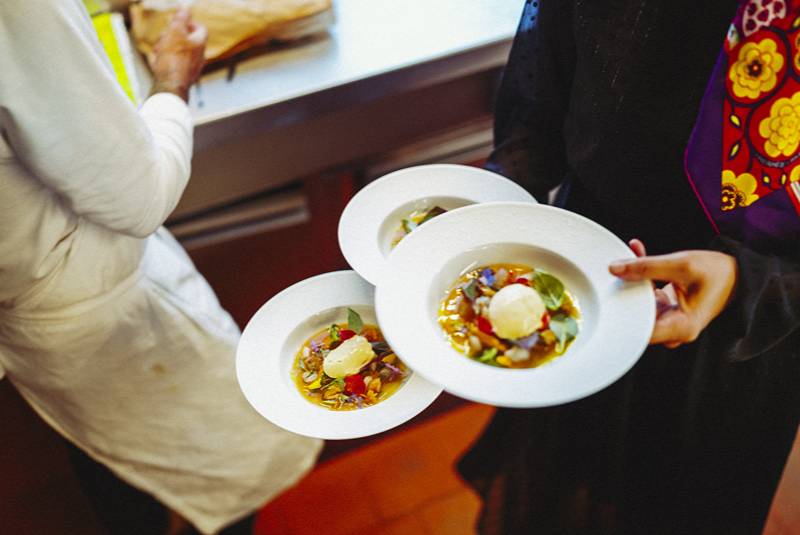
Wine pairings at Château Palmer are designed around each seasonal menu
At Château Palmer, "the menu comes first always," Duroux says. "And then, depending on what is available in the garden, and what kind of wine we want to propose, we work together. We know each other very well now, so to pair his cuisine with our wines, it's an easy thing." In an April menu earlier this year, this meant garden asparagus with cuttlefish bacon, trout roe and lemon brown butter emulsion, paired with the Vin Blanc de Palmer 2023, or crispy sweetbread with carrots, morels and veal jus alongside Château Palmer 2007.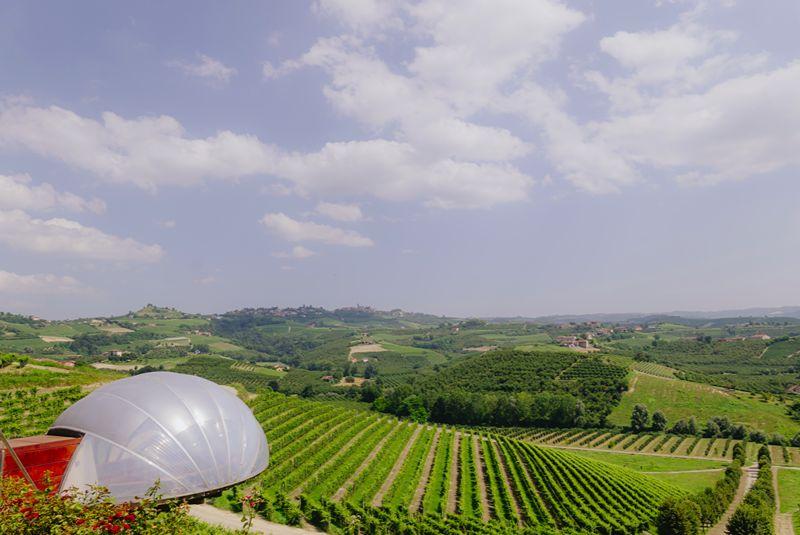
Le Brunate restaurant opened in May 2026 overlooking Ceretto's vines
Yet within Ceretto itself, a new restaurant offers a counterpoint. At Le Brunate – named for one of Barolo's most legendary crus – the hierarchy shifts. "The wine is the protagonist. From its name to its menu, everything is designed with the singular purpose of elevating wine to centre stage." At Roam at Sandridge Barton, Tuddenham often takes the same approach: "What's particularly interesting is that we sometimes consider pairing food around the wines, rather than the other way around," he says.
Beneath the different approaches, the ambition is the same. "If guests leave with a stronger sense of place and a deeper appreciation for the values that guide our work, then the experience has succeeded," says Gupte. Duroux roots it in something more elemental: "What we do is try to put a place in a bottle of wine or a place on a plate. And the best way to understand it is to come and see it directly."
Explore the full list of The World's 50 Best Vineyards 2025.