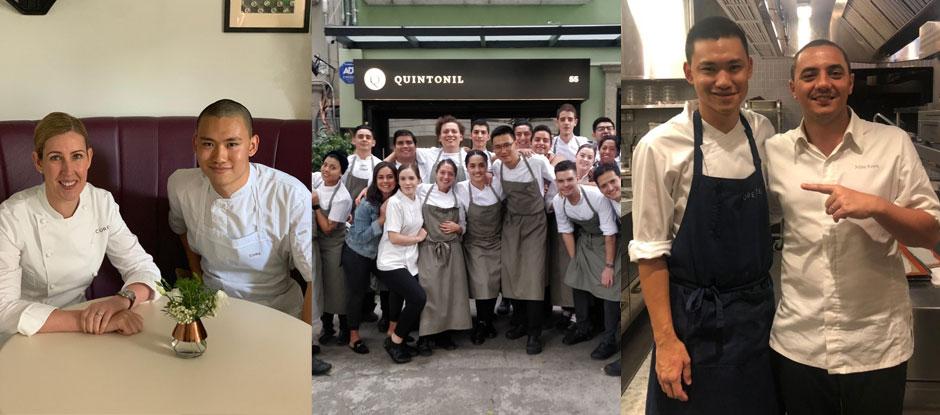
With only one week to go before applications close for the 50 Best BBVA Scholarship 2020, we asked our most recent alumnus – 20-year-old Canadian cook Andersen Lee – to share the learnings from his summer of stages at Odette, Core by Clare Smyth and Quintonil.
Discover how to make the most of any stagiaire experience with first-hand advice from Lee and apply on the Scholarship portal by next Friday 20th December for the once-in-a-lifetime opportunity to train at Mirazur in France, The Test Kitchen in South Africa and Leo in Colombia next year
The 50 Best BBVA Scholarship was completely life changing. Even before I started cooking professionally, I wanted to travel and stage in restaurants from the 50 Best family – it had been a dream of mine since I was a 16-year-old dishwasher. I had a unique opportunity to grow in my trade by staging at three incredible restaurants: Odette, Core by Clare Smyth and Quintonil. Working in foreign kitchens made me a more confident cook and a more mature person. Here are some of the lessons I learnt along the way.
1. Do your research on the chef and menus
Staging in your dream restaurant is beyond intimidating. You might have worked on your skills for years before feeling ready to commit to a stage. It's now time to put your head down and work. Studying before your first day will prepare you for what's to come. It's a great way to show your interest and initiative, but it will also help you make sense of what kind of food the restaurant is aiming to serve. I found this especially helpful at Odette. I was very nervous for this stage because it was my first time working abroad. Knowing Julien Royer's signature dishes, such as the crab and green apple or the heirloom beetroot variation, really accelerated my learning process.
Lee working in the kitchen at Odette
2. Look good, cook well
Make sure you set the tone – have a super high standard for your appearance and the way you present yourself at work. I'm a firm believer that first impressions are super important. Clean shoes, a white and pressed chef jacket, short fingernails and a sharp knife will go a long way. It's normal to feel a little shy and lost over the first few days, but knowing that you look immaculate will give you a boost in confidence. Show your new co-workers that you pay attention to the little details and that you're here to learn.
3. Keep your eyes, ears and notepad open
When people are explaining your new tasks, it's important to take notes to avoid having to ask your chef de parties to repeat themselves. Asking questions as soon as something is unclear may seem like a burden, but double checking can only save time. The only silly question is the one you didn't ask. Jot down every little detail you learn in the kitchen as well, especially those that you have never seen before – from the restaurant's daily routines to station set-ups and recipes. Make sure you look around to see what other people are doing. You might just happen to see a new technique for the first time. Keeping your eyes and ears open will also help you anticipate when people need help. Offering a hand can go a long way.
4. Taste everything
Asking to taste the mise en place you’re working with will help you understand the restaurant's standards. I find it so much easier to season to a restaurant's liking once I know what I'm aiming for. During my stages, I found that the flavours at Quintonil were bolder than I'm used to. The dishes had elements that were a little spicier and more acidic, and tasting them helped me get the flavours right. Tasting is also a great opportunity to discover foreign ingredients, whether it's insects and exotic fruits in Mexico or ultra-fresh shellfish from Japan. Having a meal at the restaurant is an important part of the stage too, because you get to taste the fruit of your labour.
Some of Lee's photos from his period in London
5. Get to know the city and culture
As a cook, it's quite easy to travel locally and have the opportunity to enrich your knowledge, but it's not every day that you get to be in another country. So allow yourself to spend some time being a tourist. Part of a stage is also getting to know the place where you are. Go to markets, vineyards and farms, and eat around to better understand what you’re cooking and why.
6. Be proud of where you're from
You're now at the stage you've been anticipating for what seems like forever. You're working hand-in-hand with the best in the business and you're learning at a faster rate than ever. So it’s now more important than ever that you don't forget where you come from. None of this would be possible without the amazing people you worked with beforehand. Be proud of the restaurants you come from, even if they’re not as well known. It means you might be able to pass on the opportunity you’re enjoying to your co-workers in the future.
7. Keep recipes and contacts like gold
Over the course of your stage, you're going to write down some awesome recipes and make some incredible human connections. It's important to take full advantage of this. Print out the final versions of the recipes you wrote down, take pictures of your notes, and back up everything – do whatever it takes not to lose this material. You should also try to keep in touch with your new friends once you've completed your stage: you never know when your paths will cross again.
Some of Lee's highlights from his meal at Quintonil
8. Don’t get an emotional haircut!
The running gag through my three stages was my hair. I was trying to get over a breakup during my time at Odette, and I heard changing hair styles can help people move on. I asked around the kitchen and the vote was unanimous: bad idea – I should keep my hair the way it was. Obviously, I let my emotions get the most of me and shaved my head completely. As I walked into work with my new look, everyone had their head in their hands. "Have you lost your mind? I thought we all agreed you wouldn't do that to yourself?" Once I got to Quintonil, I kept it short for the hot Mexican weather. The first thing my sous chef told me was: "I didn't recognize you from the World's 50 Best ceremony. You were so much more handsome with long hair! What were you thinking?"
9. Be patient with yourself
It's important to remember to be patient with yourself. You're away from home, working in a foreign kitchen, so it will take a while before you settle into your new work environment. Everyone wants to do their best, but it's important to understand that there's always room for error, especially during a stage. You're not going to be an all-star stagiaire right off the bat. Give yourself time to progress, have fun and enjoy riding the wave. You will leave behind your reputation and, hopefully, a few of your catchphrases.
Applications to the 50 Best BBVA Scholarship 2020 are open until Friday 20th December to chefs with less than three years’ experience in a professional kitchen. Apply now on the Scholarship portal.
Read all the articles about the 50 Best BBVA Scholarship for more inspiration and follow The World’s 50 Best Restaurants on Instagram, Facebook, YouTube and Twitter for more news, videos and features.