From counting down the final days of Ramadan to making ma'amoul cookies, the iconic chef shares how her Eid al-Fitr rituals pay homage to memory, family and identity.
Salam Dakkak's cooking is rooted in nostalgia. Her mother's name is emblazoned above the doors of both her Dubai restaurants, Sufret Maryam and Bait Maryam, where the values and rituals she absorbed growing up in Jordan are kept very much alive.
Dakkak sees that nostalgia as both inheritance and responsibility. "Your past is your foundation. Without it, one cannot exist," says the Palestine-born chef.
Her celebration of Eid al-Fitr reflects the same philosophy, centring on family, ritual and the traditions that have shaped her identity. When speaking about the holiday, she returns to the idea of 'irth', which means 'heritage' in Arabic, and 'adat wa taqalid' – the customs and traditions that shape a person. For her, the aim is to preserve long-standing rituals while carrying them forward into the present, keeping them alive without diluting or appropriating their meaning.
Morning memories
For Dakkak, the night before Eid holds special meaning. Once the ma'amoul (semolina dough stuffed with dates, walnuts or pistachio) were baked, Dakkak and her sister would cling close to her mother as she put the finishing touches on the children's new Eid clothes, threading the needle for her mother as she sewed late into the night. Even going to bed became part of the ritual: "I used to sleep next to my new Eid clothes," she laughs. "I would sleep on one side all night so I wouldn't roll over and crease them."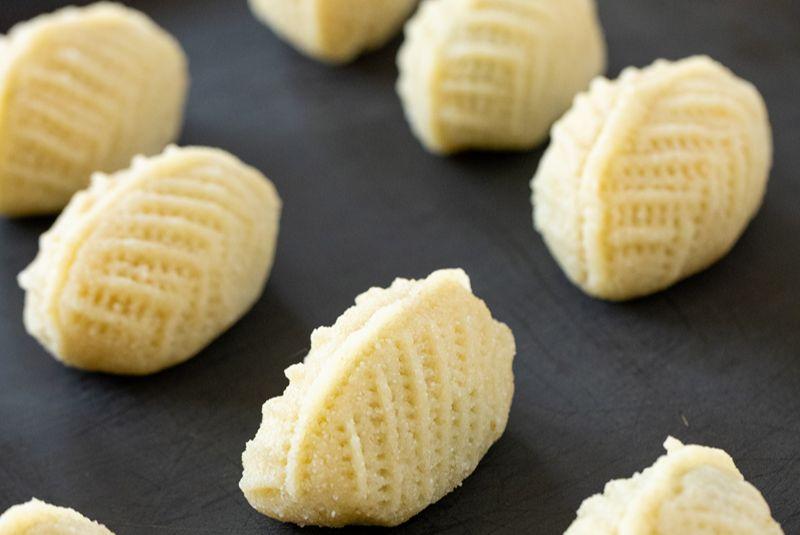
The intricate patterns on ma'amoul cookies are often embossed using wooden molds
Before the coffee and sweets come out and the greetings begin, the morning starts with the takbeerat – the call to Eid prayer. "There is nothing more beautiful," she recalls warmly. This moment brought about a unique, vibrant atmosphere, with everyone living out the sense of occasion, dressed up in their new clothes. Later, coffee would be shared from house to house across the neighbourhood. "People brought their dallahs to be filled, and large pots were prepared to serve more than one home. The coffee belonged to the whole neighbourhood," she says.
Past is present
Where Dakkak now lives in Dubai, the first day of Eid begins with a late-morning brunch at home after prayers. Her family comes together around noon, with everyone pitching in to help with the cooking. On the table, there's a full Arabic spread: foul, falafel, eggs, potatoes, makdous, labneh, grilled halloumi and ma'alaq, lamb offal cooked with onion, a traditional dish that takes her back to her childhood.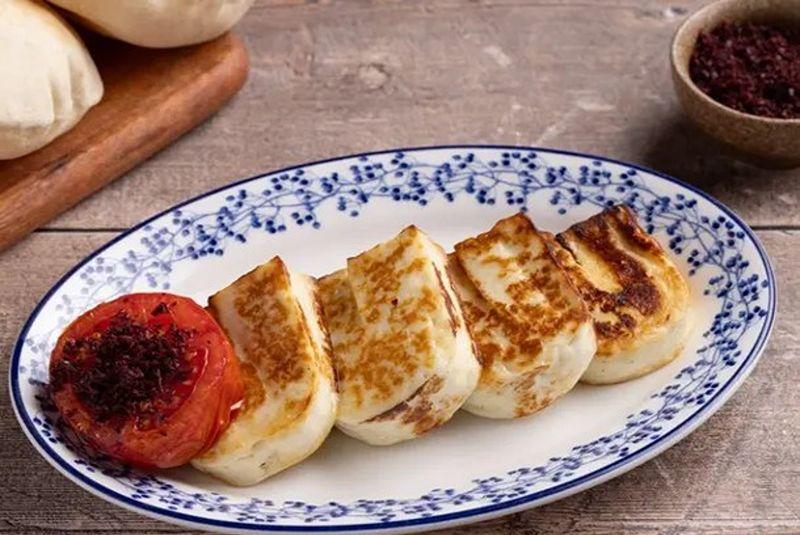
Grilled halloumi forms part of the Eid brunch spread Dakkak still makes
Generational gifts
The tradition of Eidiya – where parents and relatives give children money – is one of Dakkak's fondest memories. She remembers the excitement of waiting for it, collecting it, and saving it up for toys she had her eye on. Her mother even stitched her a small pouch from the same fabric as her new Eid clothes, giving her a special place to keep her stash safe.
Sat under a pomegranate tree, Dakkak's grandfather would prepare the eidiya while his grandchildren lined up patiently. "The amount was never important," she says, "the idea is, the principle is," describing the tradition of gifting.
Today, she keeps the custom alive in her own family. When her granddaughter, Maryam, celebrated her first Eid, Dakkak insisted on marking it properly, even though she was too young to understand. For Dakkak, it matters deeply that these habits continue. She feels proud when she sees her own children calling their elders and relatives to mark Eid without needing a reminder. "That's how I was raised," she says, "and how I raised my children."
The here and now
The power of tradition is felt most emphatically during Eid, says Dakkak. It lives in the carefully laid table, the ma'amoul she still insists on making, as well as the rituals she brings into her restaurants.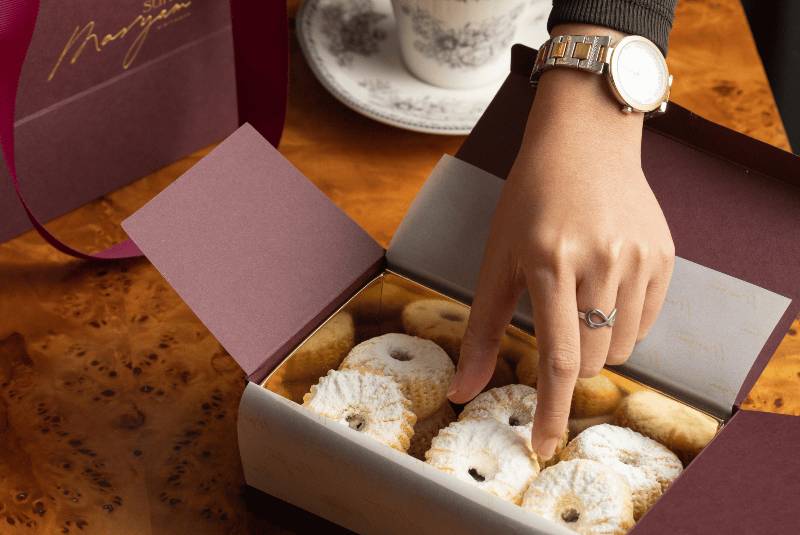
Dakkak's family traditions carry through to her restaurant, Sufret Maryam, where ma'amoul cookies are available to order for Eid
"Bait Maryam is the foundation and Sufret Maryam is the present," she says. "You stitch the two together so you do not lose your identity."
This is why Eid holds so much meaning for Dakkak – it's her way of cherishing the traditions she grew up with, and passing them on to future generations. She asks: "How can you move forward if you have no past? This is not something we invented, it is something we [have] lived. That's why I make ma'amoul at the restaurant [...] as soon as you arrive at the reception, the ma'amoul is there waiting for my guests."
Salam Dakkak is the winner of the SevenRooms Icon Award, as part of Middle East & North Africa's 50 Best Restaurants 2026, sponsored by S.Pellegrino & Acqua Panna.