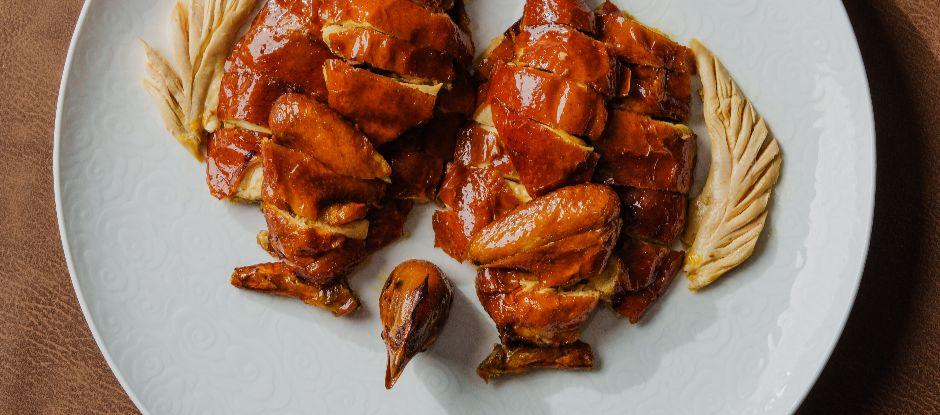
From yakitori counters to refined Italian kitchens, three-yellow chicken is taking Hong Kong's fine dining scene by storm. Here's why chefs are obsessed – and where to try it.
In Hong Kong, holidays are marked by symbols of prosperity and luck: whole chickens often poached in a five-spice-seasoned liquor, bathed in a vinegar-sugar syrup, then fried until fully submerged in oil. The dish is known as crispy fried chicken, and its ascendancy has turned the humble bird into something as coveted as char siu and roast goose.
Lacquered, golden-brown skin coating luscious white meat has made the dish a Hong Kong signature, but in recent years attention has shifted from the dish to the bird itself. Three-yellow chicken – a name referring to a local breed's yellow skin, beak, and feet – has moved into the gastronomic spotlight.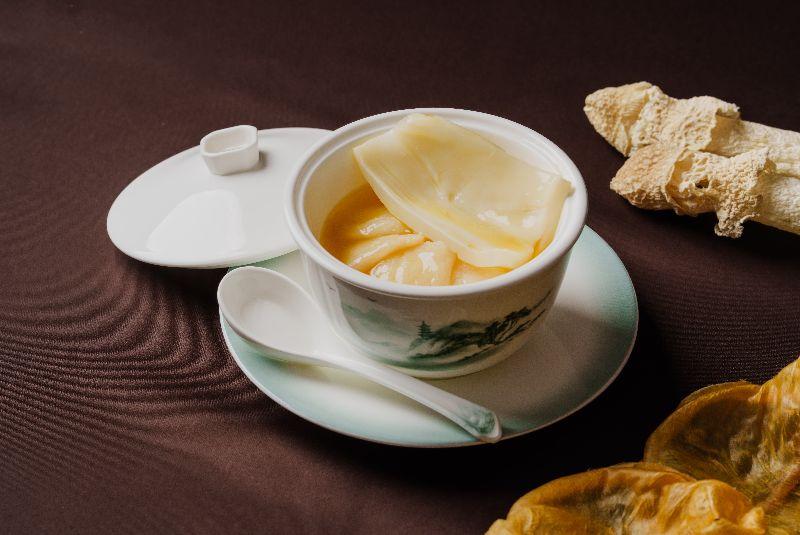
At Duddell's, chicken is used for its richness in the broth base of the double-boiled fish maw stew with fungus and bamboo
The city's most esteemed chefs are drawn both to the bird's singular qualities and to a broader commitment to local sourcing. At Cantonese fine dining spot Duddell's, for instance, the use of fresh birds is essential. "Fresh chicken retains a natural elasticity; it cooks up tender and moist, never dry or tough," says Chef Chan Yau Leung. "This is the core reason why Duddell's diao zha local chicken has become such a beloved signature dish."
Chef Liu Zhen of Yong Fu, the Hong Kong outpost of a Shanghai-based Ningbo restaurant, notes that the chickens are never raised beyond 180 days, which contributes to their appeal. "As a result, their skin tends to be slightly thicker compared to other chicken breeds, which helps achieve a better crispy skin texture."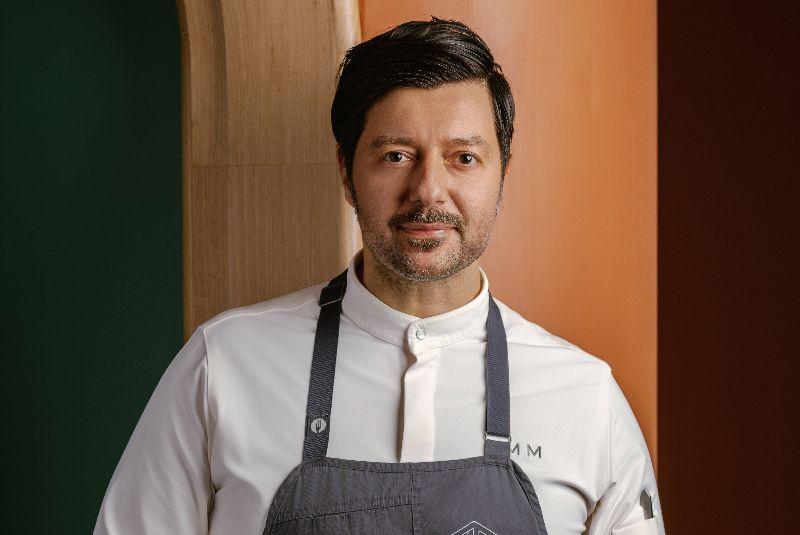
Estro is Naples-born chef Antimo Merone's first restaurant, where he showcases modern interpretations of his hometown's cuisine
Chef Antimo Merone of Italian fine-dining restaurant Estro describes three-yellow chicken as having "very peculiar characteristics." Unlike other varieties, "it has a thin but resistant skin, a large subcutaneous layer of fat and very succulent meat." Together, these characteristics produce an ideal balance of fat and lean, tender flesh.
At Roganic, making use of the bird in full is paramount. The carcass, wings, and legs are used to create a rich, gelatinous chicken stock base that is then used across the kitchen. "We want to make use of the whole bird, especially that incredible yellow fat and natural collagen, which imparts so much of the bird's unique character," says Head Chef Adam Catterall.
For Catterall, the breed may even surpass the finest poultry in France. "I must say the three-yellow chicken trumps Bresse, it's one of the best chickens I've ever tasted," he says. "For me, it wins for its concentrated pure chicken character and silkier mouthfeel. The yellow skin and fat impart a rich umami profile to the meat which turns it into something quite unique."
Where to eat three-yellow chicken
Crispy local fried chicken at Duddell's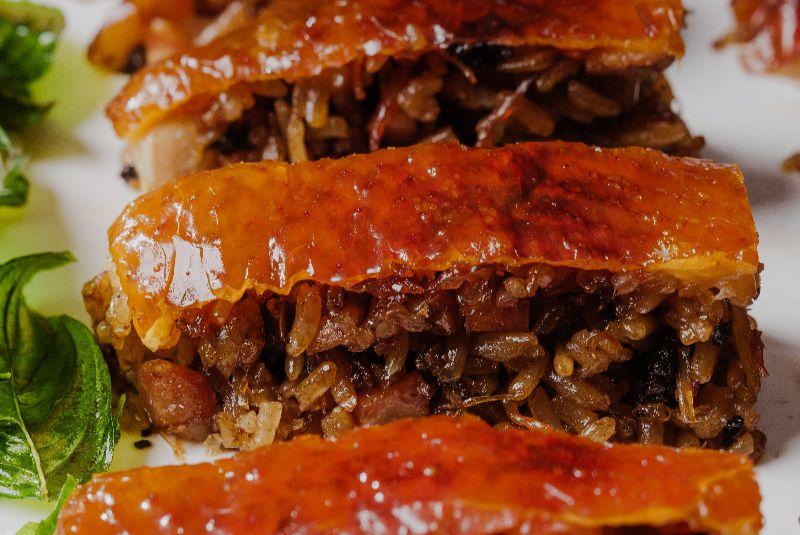
A signature at Duddell's, the fried chicken is known for its crisp skin that shatters on the first bite
One of the finest crispy chickens in Hong Kong, they replace the traditional immersion method with a diao zha (hanging fry) technique that results in juicier meat. "While the old-school method guarantees crispy skin, it often leads to dry, tough flesh," Leung says. After trimming, blanching, glazing in a precise blend of maltose, vinegar, red vinegar, and Shaoxing wine, the chicken is air-dried for eight hours, given an initial fry, before the diao zha is applied. Here, the chicken is hung and continuously basted with hot oil until fully cooked. "Controlling the oil temperature and mastering the basting motion relies entirely on the chef's extensive experience," Leung explains. The chicken arrives with its striking copper sheen and is served with house-made dipping salt.
Yakitori at Torikaze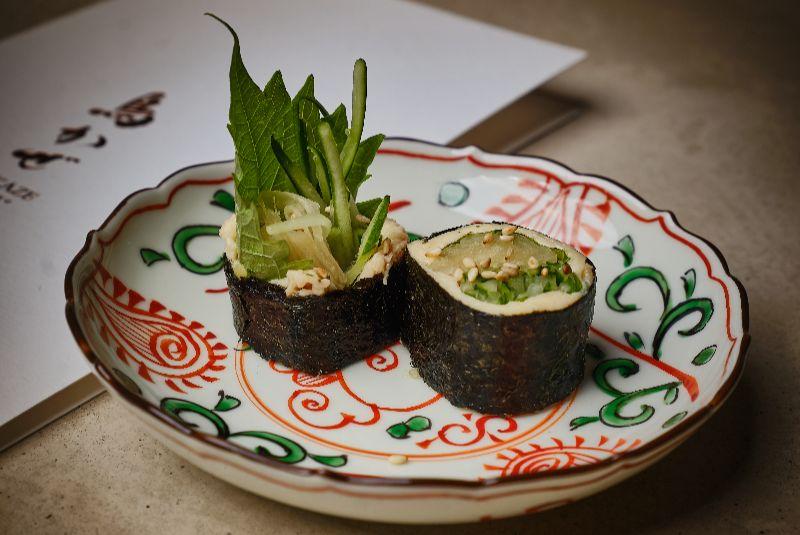
Torikaze's confit chicken ginger roll wraps slow-cooked chicken breast in nori with pickled ginger, cucumber and shiso leaf
An intimate 16-seat counter where surgically butchered cuts rise over Kishu binchotan, wreathed in billowing smoke – Torikaze Hong Kong is a worthy extension of the legendary Tokyo original, and every bit as alluring. "From our very first yakitori trial using this prized local breed, we knew we had found the signature chicken for our Hong Kong flagship," says Chef Ryo Matsui. Its fattiness is perfect for grilling, meaning prized cuts like hiza nankotsu (knee cartilage) and sori (oyster) are near ecstasy-inducing. The meal closes with a chicken broth, flecked with golden circles of sumptuous schmaltz.
Three-yellow chicken, White Dragon Corn, fermented turnip and black garlic at Roganic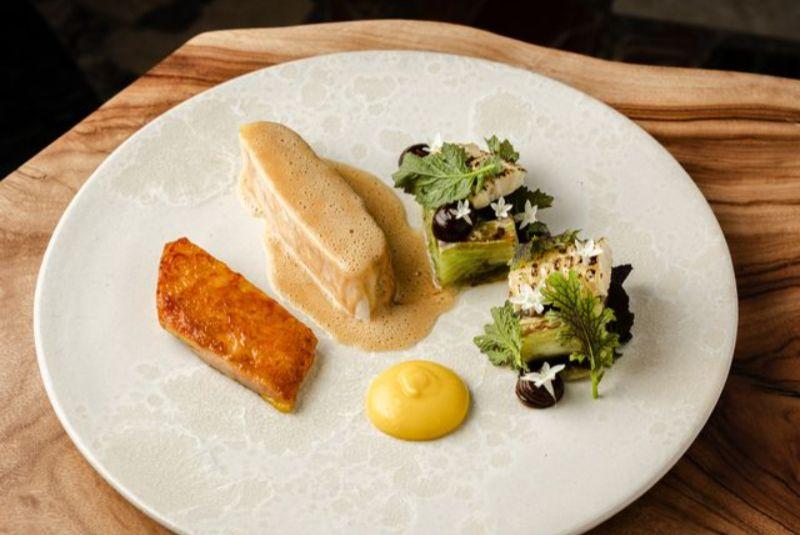
Roganic's version of three-yellow chicken is served with white dragon corn, black garlic and local lettuce
Applying a fierce locavorism tied to a 10-km radius in the Lake District to Hong Kong might seem an impossible challenge at first sight, but at Roganic, the fare manages, impressively, to speak Simon Rogan in a local language. This dish is no exception: a premium Taiwanese corn brings sweetness, and lactic acidity comes from fermented turnip, together complementing the chicken and black garlic's rich layers of umami. To let the chicken shine, the breast is poached at a low temperature for a longer time to develop tenderness without drying it out, while the fat is rendered, then used to baste the meat and cook the corn.
Golden crispy chicken with pepper and sesame at Yong Fu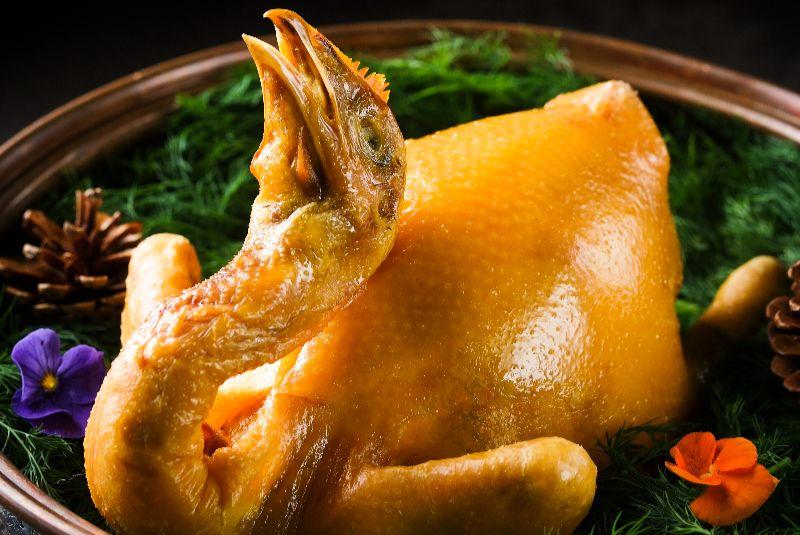
Served whole, the chicken at Yong Fu has become a signature dish refined over two years by chef Zhen
Ningbo cuisine is marked by its freshness, with a subtle fermented depth beneath the surface, but Zhen's crispy chicken pays tribute to its Cantonese counterpart, via Beijing. The gossamer-thin, crackling skin is the dish's defining feature, making the choice of bird essential. "We spent two years researching and developing this chicken," Zhen says, "testing over a dozen breeds available in Hong Kong before ultimately selecting this particular one." The meat is then shredded and marinated with sansho flowers, served with wafer-thin pancakes more commonly used for Peking duck.
Three-yellow chicken with spinach, onion and natural jus at Estro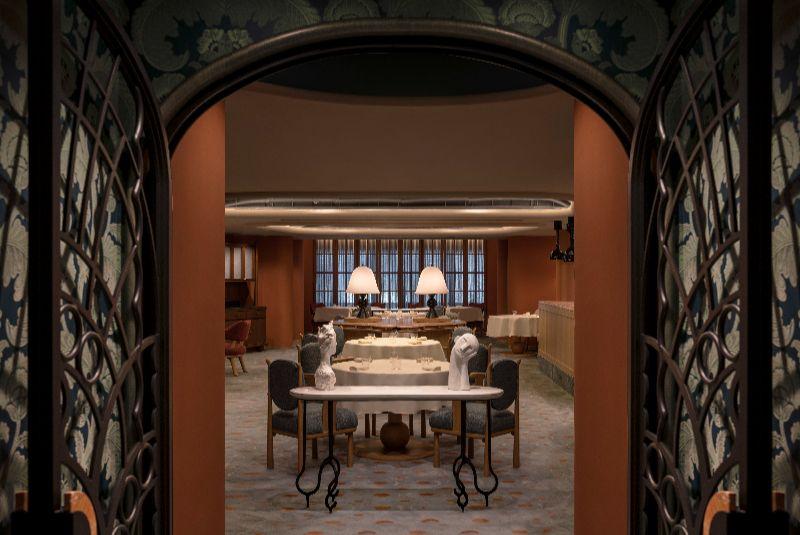
With earthy tones and curvaceous detailing, Estro's salon-style interiors by André Fu Studio reflect chef Merone's Italian heritage
Ordinarily importing the finest Italian ingredients – alongside seafood from Japan – the esteemed chicken is one of the few local elements to make the cut in this glamorous, curvaceous dining room. In Merone's refined cookery, seasonal accoutrements are used to highlight rather than distract from the bird's pure flavour, always bound together by a glossy natural jus made from its stock. In autumn, that might lean towards wild mushroom and charred onion, while in warmer months spinach and green olive bring a lighter frame to the chicken.
Discover more fantastic restaurants, bars and hotels with 50 Best Discovery, and start planning your next adventure.