A new guard of Japanese chefs is making their mark on Paris, bringing with them an appreciation for French technique, ingredients and the creative freedom the cuisine affords.
In 1868, French chef Louis Begeux became the first foreign head chef in Japan, inaugurating a Franco-Japanese culinary dialogue that is still alive and well. It deepened a century later, when Paul Bocuse and the Troisgros brothers visited Japan, returning to France with an appreciation for kaiseki, the Japanese tradition of multi-course dining.
Today, haute cuisine in Paris echoes the ultra-precision of kaiseki. But in the last decade, a new chapter has begun: Japanese chefs are now leading French kitchens in the heart of Paris itself.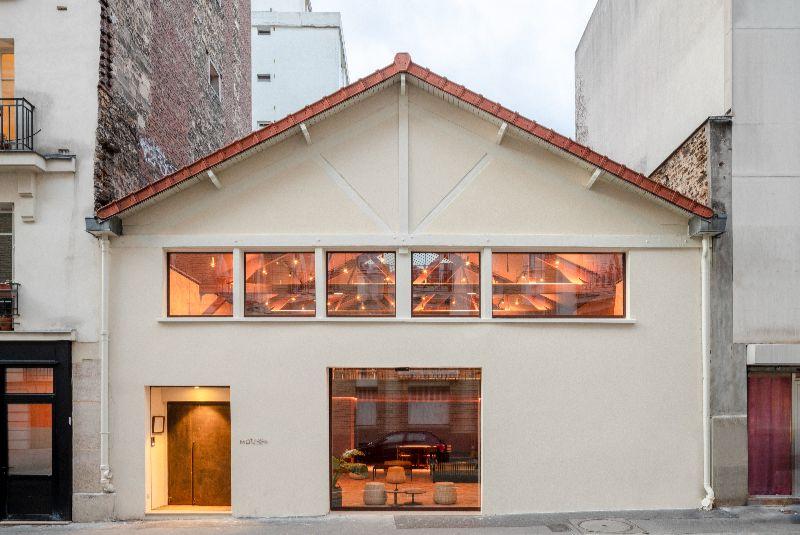
Restaurant Maison occupies a renovated former wine storage building with an original glass roof
When Magma opened in Paris' 11th arrondissement in 2022, chef Ryuya Ono joined a growing wave of Japanese talents, such as Kei Kobayashi (Kei), Sota Atsumi (Maison), Atsushi Tanaka (Restaurant A.T), Shunta Suzuki (Les Enfants du Marché), Ryuji Teshima (Restaurant Pages), Masahide Ikuta (Masaikuta) and more.
While French chefs have long borrowed from Japanese cuisine, this reverse phenomenon feels different. These chefs trained in French techniques but bring distinct experiences, memories and approaches to ingredients, plating and the overall dining experience.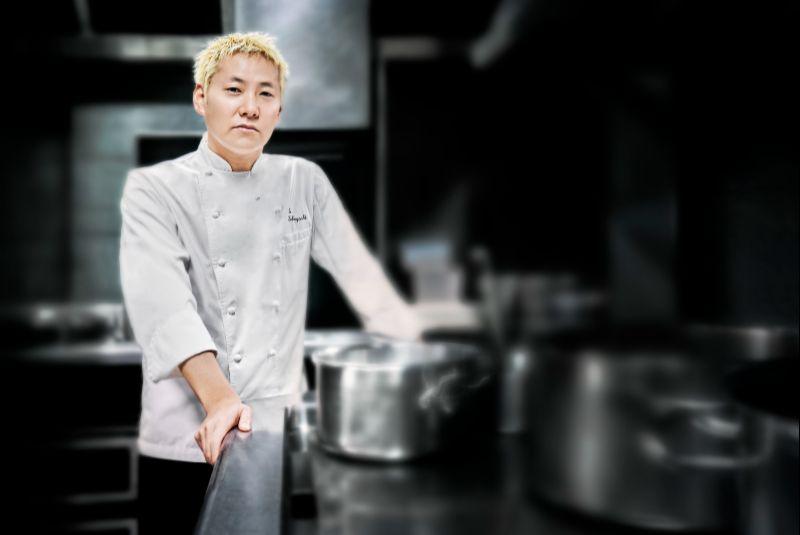
Nagano‑born chef Kei Kobayashi gained classical French training under masters Gilles Goujon and Alain Ducasse (Image: Richard Haughton)
For many of them, the lure towards la cuisine française goes way back. Atsumi remembers trying foie gras poêlé for the first time at just nine years old in a department store with his grandfather. For Kobayashi, it was watching a television documentary about Alain Chapel. "I was fascinated by his presence," he recalls, "the simplicity and strength of his attire, his posture. At that moment, I understood that I wanted to become a chef. And more specifically, a chef of French cuisine."
The Tsuji Culinary Institute – a multi-cuisine culinary school founded in Osaka in 1960 – is often the first port of call for those who feel this sense of destiny. For Sota, this is where many new memories formed – especially of classic French dishes his professors made for him.
But what connects these two foundations? Kobayashi was the first Japanese chef to own a Paris restaurant when he opened Kei in 2011, and he frames it as a creative tension. French cuisine is "a cuisine of construction," he says, building depth through sauces and technique. Japanese cuisine, conversely, "seeks clarity and purity of flavour, often by removing rather than adding."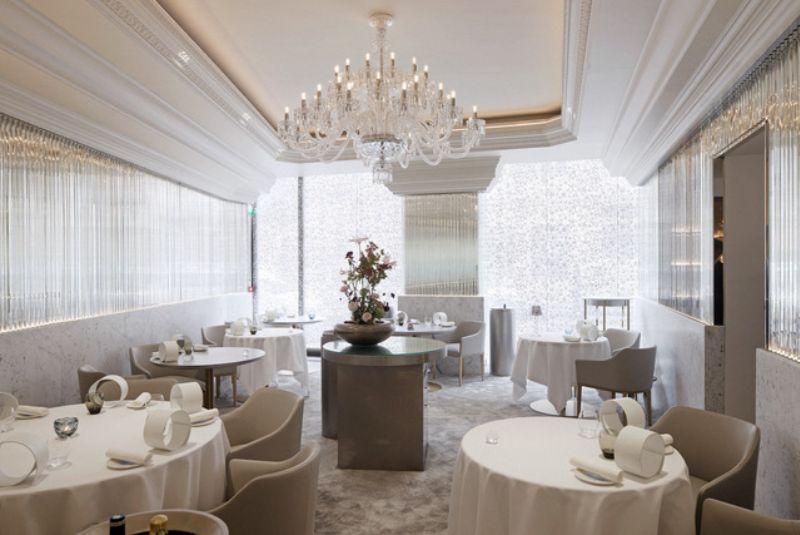
The Great Hall dining room of Kei features mirrored walls lined with glass tubes, creating a crystalline play of light
Atsumi says Japanese cuisine works like sake, transferring flavour through water and moisture in an almost infusion-like process, while French cuisine operates like wine, drawing out the essence of its ingredients. The gap between them is wide, he suggests, stating, "the difficulty of Japanese people tackling French cuisine may be one of the reasons I'm so fascinated by it."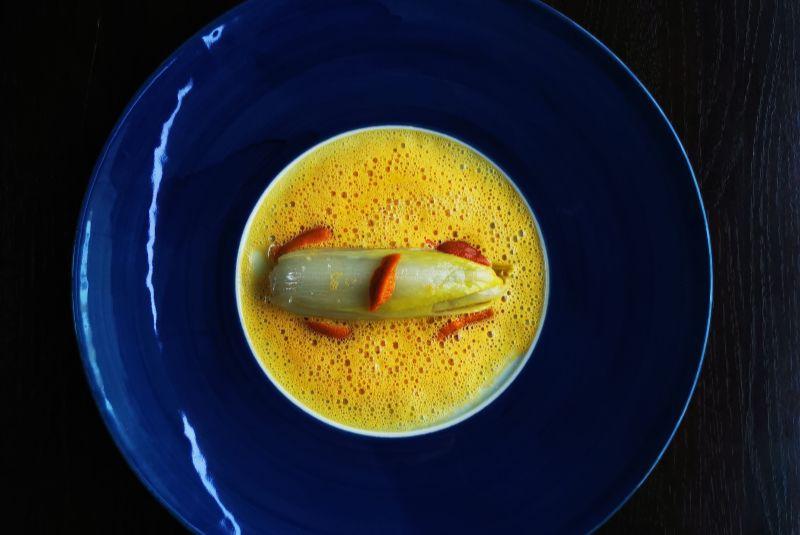
Endive confit stuffed with hazelnut and citrus, topped with bright sea urchin and carrot‑juice sauce at Maison
Even so, a meal at Maison has echoes of what essayist Junichiro Tanizaki called the 'beauty of shadows' – a Japanese aesthetic of evocative restraint. Classical French sauces appear throughout, but any hint of richness is balanced in ways that may appear external to the canon – like dripping foie gras-laden sauce Albufera over a salad of caramelised courgette, green beans and pistachio.
Sota says he tries to remove Japanese elements because people can sense the way his culture may affect his cooking. "Having said that," he reflects, "I believe that the Japanese elements that remain are what I need. What I've noticed is that when I cook, I try to subtract as much as possible rather than adding, and I try to make the food deep, but avoid superficial overlapping."
For Ono of Magma, however, there are some fundamental similarities. "They meet on what matters most," he says, "respect for the ingredient, for seasonality and a strong demand for precision. In both cases, every detail counts."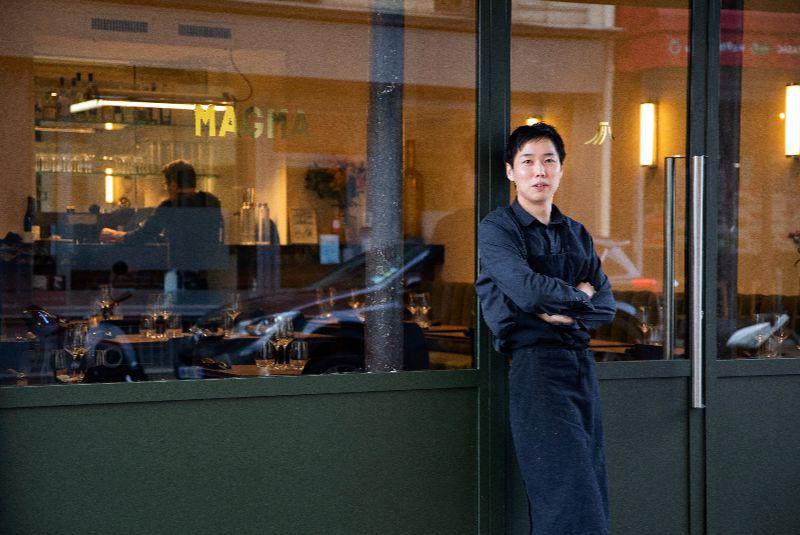
Hailing from Yamaguchi Prefecture in Japan, Ryuya Ono credits working with Bruno Verjus and Sota Atsumi for his culinary style
The reasons the French kitchen appeals to different Japanese chefs, then, may be the ability to take this sensibility and give it personality. Ono, for instance, found Japanese cuisine too context-bound and repetitive, and French cuisine more open to evolution. "It leaves room for interpretation and for the chef's personality," he suggests. "It is a cuisine you can keep learning throughout your life and continue to evolve within. That freedom, combined with a high level of demand, allows me to build my own cuisine." Kobayashi feels the same: "French cuisine gave me a very rigorous framework within which I was able to build my own expression," he says.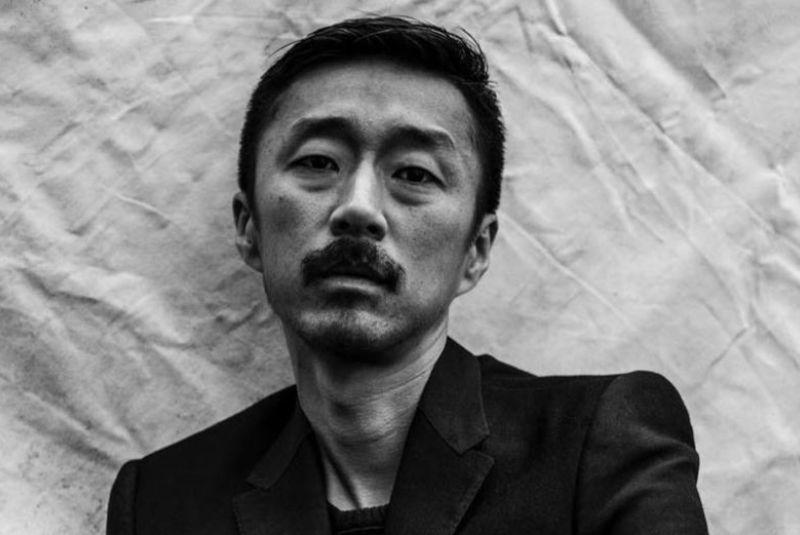
Atsushi Tanaka's cooking is shaped by a range of European techniques, including molecular cuisine, Nordic influences and classical French tradition
For Tanaka of AT, that sense of possibility crystallised with the discovery of a Pierre Gagnaire book at 17 years old. "I wanted to work with him," he says, "that's why I came to Paris." But before that, he cooked in Spain and Copenhagen (at Quique Dacosta and Geranium), and his take on French cuisine feels inflected by these other influences.
"But we're using some very French technique," he reminds me, pointing to the bouillon, bisques, consommés and jus that structure his cuisine. "These kinds of things are very basic French techniques." Though he has no formal Japanese training, he feels that it does have an influence. "I don't try to show any Japanese technique," he says, "but in my mind, I always have a Japanese inspiration."
You can see that interplay in his chromatically composed menu. Lightly grilled beef heart tartare, for instance, is tempered by fermented daikon and redcurrant, before being finished with oxalis and shaved dried beef heart and served alongside a beef consommé.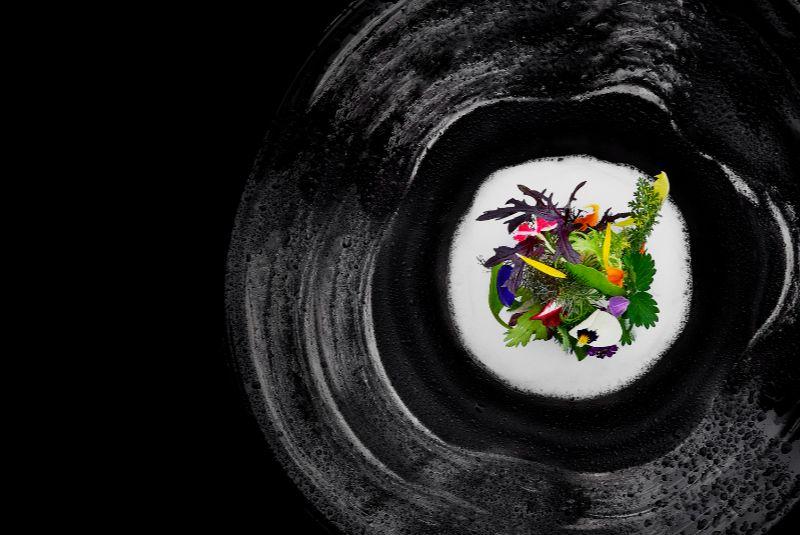
Restaurant Kei's Garden of Vegetables Salad has stayed on the menu since opening, though its recipe of flowers and greens set on yoghurt foam evolves with the seasons (Image: Richard Haughton)
For Kobayashi too, there's an awareness of how his heritage shapes his French cookery. "I do not seek to add Japanese elements in a visible way," he says. What he brings instead is a sensibility about balance, harmony and "knowing precisely when to stop." Though minimal would be the wrong word for a dish at Restaurant Kei, there are clear flashes of this approach across the menu like a snack of smoked yoghurt and sardine tart, or a main of matured Galician beef served with just its fat and a parsley béarnaise sabayon.
At Magma, Ono's Japanese identity is even more clearly pronounced – even in a menu that clearly follows a French architecture. "I pay close attention to detail, balance and the rhythm of a dish," he says. "I always try to stay precise, without doing too much. There is also the idea that intuition must be supported by technique. A dish may seem simple, but it has to be fully mastered. That is a very Japanese approach."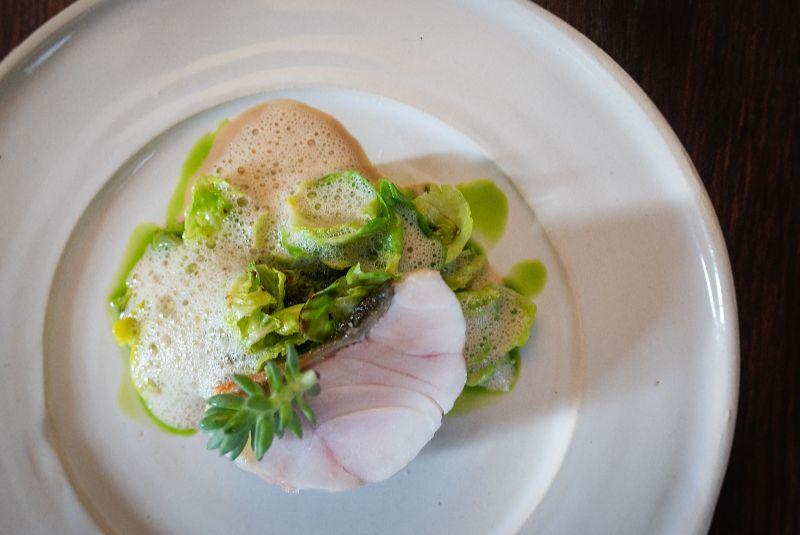
At Magma, red gurnard is served with Brussels sprouts on a bed of foie gras sauce with a garnish of stonecrop from Nice
This is evident in a raw scallop dish that reads immediately as Japanese: pieces of kabocha squash, creme fraiche and rosemary oil subtly cut with a hint of rosemary vinaigrette, all plated with kaiseki-like restraint.
If French cuisine has historically been defined by maximalism and intensity, these Japanese chefs draw on aesthetic traditions of restraint to reshape it. "This approach allows French cuisine to evolve naturally," Kobayashi says, "without ever betraying its identity."
Header image credit: Marie Monsieur
Discover more fantastic bars, restaurants and hotels with 50 Best Discovery, and start planning your next adventure.