As she celebrates winning the title of Latin America's Best Female Chef 2025, Tássia Magalhães explains why toxic macho kitchens are no longer tolerated, and how women are changing the game.
As a young chef at the start of her career, Tássia Magalhães was keen to fit in with the boys, believing she'd be treated more seriously if she acted like them.
"I thought the more I looked like the guys, the more respect I'd receive," says the chef-owner of Nelita, a modern Italian restaurant in São Paulo that ranks No.12 in the list of Latin America's 50 Best Restaurants 2025. "It wasn't just the way I dressed, but my behaviour too. I needed to be tough, to be angry. Now, it's the total opposite."
When she opened Nelita in 2021, Magalhães decided the kitchen would be run entirely by women, all of whom would be encouraged to express their individuality. "I didn't need them to be rude, angry or especially strong," she says. "Each woman could be herself. I wanted it to be a spectacle, a ballet."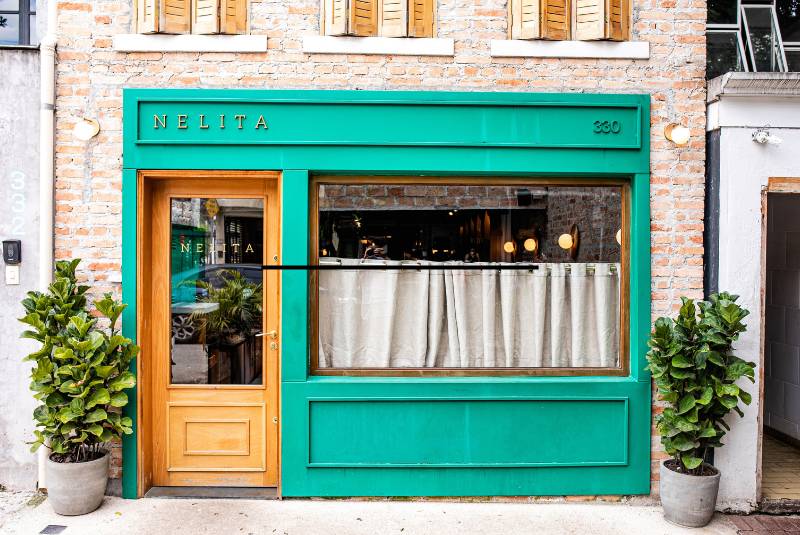
Nelita is located in São Paulo's Pinheiros neighbourhood
Nelita, named after Magalhães' mother – "a strong woman, a fighter, a warrior" – is exactly what she wanted it to be, with an open kitchen and counter from which diners can watch the ballet in full swing. "People go crazy for it," she says, adding that the concept gets "a lot of compliments from men".
Finding role models
At the open-kitchen counter, Magalhães' all-female team express themselves with colourful headbands and other accessories. "I want their femininity to show," says the chef, adding that she "lost her femininity" at the start of her career.
Part of the problem was a lack of female role models. "All my idols were men," says Magalhães, who worked alongside Jefferson Rueda at Pomodori in São Paulo, and who has long admired Thomas Keller, chef-owner of The French Laundry, which was voted The World's Best Restaurant in 2003 and 2004.
Over the years, she started to question why women often ran home kitchens yet were mostly in cold sections or pastry in professional settings. She consciously looked for female role models, finding them in Brazilians like Helena Rizzo, who was named Latin America's Best Female Chef in 2013 and The World's Best Female Chef in 2014, and Roberta Sudbrack, who won the accolade for Latin America in 2015.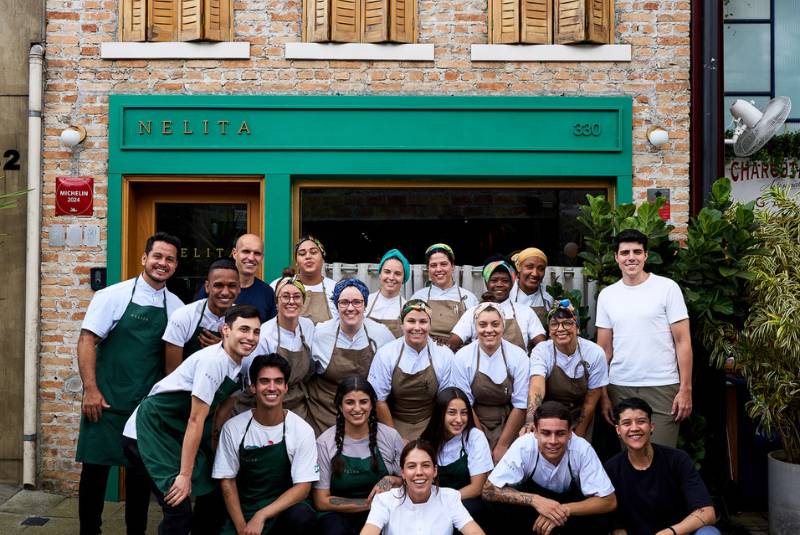
Magalhães strives to improve female representation in professional kitchens
As soon as she found her own heroines, Magalhães became a reference for others. She was working at Pomodori in her early twenties when she noticed other young chefs looking up to her. She decided to create a place where women would take centre stage.
Counter culture
People told her it wouldn't work; that an all-female kitchen would be a clash of personalities. They were wrong.
"The energy is brilliant," says Magalhães, whose husband Danyel Steinle works front of house as Nelita's sommelier. "If one person is feeling fragile, another steps in and has her back, encouraging her to take a breath. That exchange between women is the best thing, because I never had that."
At the kitchen counter, Magalhães serves a modern Italian tasting menu featuring her signature homemade pastas, like delicate ravioli filled with fermented and sweet tomatoes in a broth of chicken and Brazilian acerola fruit. While the counter is tasting menu-only, an a la carte is available at the table. "I wanted everyone – not just a select group of people – to have access to our 100 per cent women-led cooking," she says.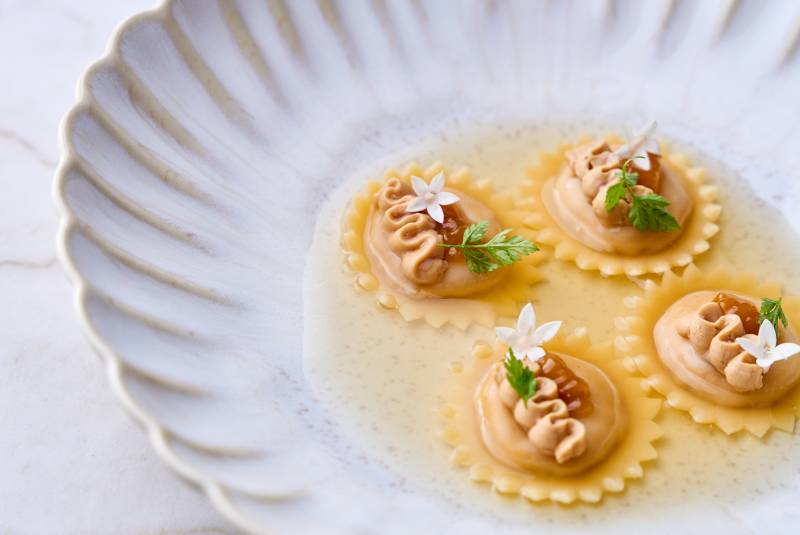
Nelita's ravioli solar, one of the restaurant's popular pasta dishes
There are now more ways to try Magalhães' food. In 2025, she and Steinle opened Lita, a wine bar where food is "not an afterthought". She also owns Mag Market, a boulangerie and deli where she flexes the pastry skills she learned in her early career.
Zero tolerance
Though Magalhães is still in her thirties, she says the restaurant industry has improved since she first began cooking, and while a chef might have been applauded for throwing a pan across the kitchen a decade ago, today that behaviour is no longer tolerated. Female-only kitchens aren't the only answer though – she says a mixed team can work, as long as there's good communication.
"Running a kitchen is tough, so when people say a chef is angry or strict, there's a reason for that – you need a certain strictness," she says. "But nowadays, if you have well-implemented systems, good communication and organisation, it works – you don't need that explosiveness."
New rules
While Magalhães is happy with the progress she's made, she says there's still a long way to go to get more women into top positions, and that the Best Female Chef Award is "extremely important".
"If this award didn't exist, I'm not sure how many women would be recognised, because the gastronomy world is still very male-dominated," she says.
In celebration of her achievement, she's planning to host a special dinner at Nelita in March, opening her kitchen to fellow Brazilian award winners, including Helena Rizzo, Roberta Sudbrack, Manu Buffara, Janaina Rueda and Bianca Mirabili, who holds the title of Latin America's Best Pastry Chef 2025. 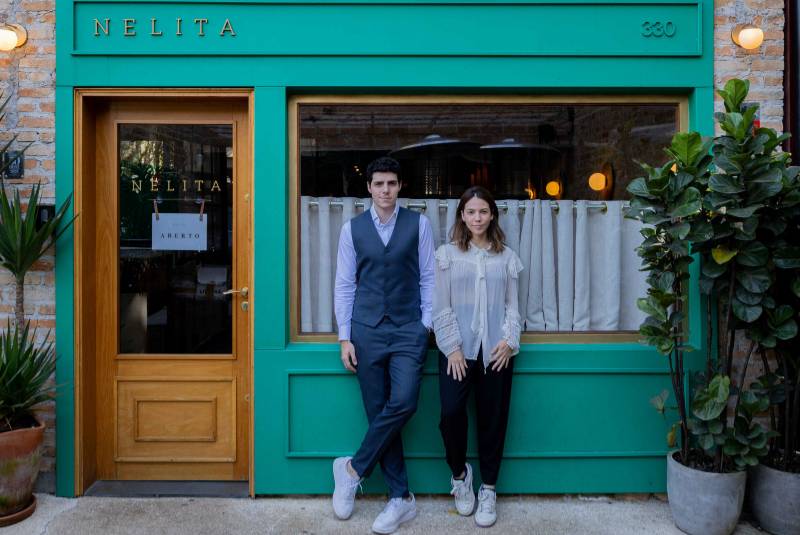
Magalhães with husband Danyel Steinle, Nelita's sommelier
"We're celebrating the strength of Brazilian women," she says, proudly, "because Brazil has so many strong women."
Slowly but surely, these women are changing the game.
Discover the full list of Latin America's 50 Best Restaurants 2025, and other special award winners.