Great food may transcend language and culture, but the complicated practice of tipping does not.
In some parts of the world, rewarding servers with generous tips is considered the norm. In others, the notion of adding a gratuity to the bill can be met with confusion or even indignance.
For staff, often dependent on tips to bulk up pay, the variability of tipping culture sometimes creates uncertainty and resentment. For restaurant leadership, it creates a minefield at the end of a meal, jeopardising the atmosphere of genuine hospitality they strive to create.
Over the past decade, the growing conversation around tipping has resulted in a spate of tip bans, service-included menus and reframed gratuities in an attempt by restaurants to adopt a more universal approach.
Culture clash
Global approaches to tipping are "hugely variable," says William Michael Lynn, a professor at Cornell University's School of Hotel Administration and author of The Psychology of Tipping. "In places like Japan and Iceland, tipping is either non-existent or very rare."
Leaving a tip after a meal in Japan could cause confusion and offence, an attitude thought to stem from the concept of omotenashi (selfless service), in which excellence is assumed, rather than being contingent on a financial transaction.
In contrast, North American restaurants typically expect tips of 20 per cent, rising as high as 30 per cent. Though some international visitors may balk at the idea of adding almost a third of the cost of a meal to their bill, historical legislation means large tips are standard practice.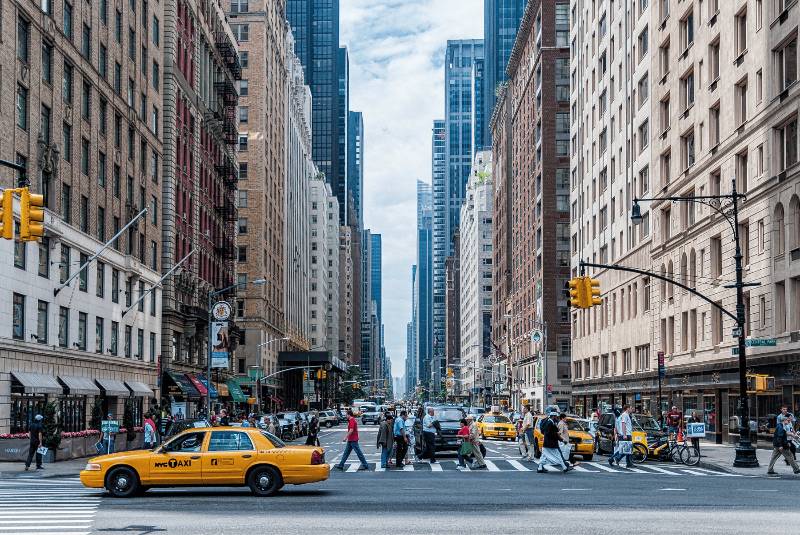
In New York, high living costs for restaurant staff are offset by a minimum tip of 20 per cent in most venues
In 1966, US Congress amended the Fair Labor Standards Act to create the 'tip credit', meaning employers could count customer tips as up to 50 per cent of an employee's wage. Tip credit is now banned in seven states. However it created a culture in which tips were seen as a legitimate way to compensate servers' low salaries.
When these opposing approaches to tipping meet across a restaurant bill, the results can be uncomfortable, says Lynn. "Diners don't want people to think badly of them. That social pressure isn't good. Clearly, tipping can create conflict."
"Tipping is one of the few parts of a dining experience where a guest arrives with a set of assumptions from home that may have nothing to do with where they're sitting," agrees Alvaro Perez Miranda, founder of Miami-based APM Restaurant Group.
"An Asian or European guest often experiences the American tip line as a surprise at the end of a meal. An American guest abroad sometimes over-tips out of habit or under-tips out of confusion. Either way, that moment lands at the very end of the evening, which is exactly the wrong place for a guest to feel uncertain. It can leave a bad final impression," says Perez Miranda.
Rethinking the tip
In recent years, some restaurants have experimented with tipping bans, service-included menus and more transparent gratuity models.
In 2015, Daniel Humm and Will Guidara, then co-owners at New York City's Eleven Madison Park, announced diners would no longer be expected to leave a tip
Guidara has long been an advocate for a non-transactional approach to hospitality. "Great hospitality is not serving the experience to someone; it's creating the experience with someone," he said in an interview marking the restaurant winning the Art of Hospitality Award, as part of The World's 50 Best Restaurants 2016.
The following year, Union Square Hospitality Group (USHG), including Gramercy Tavern, announced it would also eliminate tips. Speaking of the move, founder and executive chairman Danny Meyer said, "The tipping system has allowed restaurants to make it the customer's responsibility to pay the lion's share of servers' compensation and has unwittingly created several consequences.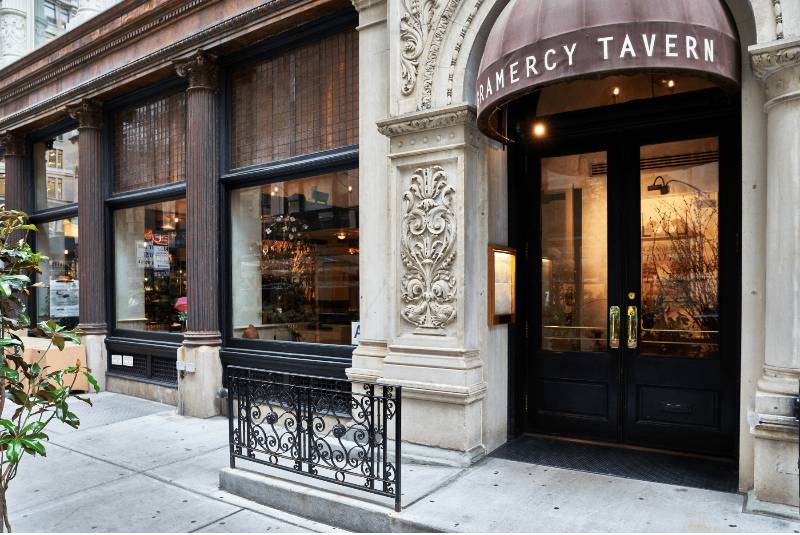
Gramercy Tavern was ranked No.43 on the North America's 50 Best Restaurants 2026 list
"Menu prices don't reflect the true cost of dining out; cooks and employees who don't receive tips are squeezed with very low pay; tipped employees get hooked on a 'gratuity drug' that prevents them from advancing their careers."
In some restaurants, back-of-house staff receive little or no share of gratuities, despite playing an essential role in the dining experience. Meanwhile, tip-dependent employees such as servers and bartenders may become reliant on this additional income, making them less inclined to pursue salaried management or leadership positions that carry greater responsibility but offer limited or no access to tips.
Blue Hill at Stone Barns meanwhile removed tip lines on receipts and opted to add a set charge of 22 per cent for diners instead. On its website, the restaurant says this fee is "not a gratuity [and] will not be distributed as a gratuity to employees." Instead, it is used to "offset operational costs."
At Mangal 2 in London, owners Ferhat and Sertaç Dirik have also spoken out about what they call "outdated" approaches to tipping. "Having analysed our practices, spoken to our staff and management and gauged the actions of our friends in the restaurant world, we believe now is the time for change," the pair say in their Service Included manifesto on the restaurant's website. "Our prices have been amended so each item now has our typical 12.5 per cent gratuity included in its final pricing."
Back to square one
However, due to rising costs and labour pressures in the sector following the coronavirus pandemic, some restaurants have reversed these policies.
In 2020, Meyer reinstated tipping at USHG as a means of increasing staff wages. In February 2022, Eleven Madison Park ended several years operating as a gratuity-free restaurant. In an email to customers, the restaurant explained that this change would allow it to keep wages competitive amid high operating costs in Manhattan.
London's Perilla has also moved away from a service-included model, says managing director Matthew Emerson. "When we implemented it, we felt it was clearer for staff and hoped it would allow our staff to make a career out of hospitality, for example by helping them to secure mortgages," he explains.
Service charge turns previously undocumented tips into official income, meaning it can be used on mortgage applications to banks.
Increasingly high food costs in the UK have impacted the country's hospitality sector
"However, with recent changes to business taxes, minimum wage and tronc, it was no longer financially viable to pay wages which were competitive with the rest of the London dining industry," he says. In the UK, it is common for restaurants to operate a tronc system, where tips or service charges are pooled and an impartial staff member or external expert decides how to split the money based on factors like hours worked or seniority.
"The beneficiary of the policy was always supposed to be the team. When that was no longer the case, we scrapped the policy," says Emerson.
Imperfect status quo
"On paper, a service-included model is the cleanest answer to everything, but I've held off," says Perez Miranda.
"Right now, in the US, and particularly in a market like Miami, a full tipping ban puts a lot of pressure on a single restaurant to solve an industry-wide question.
"Guests' expectations, the tax structure, labour economics and even the way credit card processing works are all built around the current model. A restaurant that moves alone risks confusing its guests and worse, disadvantaging its own team," he explains.
For Lynn, given the challenges of tip bans or even service-included models, the best solution that restaurants can adopt is to stick with their own cultural norm. "If most of your customers are foreigners who are used to a different norm, maybe think about [a change], but otherwise, it's probably safer to stick," he says.
It's an imperfect solution, but in a world where diners, staff and restaurateurs all want different things from the bill, compromise may be the closest thing to a universal language.
Discover more fantastic bars, restaurants and hotels with 50 Best Discovery, and start planning your next adventure.