The chef-owner of Le Du, Baan, Nusara, Mayrai and more chooses six of his top spots, from local coffee to Thai-Chinese beef noodles and refined Isaan cooking.
With a hard-working single mother, chef Thitid 'Ton' Tassanakajohn grew up around his grandmother's kitchen, and remembers the sweet, savoury smell of pork belly and eggs braising in five-spice master stock. "That stayed in my head," he says.
Third-generation Thai-Chinese, Chef Ton studied economics and worked in banking before realising that path wasn't for him. Food had always been his anchor, and he retrained at the Culinary Institute of America in Hyde Park, New York, later completing an MBA in hospitality management. He then spent five years cooking at Eleven Madison Park, The Modern and Jean-Georges.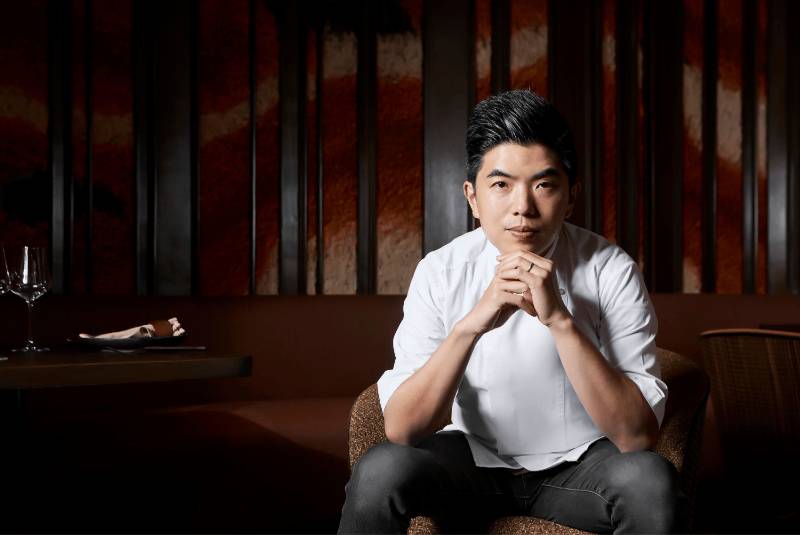
Chef Ton has also served as a judge on television programmes such as Top Chef Thailand
Eleven Madison Park left the deepest mark. "The key thing I took from Chef Daniel was using local ingredients and turning them into something unique. You don't have to source everything from France or Japan to make something phenomenal," Chef Ton then brought that idea back to Bangkok.
Le Du opened in 2013 – the first modern Thai restaurant built entirely on local ingredients. "Honestly, it was a stupid idea at the time. Nobody was going to pay for Thai fine dining with local ingredients and no French products," he says. But they did, eventually, and in numbers. From that hard-won success came casual eateries and then Nusara in 2020, a more personal project rooted in palace cookbooks and the recipes of his grandmother, who passed away that year.
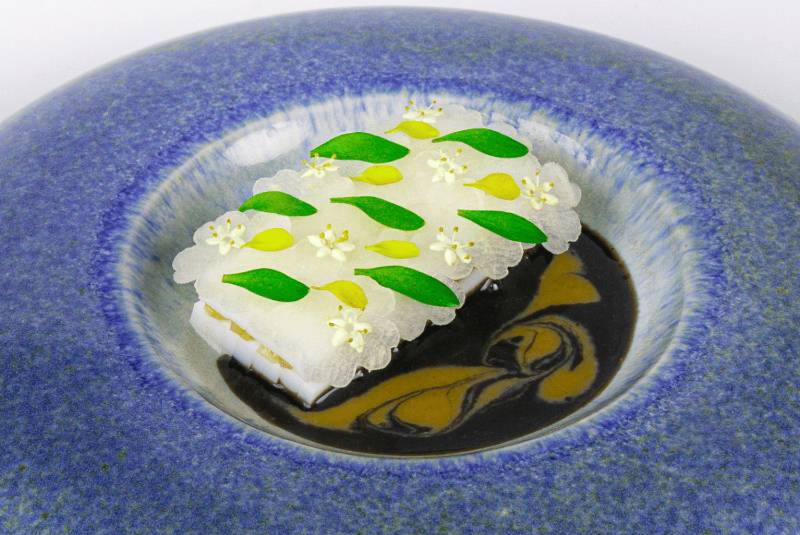
Le Du is named after the Thai word for 'season'
All of this has led to him winning the Inedit Damm Chefs' Choice Award 2026, as part of Asia's 50 Best Restaurants. "I felt that everything I've done has been accepted by the people doing the same things," he says. "That's the most meaningful recognition I could get."
Who better to choose their favourite cafés, restaurants and casual eateries than Chef Ton? He says the city has never been more dynamic or more focused on local flavours.
"Right now, the young generation of chefs want to cook Thai food. We have so many good Thai restaurants with so many different approaches. From where I started 13 years ago, when it was just Nahm and Bo.lan, to now – where you can eat at really good new places every week. I think Bangkok has the best food scene it's ever had."
Chef Ton's best eats – and caffeine – in the Thai capital
School Coffee
Tassanakajohn's go-to coffee spot for many years, School Coffee works directly with growers from the Chiang Rai area (the original location is in Chiang Mai). Using almost exclusively Thai beans, it's one of the few places you can pick up a cup of Joe for 50 Baht ($1.55). Though Bangkok's speciality coffee scene is thriving, it's rare to find good coffee that's reasonably priced.
Sakkwa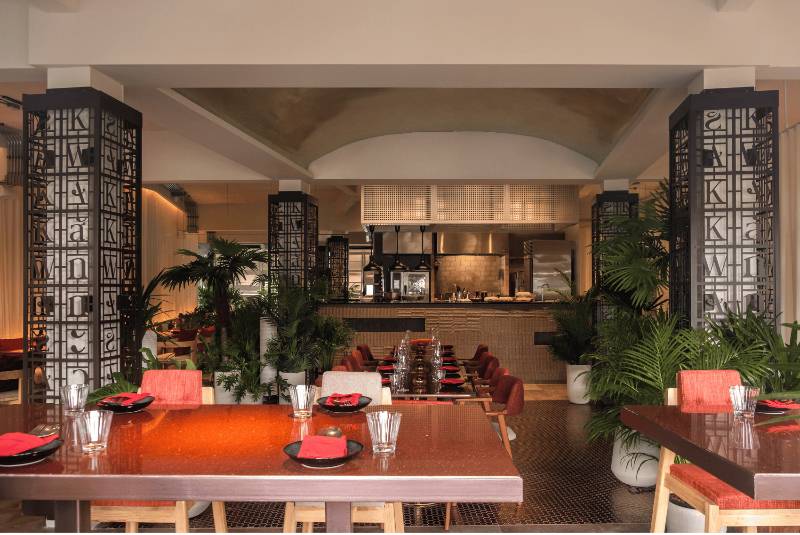
A relatively new spot in the regenerated Talat Noi neighbourhood, chef Worathon 'Tae' Udomchalothorn studied with Tassanakajohn at CIA and helped him open Le Du. Here he's cooking classic Thai food from the central regions – using local ingredients and impressive technique, and representing a new genre of upscale casual that is flourishing in the city right now. Must-orders are the marinated raw tiger prawns in kaffir lime cups, and the 14-day dry-aged Khao-yai duck.
Khao San Sek
At her casual spot, Chef Pam's focus is different from Potong (No.13 on The World's 50 Best Restaurants 2025). Here, she opts for Thai cuisine without Chinese inflections, and Tassanakajohn admires the way she does it. Instead of expressing aggressive sourness, pungency and heat, the menu is vegetable-forward and well-balanced. Rice takes centre stage, and though dishes such as lamb ribs massaman and slow-cooked pork ribs with palm sauce and herb salad are excellent, Tassanakajohn insists the usual side fixture has so much flavour you could eat it alone.
Noi Samrub
A new spot from the much-loved Samrub Samrub Thai, it's a great opportunity to try chef Prin Polsuk's cooking in a casual setting. Chef Ton thinks of it as a lan lao, meaning an informal (usually open-air) drinking space for gathering and eating kap klaem: bold, salty and spicy foods that call for more liquid. He goes there frequently, always orders Trang venison skewers dusted in toasted spice, washing them down with one too many satos and Regency highballs.
Soma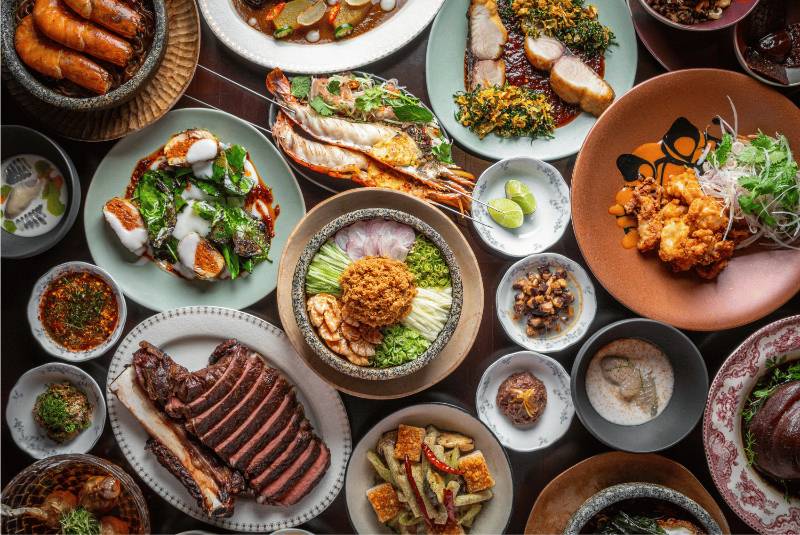
The food of Isaan – the northeastern part of Thailand that borders Laos and Cambodia – is known in Bangkok to be unrelentingly hot, as well as a cheap and cheerful option. Though the fare is multi-regional, Chef Ton loves Soma for the way it redefines and refines Isaan cuisine by using high quality and difficult-to-source ingredients. The brainchild of chefs Num Samuay (from the region) and Chalee Kader (of Wana Yook and Isaan-focused 100 Mahaseth), the restaurant is covered in diverse art from local artists. Try the kolae skewers, crab curry tuile, shrimp paste clay pot rice, and Chef Ton's favourite, kai mod daeng red ant larvae in a pulsating salad softened by lush Marian plum.
Heng Chun Seng
At this no-frills beef noodle specialist, the flavours are resolutely Thai-Chinese. A long-standing favourite with a devoted local following, Chef Ton has been coming here for lunch for more than two decades, undeterred by the queues. A bovine broth is aromatised with cinnamon, clove, galangal and lemongrass, and then you customise the rest. A choice of rice or egg noodles, beef shank and meatballs, and then all manner of beef offal – from tripe to heart, tongue, liver and spleen. As is the way with Thai-Chinese cuisine, the meat is dipped into a sauce made from fish sauce, chillies and vinegar, assembled to your taste.
Thitid 'Ton' Tassanakajohn is the winner of the Inedit Damm Chefs' Choice Award 2026, as part of Asia's 50 Best Restaurants. Discover the full list and other special award winners.