A glut of restaurants are prioritising ingredients found at altitude, and innovating within an environment where everything is rarer, essential and earned.
In 2008, chef Norbert Niederkofler introduced a radical manifesto to the culinary world. 'Cook the Mountain' meant abandoning olive oil, citrus and greenhouse vegetables – focusing only on produce within 50 km of his South Tyrolean restaurant, St. Hubertus.
In 2017, it became the first restaurant to earn three Michelin stars with such a concept, crafting umami from fermented plum ketchup and chickpea soy sauce. "The pantry for me is really the heart of the mountain kitchen," he says. "It shows what the land can give you in a natural way...without forcing things."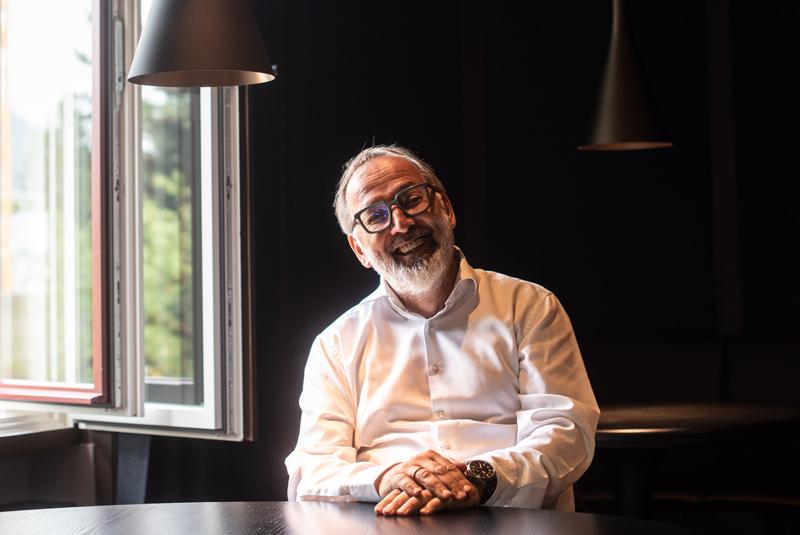
Norbert Niederkofler (Image: Lorenzo Polato)
In 2023, the restaurant relocated to Atelier Moessmer in Brunico, where the tasting menu's first bite is gossamer-thin lamb charcuterie and preserved radichetta on mountain potato pancake. The back-to-the-roots philosophy continues with dishes such as barbecued char swimming in beurre blanc infused with sauerkraut and speck. "There are 15 ingredients you find in 90 per cent of the restaurants," Niederkofler observes. "Here, the food is different."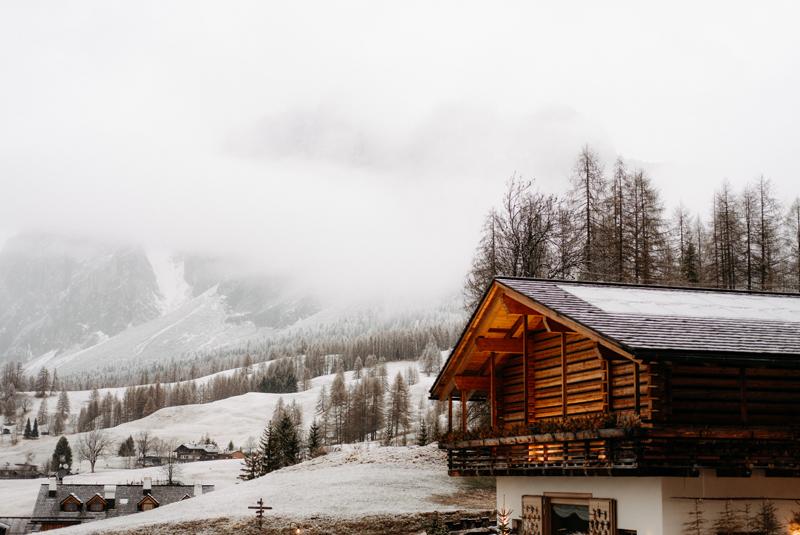
SanBrite offers sweeping views of the Ampezzo Dolomites
Despite emerging as an outlier, Niederkofler's vision is spreading. Across Italy, where mountains dominate the landscape, the influence is being felt. At SanBrite, also in the Dolomites, chef Riccardo Gaspari and partner Ludovica Rubbini are driven by resourceful, altitude-driven cooking. One intriguing outcome is how altitude reshapes Italian cuisine itself – with dishes like trout with yeast sauce and spaghetti with mugo pine breadcrumbs, the mountain vista framed by wood-panelled walls that recall classic alpine retreats.
"Italy is often described through abundance, sunlight, rich markets," Gaspari notes. "The mountains invert that narrative. Here, everything is rarer, essential, earned." At high altitude, seasonality sharpens into micro-seasons, creating a constant dialogue between what is fleeting and what must be preserved for months.
SanBrite's pantry functions as a living map of possibility. The cycle – spring's verticality, summer's herbs, autumn's fermentations, winter's smoke – defines the menu's structure. "When the mountain changes, not when we decide it should," Gaspari explains. Each dish carries what they call a 'cinematic' sensibility; a small scene from the landscape that inspired it.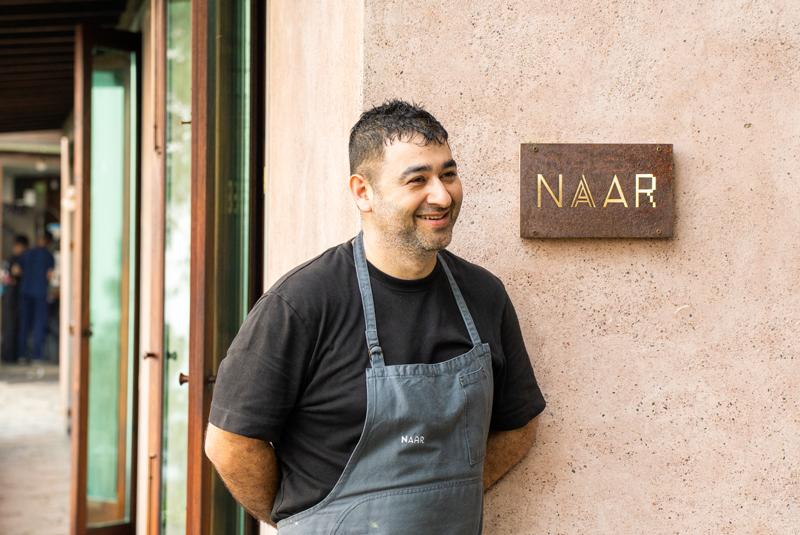
Prateek Sadhu (Image: Penelope Prisi)
At Naar in northern India, chef Prateek Sadhu adopts a similar ethos, offering a radically different perspective on Indian cuisine. His Himalayan dining experience unfolds like the profound panorama around it, reflecting a vast geography from the saffron fields of Kashmir to the forested highlands of Uttarakhand. Drawing on ancestral techniques, his menus layer unexpected textures and flavours – from smoked trout roe with banana custard, to hand-pulled "Sunderkala" noodles with lamb sausage and timur broth. "The Himalayan pantry isn't just about ingredients," Sadhu says. "It's about necessity translating into philosophy." Short seasons, unpredictable weather and long winters mean everything is built around "making the most of what you have."
This thinking led Virgilio Martínez to open Mil in Peru's Sacred Valley, where altitude and Andean biodiversity define possibility. "We already had a philosophy grounded in working at altitude," Martínez says, "a worldview shaped by the heights." But while Central in Lima – No.1 on The World's 50 Best Restaurants 2023 – formed this view, "Mil has taken this much further." Located at 11,700 feet, the restaurant uses ingredients like freeze-dried potatoes, oca, mashwa (South American tubers), high-altitude quinoa and ancient maize grown with local Andean communities. Its menu shifts with the harsh conditions, adapting techniques like huatia earth-ovens and stone-heat cooking to honour how people have long survived and cooked in the high Andes.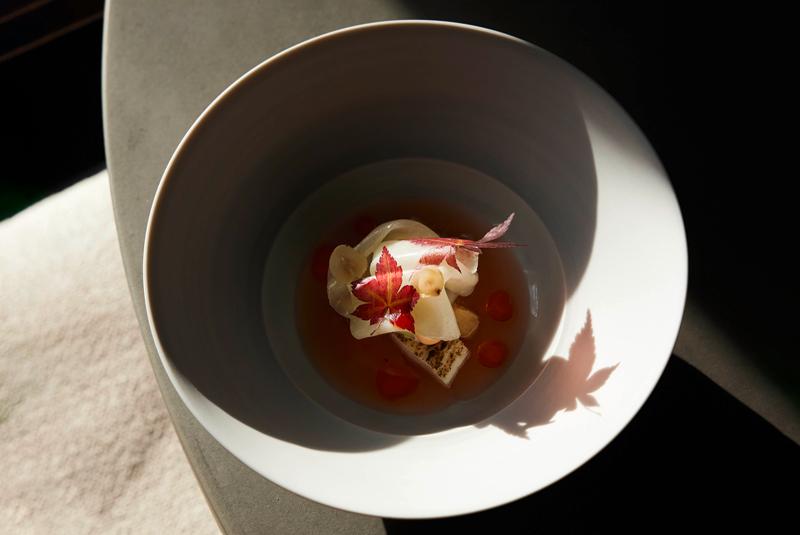
A pike perch dish paired with quince and hazelnut, finished with a maple leaf garnish (Image: Joan Nathanael Minder)
Not every mountain restaurant engages with the history of scarcity. At Schloss Schauenstein in Fürstenau, the Swiss Alps, the cooking is rooted in adaptation. "Our cooking is deeply shaped by the permaculture garden we tend at Alpine altitude," says chef-owner Andreas Caminada. "Rather than responding to scarcity, we work within the rhythms, limits, and surprising generosities of this micro-landscape." The garden serves as "our primary source of inspiration, our playground and our laboratory."
Still, ferments and preserves – which are stored in the "culinary cellar" – play key roles. Spring shifts toward wild garlic and vibrant greens. Summer is nearly 100 per cent garden-driven. Autumn begins layering preserved flavours back, while winter brings ferments and vinegars to centre stage. Caminada experiments with artichokes and Mexican nopales alongside Alpine ingredients like cornel cherries, which when preserved have the briny character of olives. An Alpine sensibility always imprints certain dishes on the menu, such as char from local mountain lakes appearing with radish and buttermilk; or sweetbreads paired with wild herbs and foraged mushrooms.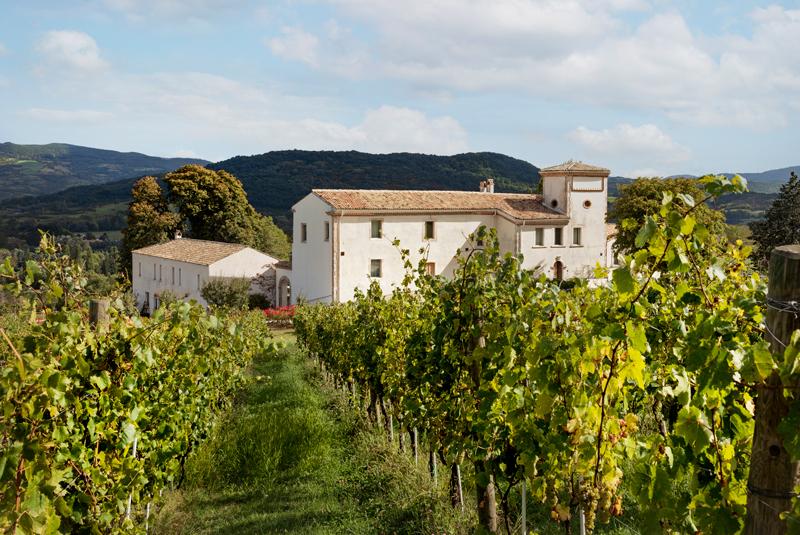
Reale is set within a restored 16th-century monastery (Image: Helenio Barbetta)
Not every mountain restaurant walls itself into a radius. Some chefs draw creative power from altitude and isolation without strict geographic limits on ingredients. At Reale in Abruzzo, chef Niko Romito credits the mountains with creative focus. "Being away from the beaten track, surrounded by these mountains, has always allowed me to be more focused and more creative," he explains. "My cuisine would never be the same elsewhere."
At Hiša Franko in Slovenia, Ana Roš absorbs the mountain mindset while working across multiple landscapes. Foraging in the hills around the restaurant is central to everything she does. "Foraging isn't just about finding ingredients, it's about understanding the landscape and its rhythm," she explains. "You take what nature offers, not what you want to put on your plate." Hiša Franko has its own in-house forager. Slovenia's geography – from lowlands and rivers to highland forests and coastline – feeds a cuisine of contrasts, with mountain dishes like orzotto with seasonally changing fruits and herbs anchoring the approach.
Across all restaurants with a mountain ethos, preservation techniques enter a dialogue with the deep past. "We also look at the ancestral," says Martínez, "understanding, for example, how agriculture worked when there was no irrigation." But Niederkofler insists this dialogue must live in the present. "When we ferment or smoke today, the technique is old, but the way we use it is new. We use old methods to show purity, not to hide mistakes."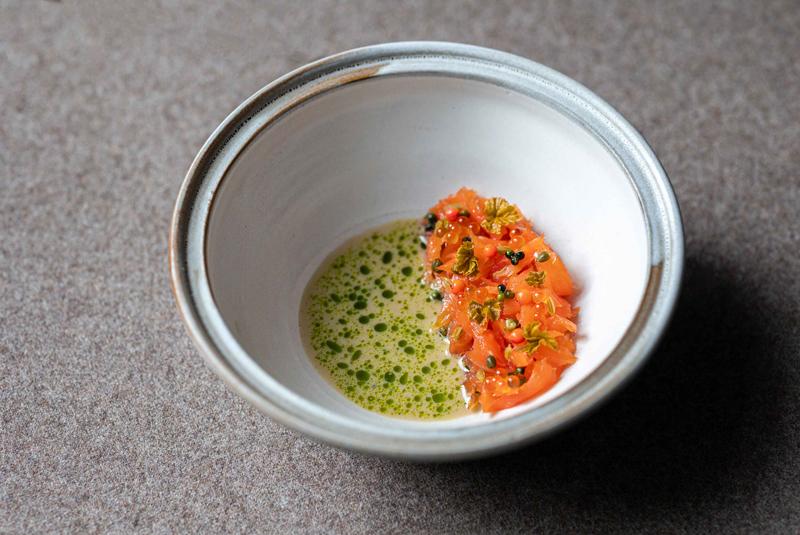
The salmon trout dish from Atelier Moessmer Norbert Niederkofler (Image: Dalge)
A key challenge is ensuring guests will pay for seemingly rustic ingredients. "Living and working in the mountains has taught us that value doesn't come from opulence but from precision and essence," Gaspari says, citing milk from a single alpine pasture or a herb picked on one specific day. "Our role is to turn that essentiality into an experience that carries the same emotional intensity as more conventional luxury ingredients."
Niederkofler echoes this. "International guests often come with one idea of luxury, and leave with another," he says. "When the experience is honest, really connected to the place, people feel it."
Located at life's edge, mountains provoke sustainability commitments other landscapes don't – another aspect valued by diners today. "When producers feel respect, they protect biodiversity," reflects Niederkofler. "When young chefs see that creativity can come from limits, they rethink the supply chain." Sadhu echoes this 6,000 km away in the Himalayas. "Ingredients alone don't define our contribution. What matters more is the underlying philosophy: mountain cooking as adaptive intelligence. It's about reading landscapes, respecting seasonal limits, understanding community interdependence."
All of this makes the mountains a uniquely alluring springboard for new visions of cuisine. Teaching in their own quiet way, the mountains are – as Goethe put it – silent masters that make silent disciples. With the peaks as inspiration, chefs learn to innovate within limits, diners feel the pull of place, and tradition becomes creating experiences inseparable from their settings. As Gaspari puts it, "true luxury is offering something that exists only here, and nowhere else in the world."
Header image: Celeriac, crab, foraged greens, mustard seeds from Hiša Franko, Ana Roš [Image credit: Ciril Jazbec]
Discover more fantastic restaurants, bars and hotels with 50 Best Discovery, and start planning your next adventure.