Kelp-infused ice cream, fried potato meringue and carbon caramel cream with smoked marrow, these desserts punch well above their weight.
When Auguste Escoffier began naming desserts after guests at The Savoy, he understood that the final act ought to be memorable. A mediocre meal could be all but forgotten if redeemed by a transcendent dessert. For centuries, memorability meant spectacle: in 1574, Henry III famously reached for a napkin at a feast, only to find it was made of sugar. Antonin Carême constructed architectural ruins from marzipan. Baked Alaska arrived aflame.
Today's best chefs understand that what truly haunts us isn't spectacle or namesakes, but flavour itself. These aren't sweet epilogues – they're extensions of the kitchen's full identity. No longer limited to a salty undertone or a boozy edge, smoke, umami and vegetal depth now sit comfortably alongside sugar, creating endings that feel unexpected. These are the world's most unusual – and compelling – desserts.
Laminaria Digitata
Le Coquillage, Saint Méloir des Ondes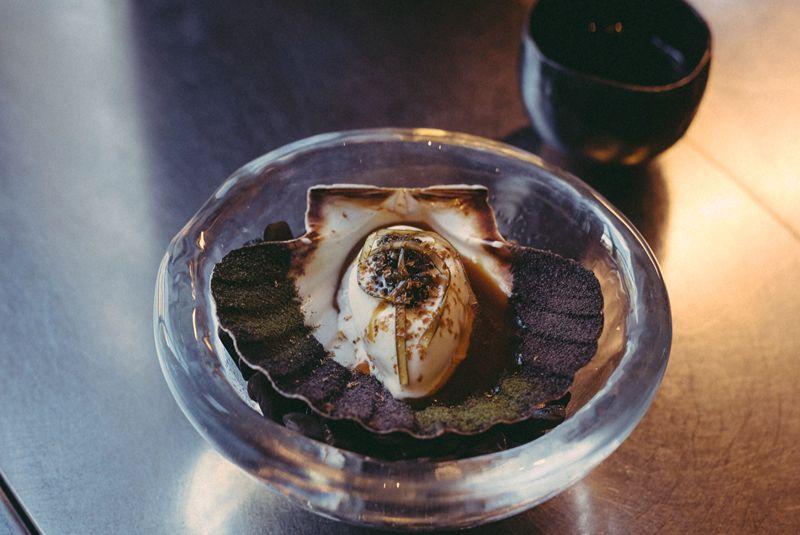
At Le Coquillage in Brittany, chef Hugo Roellinger's cuisine de la mer takes on a Japanese inflection, with local seaweeds aged slowly out of sight. In the dining room at Château Richeux, the sweeping view of the sea sets the mood, while this hidden reserve underpins every dish – dessert included. Served in a scallop shell, the dessert centres on its namesake: smooth, saline ice cream infused with laminaria digitata (kelp). Beneath it sits a hazelnut and elderflower miso paste, with sea lettuce, dulse and black seaweed for marine depth. Intensity is layered through two-year-aged grated dried scallop, warm smoked caramel, candied kombu and creamy Oscietra caviar. An 'au long cours' infusion of tulsi, poppy, lemon balm, buckwheat, sage, seaweed and rose completes the experience, sealing its sense of calm.
Chiaroscuro
Al Gatto Verde, Modena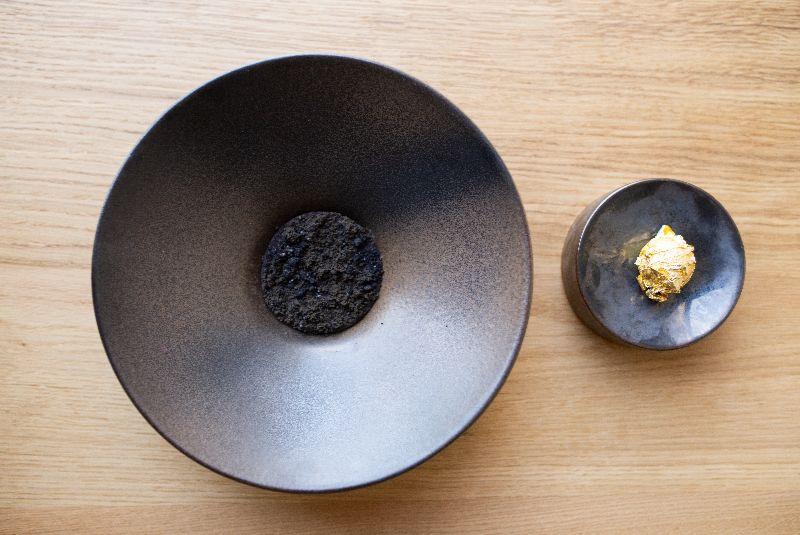
(Image: Stefania Gambella)
A term coined during the Renaissance to describe the work of Caravaggio, da Vinci and others – artists who relied on the vigorous contrast of light and dark to create depth, dimension, and emotion – chiaroscuro frames chef Jessica Rosval's art-inspired dessert, reflecting her mentorship under Massimo Bottura. A lava-like circle of carbon caramel cream with smoked marrow and black pepper evokes the smoke and embers central to the Al Gatto Verde project. Contrasting its brooding potency is a gold-leaf–covered passionfruit semifreddo, shimmering with freshness and brightness.
Dabai Tart
Dewakan, Kuala Lumpur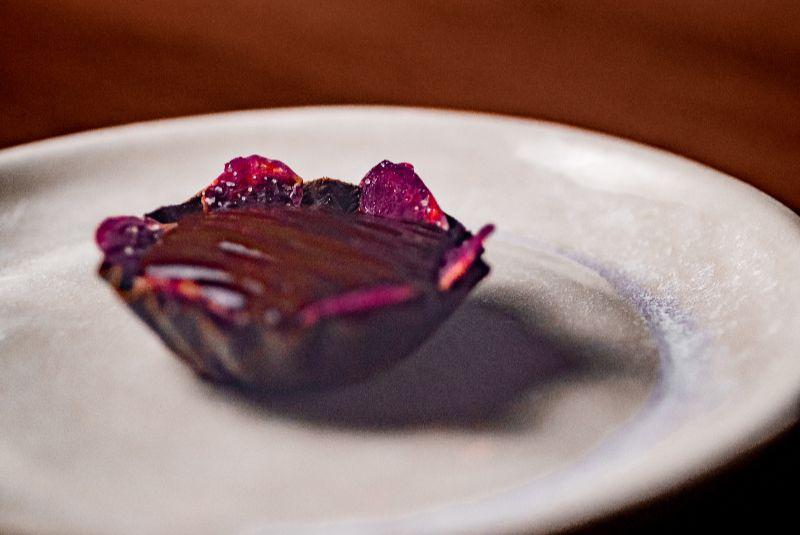
The world's greatest chocolate desserts could warrant an article of their own – from Bruno Verjus's chocolate caviar tart, now a defining reference point for caviar in desserts, to Hermanos Torres and The Cocoa Age, a multi-formed dessert that makes chocolate feel newly discovered. Yet more compelling still is a dessert that feels like chocolate, and isn't. At Dewakan, chef Darren Teoh turns the spotlight onto Malaysia's overlooked indigenous ingredients. In his signature dessert, the dried kernels of the dabai fruit are ground slowly in a stone grinder over three days, echoing the transformation of cacao beans into chocolate. They're then set in a tart shell made from coconut palm umbut – the edible heart of the palm – baked and glazed without added flour. It's a subtle sleight of hand: recognisable in texture, aroma, and depth, yet disarmingly novel. As Magritte might have put it, "ceci n'est pas une tarte au chocolat".
Warm potato mousse
The Clove Club, London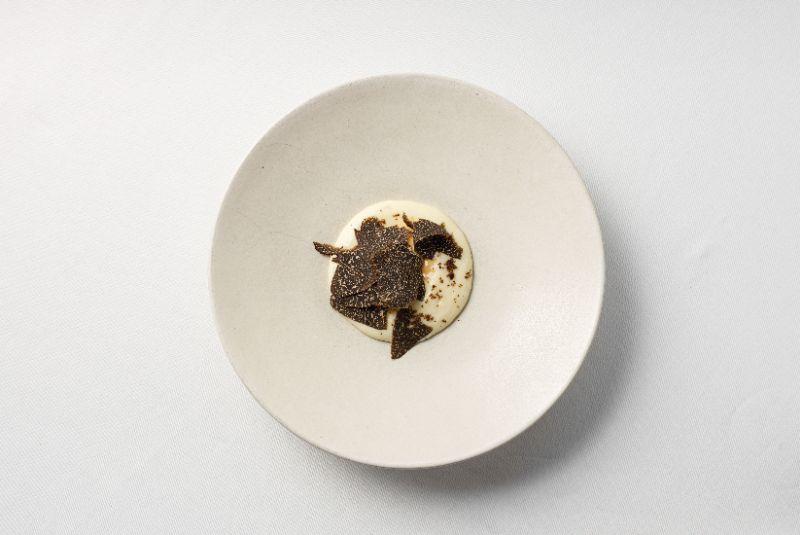
(Image: Anton Rodriguez)
Ever since encountering a potato jam in Michael Bras's cookbook more than two decades ago, chef Isaac McHale has been compelled by the radical idea of giving potatoes a sweet expression. He explored versions of it in other kitchens, but at his own London restaurant, The Clove Club, he pushed the idea further, stripping it back to something resolutely potato-forward: a warm potato mousse, charged through a siphon, set against cold caramel ice cream. Potato returns as a jam at the base – like a sweetened, dry mash – and as a crisp, fried potato meringue and purple potato tuiles. That earthy, starchy backbone forms a neutral yet deeply savoury canvas, allowing flavours of fresh Perigord or white truffle and coffee to emerge with clarity. First introduced in 2017, the dessert tends to reappear between fruit seasons, when truffles are at their best.
Tomato and sobrasada,
Coda, Berlin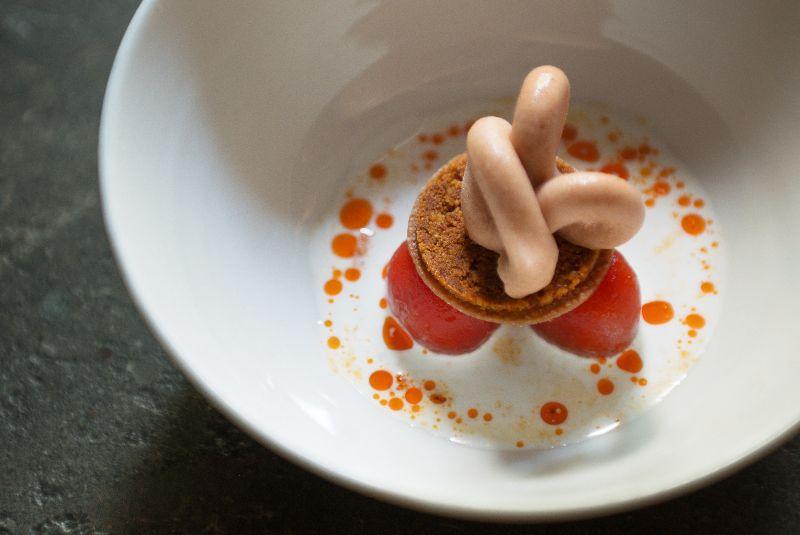
(Image: Chris Abatzis)
At Coda, dessert technique and perspective form the centre of gravity. The restaurant started as a dessert bar and in the process, chef René Frank took The World's Best Pastry Chef award in 2022. Coda has slowly evolved into what it is today – a non-conforming fine dining restaurant that blurs the line between sweet and savoury, dessert and main. Here, confit tomatoes arrive as one element, while caramelised tomato and tomato ice cream form another, finished with the creamy contrast of macadamia milk split with fiery sobrasada oil and a crisp sobrasada cracker crust.
Horseradish and watercress
El Chato, Bogota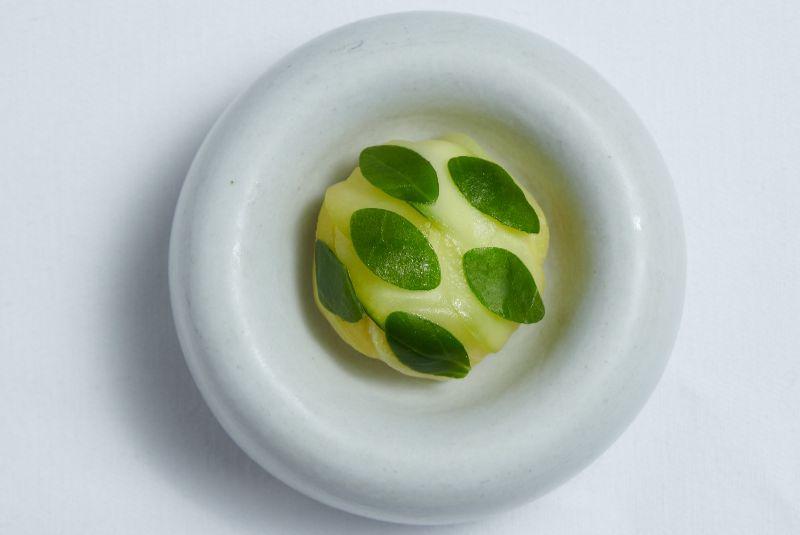
Vegetables have found their way into desserts in many of the world's top kitchens – often guided by the rhythms of a kitchen garden, as in Mirazur and Osip – but chef Álvaro Clavijo takes the idea a step further. Convinced of their infinite possibilities, he builds El Chato desserts around vegetables, as in a horseradish-led composition that moves between heat, acidity and green bitterness – meringue and sorbet softened by apple, sharpened with watercress crémeux, and finished with huacatay-scented cucumber, hoja santa and local freeze-dried apple.
Burnt milk ice cream
Asador Etxebarri, Atxondo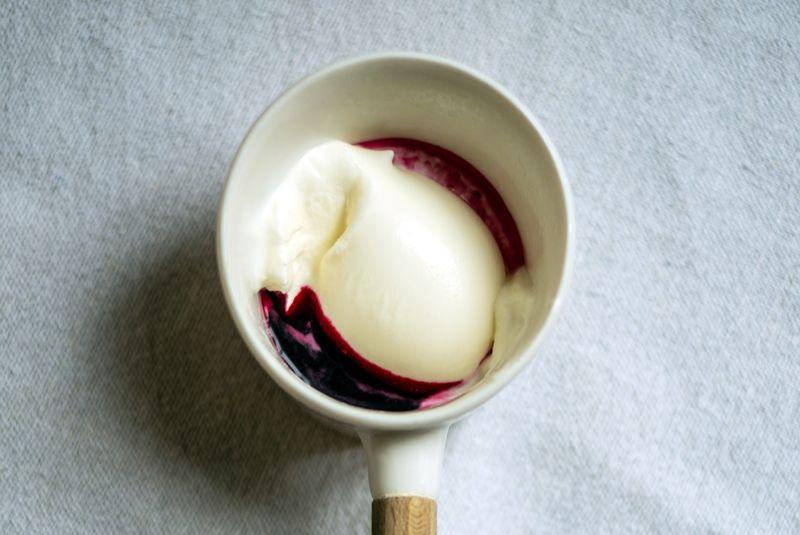
Among such offbeat complexity, you might wonder how something as simple as ice cream earns its place on this list. A meal at Etxebarri feels like learning about grill cooking for the first time, with proteins and vegetables revealed anew through fire. Having already said so much through flame alone, chef Víctor Arguinzoniz reaches, in the final act, for the inverse of fire itself – creating an ice cream scented with dying embers, the fire barely crackling. Milk is gently smoked in earthenware pots, then reduced in the oven with oak bark overnight to almost half, before being churned. Served with just the earthy sweetness of freshly juiced beetroot, the result is quietly ecstatic. Here, restraint is the point.
Discover more fantastic restaurants, bars and hotels with 50 Best Discovery, and start planning your next adventure.