From flame-kissed durian to an umami-infused carrot, these dishes set leading chefs on the path to culinary greatness.
Every great chef has a moment when a single dish shifts the course of their culinary journey: a plate that sparks curiosity, challenges tradition or reveals the power of flavour in a way they had never experienced before. For some, it's the taste of home that inspires a lifetime of cooking; for others, it's a daring creation that redefines what food can be. Discover the dishes that helped shape the trajectory of these world-leading chefs.
Kelvin Cheung
Jun's, Dubai
@junsdubai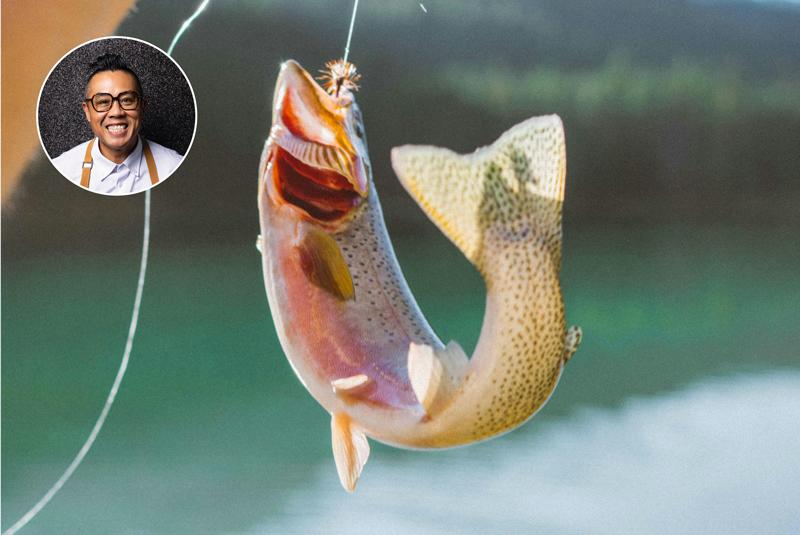
Trout are commonly fished in Belgium's Ardennes region
When I think about turning points in my career, my mind always returns to Dinant – a quiet, storybook town in Belgium, where I worked my first job outside of my family's restaurants. Until then, I had grown up in my father's Cantonese kitchens in Toronto and Chicago, which were relentless and urban. Belgium was the opposite: lush, calm and deeply connected to the land. The restaurant had a vegetable garden and, more importantly, a small pond where we kept live trout. One of our signature dishes was Truite en Bleu: trout caught moments before cooking, gently poached in a broth made from leek, white wine, vinegar and herbs from our garden. It was a dish that tasted purely of the river and countryside. The ritual changed me. Whenever a guest ordered it, I had to leave the kitchen, net a trout in full view of the dining room, then clean and prepare it. There were no shortcuts, just respect for life taken and the responsibility to honour it through precision and flavour. That experience taught me that food is more than technique, it's a story, a connection between land, product, chef and guest.
Garima Arora
Gaa, Bangkok
@restaurant_gaa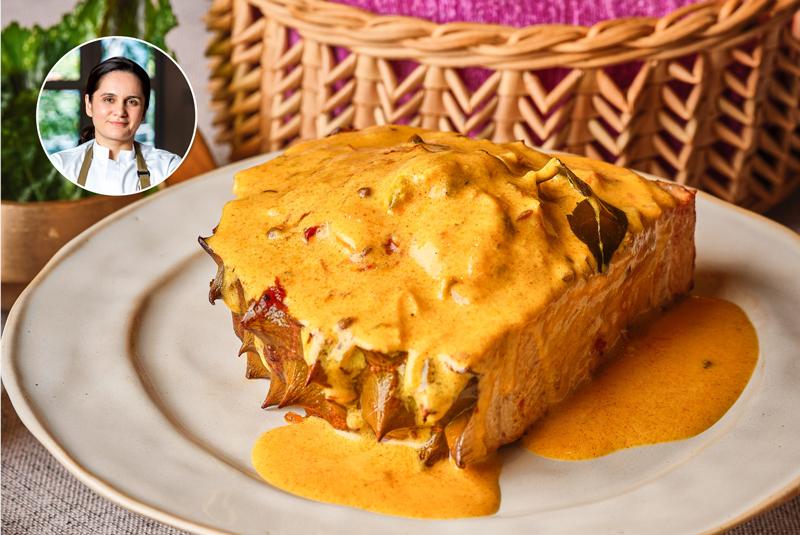
The Tandoori Story combines durian puree with roselle (hisbiscus) saag, bread and pickles
For me, the Tandoori Story is a dish that changed Gaa's trajectory. It encapsulates everything we're trying to present to our guests. I've always been drawn to vegetables and fruit because Indian cooking has a beautiful way of emphasising the country's deepest flavours, and one of my favourite ways to do this is to cook over fire – it's straightforward and primal, yet unpredictable and transformative. The main component in Tandoori Story is durian fruit. Some may say it's for an acquired palette, but I believe it's down to how you cook it. For this particular dish, we tandoor-roast it until it becomes this smoky, marrow-like butter. Watching guests take their first bite, and seeing that mix of surprise and delight – it's the best feeling in the world. This dish takes a challenging ingredient and makes it irresistible: proof that if you stay curious, take risks and keep pushing, you'll create something truly extraordinary. I think it bridges the connection between India and Thailand, blending traditional Indian fire-cooking techniques with Thailand's beloved durian to create something completely new. It's still on our menu today.
Manu Buffaru
Manu, Curitiba
@restaurantemanu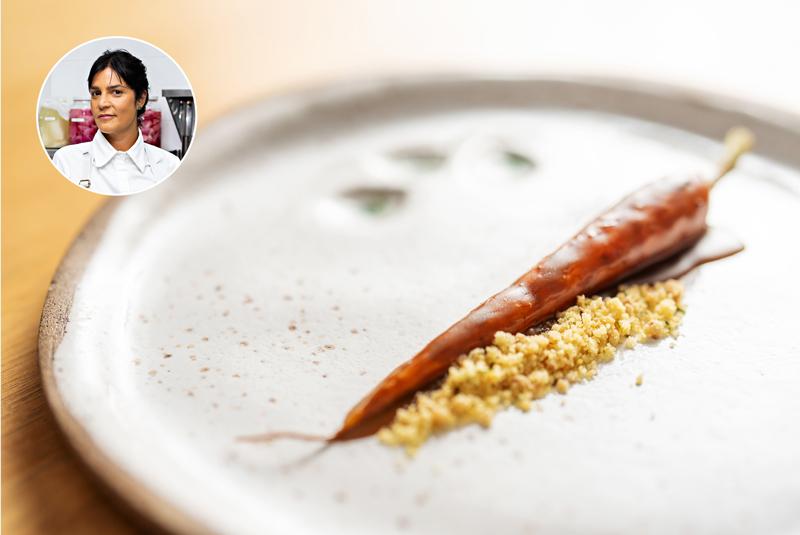
The carrot dish is served with levain – active sourdough starter – and fermented cassava flour (Image: Rubens Kato)
The dish that changed everything for me is the Carrot, which concludes the tasting menu at Manu. When I served it for the first time, it sparked surprise and even puzzlement: how could a vegetable take the starring role at the end of a gastronomic experience? Very quickly, it was met with admiration, because it revealed something essential: the power, depth and umami within an ingredient so often treated as secondary. For me, this dish marked a turning point. It showed that cuisine does not need meat or fish to achieve impact and emotion, and that a vegetable can carry symbolism, memory and creative force. It became my signature dish – an emblem of the philosophy that guides my cooking, and it remains on the menu to show how the simple can become sublime.
Ana Ros
Hiša Franko, Kobarid
@hisafranko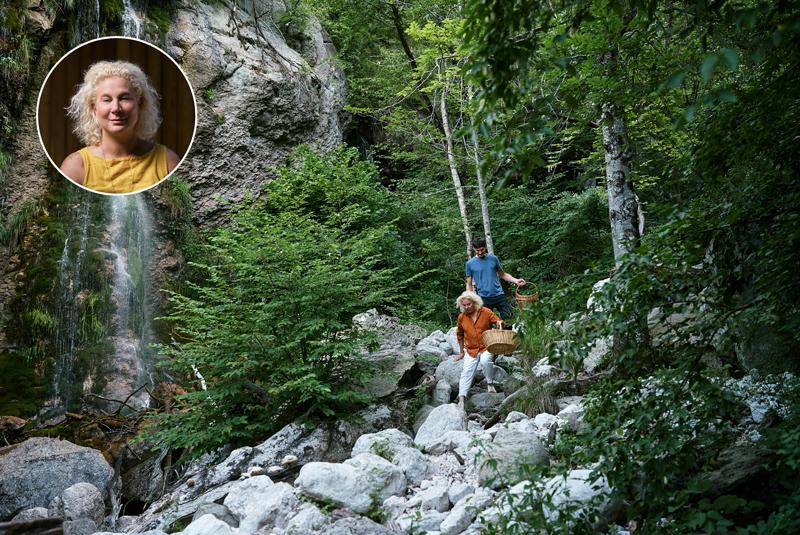
Trout fishing in Slovenia is most prevalent between spring and autumn (Image: Ciril Jazbec)
The first dish I can remember making was pasta filled with liquid potato, served in a broth with steamed trout, trout eggs and wild chives. It drew a lot of attention because of its technicality, of filling dough with liquid potato. Then, it was all about the storytelling, elevating a fish that was not hugely popular in the region. Considering trout is found in all of Slovenia's waters, many guests still prefer seafood to freshwater fish. Creating that dish was significant, because I realised the power of focusing on local ingredients over what we perceive to be popular.
Ali Ghzawi
Alee, Amman
@aleebyali
Kubbeh nayyeh is often served raw with beef or lamb in Lebanese and Syrian mezze
Our kubbeh nayyeh changed everything for us – it's a Levantine answer to beef tartare, pounded rather than hand cut. I prepare it using beef seasoned with a basil-marjoram-mint blend, then finish it at the table with crispy bulgur, pickled onion and a light garlic cream. Instead of raw onion and garlic, which can overpower, the gentle sweetness and cream bring balance. I serve it with a fresh bouquet of lettuce, mint and pea shoots grown at the restaurant, plus a final pour of olive oil from my hometown of Irbid, where olive trees more than 1,200 years old still stand. In Amman, kubbeh nayyeh is a staple in family kitchens, and at Alee, I wanted to give it a Jordanian soul. Guests who once avoided raw meat have tried it here for the first time and love it. For me, it was never simply a signature dish, it was the turning point where tradition met innovation, where Jordan's identity and influences came together on one plate.
Edgar Nuñez
Sud 777, Mexico City
@sud777mx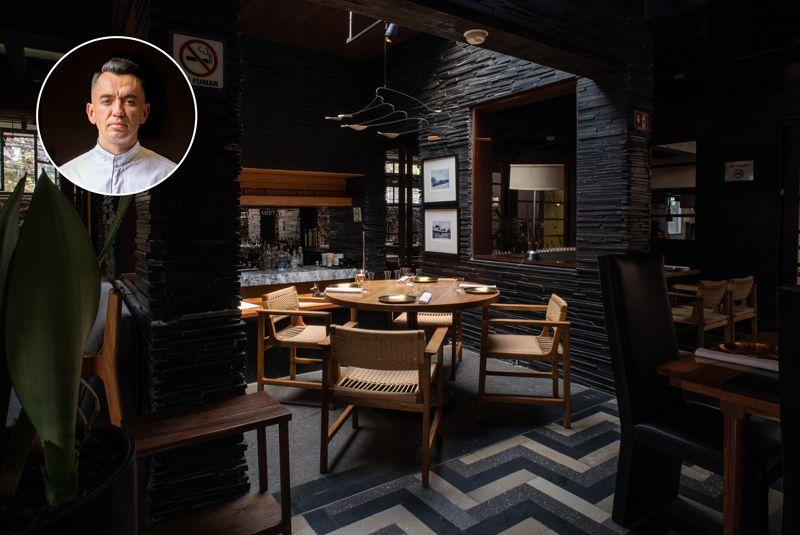
Sud777's menu presents Mexico's variety of native produce with geometric precision
The aged carrot was transformational for me. When I first introduced it 15 years ago, it was received as something radical, even controversial, because very few people at the time expected a humble vegetable to be treated with the same respect as luxury ingredients. The process behind it was meticulous: the carrot was aged and prepared in a way that revealed unexpected depth, complexity and flavour. What seemed simple on the surface was actually a statement about how I wanted to approach cooking – giving importance to what is often overlooked. I consider the aged carrot a milestone dish, one that encapsulated a philosophy and opened doors to new possibilities. Although it is no longer on the menu, its influence remains in my work and continues to inspire the way I create.
Discover more fantastic restaurants, bars and hotels with 50 Best Discovery, and start planning your next adventure.